Emilia Perez, 2024, Bananas, Snobbery, and a lot of offended people
General Reviews
 A few months ago, an artist presented in an art gallery a work that consisted of a banana stuck to a wall with a piece of adhesive tape. The work - which he named “Comedian” - was made by Maurizio Cattelan, a renowned artist. At first everyone laughed at it... until a millionaire came along, paid $6.5 million for the work... and then ate the banana.
While at first the idea for Comedian seems stupid, it ultimately turns out to be formidable. It is the ultimate and most brilliant satire on the banality of what we understand art to be. Isn't art anything the artist creates? It doesn't matter that objectively it looks like crap; the point of Comedian is to criticize the snobbery of the artistic milieu that believes that crap is valuable and, worst of all, ends up proving its point when people show up who pay a fortune to own it.

But isn't it so? We live in such banal times where art is no longer considered for its intrinsic artistic qualities but for the prestige of the artist, which merits an exorbitant price that goes far beyond what the work really represents. At Sotheby's, the prestigious auction house based in Great Britain - although it now has branches in the main cities of the First World -, we have seen millionaires pay fortunes for John Lennon's glasses, Marilyn Monroe's underwear, the love letters of some crazy and suicidal poet... or price paintings by prestigious authors at hundreds of millions of dollars, such as the extreme case of Salvator Mundi by Leonardo Da Vinci, which was sold in 2017 for 450 million dollars. Sure, they are unique, irreplaceable objects... but someone explain to me how a piece of fabric, wood and oil painting can go for the same price as buying 10 private islands, 10 mansions in the best place in Hollywood or acquiring 3,000 Tesla cars of its most expensive model.
And, saddest of all, if I went to the same art gallery and presented an apple stuck to a wall with a piece of tape, the gallery guard would kick me out of the place. Why? Because my “artwork” is not valid, simply because I am not an artist?
All this is relevant because Emilia Pérez is the cinematic equivalent of Cattelan's banana. It is something created by a director with previous prestige, which everyone called “the great work of art” - innovative, revolutionary - and which everyone applauded wildly at any festival where it was screened.
The issue is, of course, if I use the same example as in the previous case. If I were a nobody, I would show up at a film studio, summon a group of producers, and tell them that I have a masterful idea - the story of a Latin American dictator, responsible for thousands of deaths, who one day decides to become a woman through a sex change operation and who, after a few years, not only decides to return to the country he decimated but, to top it off, dedicates himself to helping non-governmental organizations (think of something like the Mothers of Plaza de Mayo) to find the bodies of the disappeared that they have been claiming for years... and for whose deaths he was directly responsible (!) -, when I finished explaining my project, they would end up forcibly expelling me from the studio.
“It is highly offensive to the people of that nation.” “It's a banal interpretation of a very dark time in history that still has consequences in life today.” “Again an LGBT villain, which gives the gay community a bad name.” “It offends the LGBT community because the bad guy thinks he gets redemption when he fulfills his desire to change his sex, as if that is the equivalent of a second birth and he gets away with the crimes of his previous life.”
It would offend many, many people and would have the wrong dramatic tone, wouldn't it?
Wouldn't it?
But director Jacques Audiard doesn't care about what is politically correct or even how many feet he will crush by going ahead with his idea. He is convinced that his project is brilliant and revolutionary. To this he adds layers and layers of material that supposedly make it more sophisticated - the play will be a musical - thus making the original idea much more elaborate.

The problem with Audiard is not his artistic vision - he has every right in the world to express his idea -; the drama is the cultural environment that, in an act of supreme snobbery, has labeled it a “masterpiece” and glorified it with dozens of awards. It doesn't matter if it misrepresents the brutal narco reality of Mexico, the memory of the disappeared/dead from the drug cartel wars, or if it places a genocidal villain as the ultimate exponent of the trans community within the story that unfolds in the work. No. Audiard is like an american football wide receiver: he created his cockamamie idea, convinced people with money to finance the project, took the ball and ran full throttle for a touchdown, convinced that there is nothing cooler than him and his film, and even ignoring the reviews it has received - a meager 77% critical approval rating on RottenTomatoes; it's not even the highest approved film of all of 2024! - ... when audience approval barely reaches 30%.
And with 13 Oscar nominations, Emilia Pérez is in a select pantheon reserved for formidable titles that left a profound mark on film history, such as The Lord of the Rings: The Fellowship of the Ring, From Here to Eternity, Mary Poppins, Forrest Gump, Shakespeare in Love (ups!), The Shape of Water, Gone With the Wind, Chicago, Who's Afraid of Virginia Woolf?, and The Curious Case of Benjamin Button.
As a Comedian, snobs call Emilia Pérez great. As an audience, people call her... anything else. Never has there been a case where the critical community is so divorced from reality that they overrate something that ordinary people simply disown. And we're not talking about things like review bombing or a toxic fan community - which has happened in previous cases, not least with Star Wars' The Acolyte -.
It is simply the popular opinion - driven by the purest and most obvious logic - that the guy on the street possesses. Let alone if I were Mexican or a member of the LGBT community, who have already come out with torches ready to protest (lynching, apart from impossible, would be frowned upon) against the exhibition of such an atrocious and offensive work.
But... is it so? Yes and no. Perhaps the biggest drama is that Emilia Pérez, objectively, is not a boring film at all. It entertains, it has a very fast pace, it is very abundant in ideas, it has some good performances, the choreographies are spectacular…
But the tone is so, so wrong. Because Emilia Pérez's action does not take place in Wakanda or any other imaginary country, but in Mexico torn apart by the narco reality. Because it treats those subjects with a banality that leaves you stunned. And because the guy who did the background research on the subject didn't even take the effort to get his hands dirty: he didn't go to Mexico to interview people in and out of the law, he didn't consult with people in the trans community... he sat in front of his expensive Apple computer in his millionaire loft in Paris, had a coffee, ate a croissant... and used the Wikipedia page on the Mexican drug cartels as his background research.
Remember when director Costa Gavras' wife went to Uruguay in the 70s, got herself kidnapped by the Tupamaros, got first-hand information from the guerrillas about a traumatic political event of the time - the kidnapping and subsequent murder of Dan Mitrione, a CIA agent who went to Uruguay to train security forces in foolproof interrogation techniques (read, torture) under the guise of “external security advisor” - and returned to Europe to film “State of Siege” in 1972?
Nothing like that happened here. Of course, those were other times. Times of serious directors and political films made in a responsible way. Of people who took risks in order to find out the truth from first-hand sources.

But it would be unfair to describe Emilia Pérez as a serious and committed film. In reality, that was never its purpose (and if Audiard thinks so, then he is a typical case of an artist who believes his own press). In the end, the story of Emilia Pérez is to make a Mexican soap opera but overloaded with anabolics. Something with Almodovarian overtones because of how corny and nonsensical it sounds, a melodrama of epic proportions.
In that sense, Act I works beautifully. A mob boss decides to fake his death and leave the scene of the criminal world, and entrusts that task to Rita (Zoe Saldaña), a highly intelligent lawyer stuck in a mediocre job at a seedy law firm. Accepting such a mission entails an enormous amount of risk, but the ultimate prize is too succulent to refuse: to win an immense fortune that will stand her in good stead for the rest of her life. To do so, she must trick Jessi (Selena Gomez), the mobster's wife, by telling her that a gang war is imminent and she will be much safer in Switzerland with her two children. She is given new identities, a juicy bank account is set up, and within two seconds she is sent into exile. Meanwhile her husband, “Manitas” Del Monte (Karla Sofia Gascón, in men's makeup) is ambushed and his charred and unrecognizable corpse is found in a vacant lot, overloaded with DNA samples that prove his identity.
So far so good.
Where Emilia Pérez starts to go off the beaten track is when Manitas asks the lawyer to do her an extra favor. Not only does she want a new identity: she also wants to change her sex - by means of surgery -. To become a woman. It's what he wanted all his life. Because he was born in the wrong body.
Tudum!
(it's ok, the film is sponsored by Netflix).
Here's a surprise that no one expected! A revelation that ends up throwing out the window any hint of realism that could have had the work.... Bah... realism that never really existed since Audiard had the whole cast singing and dancing like crazy five minutes into the film.
But already with the first song you start to feel that the film has problems with the tone it wants to take. Musicals are, by definition, light fantasies, they exist in their own universe where people - when they want to convey a feeling or a deep reflection - start singing and dancing at the most unexpected moment. As a character in a film (I think it's Jason Siegel in The Muppets) said: “where does that music come from?" ; “and you... why did you start singing and dancing?”; “and all those people who dance synchronized... where did it come from?”.
But you can't do “Narcos: the Musical”. They are not compatible genres. The musical is, by definition, pure entertainment. It does not serve to expose deep and cruel realities of today's world - especially when it has to do with the violence installed in Mexico by drug trafficking (did anyone bother to show Sicario to Audiard, to let him see the mutilated corpses hanging from the bridges in the city of Juarez?) -. And you can't just take any subject and suddenly turn it into a banal, trashy spectacle. What's next? A musical romance set in the Gaza Strip between an female Israeli soldier and a Hamas terrorist?
But Audiard frankly doesn't give a damn about any of this. When Rita does the first musical number, she does it in a very poor version of Mexico City (American style), where the city looks like a flea market and it's all poor people eating in the street or buying/selling used clothes and other items using carts and other mobile stalls.
Just think of an episode of The A-Team, where Hannibal Smith and his mercenaries were going to overthrow the dictator of Bananalandia, who had a Fidel Castro-like beard and beret, the capital of the republic was four military tents set up in the middle of the jungle, and the whole army consisted of five used jeeps.
And Audiard even has the luxury of devoting an entire segment of the film to a musical number about the disappeared.
I have never seen an artist whose vision was so divorced from reality, so self-absorbed with his own synergy. So isolated from the sensibilities of the audience who might see the work.

While Act I is a box of surprises - ridiculous, offensive, unexpected, but surprises nonetheless - where Emilia Pérez begins to fall apart is in Act II. Manitas has become Emilia Pérez, a huge woman - emphasize the word “huge” - who drops in on Rita in London. Rita is now a successful lawyer who owns her own top-notch law firm, handles million-dollar cases, and has a super prosperous present. When Rita sees Emilia / Manitas, terror grips her. She is convinced that the mobster is coming to liquidate the only witness to her new identity.
But no. That's not the case.
Emilia wants to get her children back. How? In the most bizarre way possible.
That's where the movie turns into a kind of out-of-control bullet train, hurtling at 300 km/h straight towards a precipice. All the characters start doing stupid things, completely divorced from the most basic logic - every movie, no matter how unrealistic, must follow a basic set of internal rules of logic for it to work -. If Emilia Perez spent four years in exile, she could have found herself a man, formed a couple, rebuilt her life from scratch. Or, if she wanted to have her children back, she could have had Jessi murdered and obtained legal custody of him by claiming he was a distant relative. Or she could have gone to Switzerland, presented herself as Manitas' distant cousin, and lived in the safety and comfort of the Swiss snowy landscapes in the middle of the First World.
But no. Emilia not only forces everyone to return to Mexico, she makes them all live in her luxurious new mansion. Ah!. And with the added bonus that Manitas / Emilia wants to make amends for all the damage of her old life by creating an NGO to help the families of those who have disappeared due to the wars between the drug cartels to discover the whereabouts of their loved ones.
At this point, there is little to redeem Emilia as a character. She is toxic and manipulative, despite her expensive makeup, manicured manners and couture clothes. The “cousin” Emilia - appeared completely out of the blue - is excessively cloying in her affections for the children, whom she has “supposedly” just seen for the first time in his life. She behaves like a dictator in her own mansion and ends up manipulating Jessi's funds, who wanders around like a zombie in the middle of an endless saga of parties she has every night, frolics with former lovers - something that Manitas / Emilia apparently does not mind in the least… ... and he / she was the cruelest and most vindictive person in the world. -, and dawns clouded by the vapors of the alcohol she consumes in industrial quantities.
Not only does Jessi have no reason to be in the story - the return to Mexico only brings back bad memories; she's a slave in a luxury cage; she has nothing to do all day; she's suddenly the most selfish person in the world and seems to have forgotten what it's like to be a mother; and her only reason for existence is to be the spark that ignites the tragedy at the end -; even Rita, so fearful of the genocidal villain, ends up becoming BFF with Emilia to the point of managing her NGO, sponsoring her at the national level and making her just short of a candidate for the Nobel Peace Prize. No one thinks how stupid it is that Emilia appears on national television sponsoring her cause to find the disappeared - any enemy of Manitas, even with a Commodore 64, could add beard and long black hair to an image of Emilia and discover that she is the mafioso-turned-woman; no one in the government asks how this woman obtained an inexhaustible fortune or even why she has decided to spend it in abundance in such a cause -; nor does the script question that the same person who filled those huge mass graves with corpses is now the “Saint” who comes with the sacred mission to recover them.
At that moment Emilia Pérez becomes a hurricane of WTF moments. Unstoppable, she shoots one after another. Jessi, sleeping with a former lover belonging to a rival cartel (Edgar Ramirez). Emilia having a lesbian affair (!!!) with one of the widows of the disappeared. The musical numbers, which are increasingly absurd - like the song “how to turn a p***s into a v*g**a” -. By the time the end comes, the story has become nonsensical to stratospheric levels. The icing on the cake is the final frame - the height of Audiard's pretentious artistic vision - when a crowd builds a papier-mâché figure of Emilia Pérez and parades her through the streets, venerating her as if she were a manifestation of the Virgin Mary.

If Audiard's aim is similar to that of Cattelan's banana - to test the snobbery of the international critical community, which celebrates Emilia Perez for being innovative and disruptive and therefore rewards her - I applaud him. Their mockery has succeeded.
If, on the other hand, he is convinced that this is great art, the joker has taken his own joke seriously.
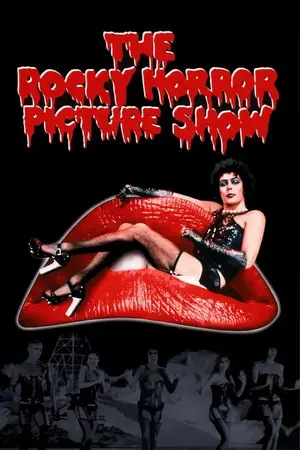
And that is the final impression. Because these people, while singing bizarre songs, are not winking at the audience saying “Hey, listen, this is nonsense!”, but they are deadly serious. They're convinced that Emilia Pérez is a high quality drama... when in reality it's nothing more than a bizarre musical, a cult movie if you will, on the same level of shock and artistic curiosity as Reefer Madness: The Movie Musical... or contender for the throne of “midnight weirdness” like The Rocky Horror Picture Show.
The difference with those two works, of course, is that those musicals were aware that they were built for fun and laughed at themselves. That's why it's so pathetic to see Selena Gomez babbling in incomprehensible Spanish while singing loudly that her fucking v****a is on fire. To foreign audiences - who read subtitles - this seems sassy and innovative; to Latin-speaking audiences, it's torture to the ears. Not only because of the horrible lyrics but also because Selena speaks Spanish like Bela Lugosi spoke English: phonetically, with the wrong accents on the words, unable to pronounce the R's strongly, since she is not a native Spanish speaker but had to take an express Spanish language course (I mean: weren't there more Latinos in the United States who could sing and dance? J-Lo, Penelope Cruz...?).
But the problem is not with the pig, but with the one who feeds it, as a popular Argentine saying goes. Instead of remaining an exotic rarity revered by 100 guys around the world, critics have elevated Emilia Pérez to the category of masterpiece, and consider it a hymn to creativity and diversity. And perhaps - and this is my guess - they are convinced that Emilia Pérez is a cultural missile of sorts that can be thrown straight in Donald Trump's face since it contains two of the subjects the ultra-conservative president hates the most: Mexicans and trans people. Not only will Trump laugh at the patheticness of the effort - and prove his point about woke culture (which may have a noble purpose but too often borders on the ridiculous and excessive to prove the worthiness of his agenda) - but the supposed two minorities the film “defends” are more than offended by the film, to the point of hating it and defenestrate it every chance they get.

To conclude: must Emilia Pérez exist? Of course!. Anyone can express whatever they want through the language of film. Then people will go to see it or simply ignore it. Is Emilia Pérez a serious work, deserving of so much critical recognition?
Of course it is not.
In any case, the biggest problem with Emilia Pérez is that its overvaluation is harmful. It takes away places from more solid films in the Oscar grid and other awards, such as Challengers or Queer, both by Luca Guadagnino (neither Best Film or Best Director) and which have LGBT themes developed in a serious way. It puts Emilia Pérez in the same category as I'm Still Here, a real-life drama about people who disappeared during the last Brazilian dictatorship. There's Karla Sofia Gascón nominated for best actress... but no Zendaya, Nicole Kidman, Tilda Swinton or Marianne Jean-Baptiste. And Emilia Pérez winning the Oscar for Best Foreign Film (and, to make matters worse, for France), I think is the biggest insult that can be done to the nation of Mexico. I honestly think the only solid nomination Emilia Pérez has is Zoe Saldaña for Best Supporting Actress, as she brings a brutal energy to the role... but any of the other nominated actresses are on par or have a superior performance.
It is impossible to deny that Emilia Pérez is a cultural phenomenon - for a question of love or hate of the film -, even if one does not agree with the movie. The awards won and her nomination is historic. Add to that the recent scandal of the appearance of Karla Sofía Gascón's old racist tweets (doesn't Netflix have anyone from Public Relations who has investigated the past of the people they are going to pitch to a massive Oscar nomination?) and we have the whole show - at least the news generates a minimum of empathy for Gascón, since I don't believe in the existence of untouchable and perfect icons, those immaculate heralds who only have neat words to say all the time -. And if Emilia Pérez wins, even if it is in one of the categories, we will all remember Ricky Gervais' speech at the Golden Globes 2020 edition: “So if you do win an award tonight, don't use it as a platform to make a political speech. You're in no position to lecture the public about anything. You know nothing about the real world. “... just to quote the least offensive part of Gervais' speech at the time, much more stark, offensive ... and extremely realistic.










Comments 36
Show 1 replies
It's too bad to be real... but it is!