Arthur Jensen and the cosmology of the business world (Network, 1976)
General Reviews
“You have meddled with the primal forces of nature, Mr. Beale, and I won't have it!” (Arthur Jensen)
Network (1976) is a film of powerful speeches. Its characters do not feel like human beings but rather like talking heads created by screenwriter Paddy Chayefsky to fire off acid remarks about journalism, the media, and the ferocity of the corporate world. One finds the amoral and cynical businesswoman (Faye Dunaway) who is only excited by ratings and audience share statistics; the mature journalist (William Holden) who knows that his time is over and who has now embarked on a desperate autumn romance with the least suitable person on the planet; and the shy and trembling old-school anchorman (Peter Finch), who, before committing suicide, has had an epiphany and suddenly become a television pastor who spews the secret truths of the world of power before an audience that reveres him in an almost religious way.
Of course, with such a high-quality script, powerful performances abound... as do Oscar nominations. Peter Finch shines as Howard Beale, and it's one of those cursed roles where the intensity of the character ends up devouring the actor - Finch would die of a heart attack before the Academy Awards ceremony, and he would be the first actor to win an Oscar posthumously (and the parallels with Heath Ledger are impossible for me to ignore) -. Faye Dunaway would triumph as Best Actress; and, right under everyone's noses, Beatrice Straight would take home the award for Best Supporting Actress for a role lasting just a few minutes... which are so devastating that they leave the entire audience in tears (she plays the wife of William Holden's character, who has anticipated that her husband is going to leave her for a younger woman - destroying a decades-long marriage - and in a mixture of fury, pride, and deep love, she ends up giving him her blessing, but not before warning him that this affair will be fleeting and Holden will end up very hurt).
But, of course, Ned Beatty's performance stands out among this stellar cast. We remember Beatty from tons of questionable comedies - 1941!; Thunderpants! - but we forget the huge, risky roles he has played throughout his career, starting with the good-natured guy who is abused by the rednecks in the brutal Deliverance. And here, in a brilliant example of casting against type, he abandons his clumsy or good-natured roles for a moment to become a business tycoon, a corporate shark whose life is being complicated by Beale / Finch's speeches as he attempts to sell his television network to the Arabs. A role that would fit like a glove for some over-the-top actor with stellar qualities, such as George C. Scott in Patton or Jack Nicholson in A Few Good Men.
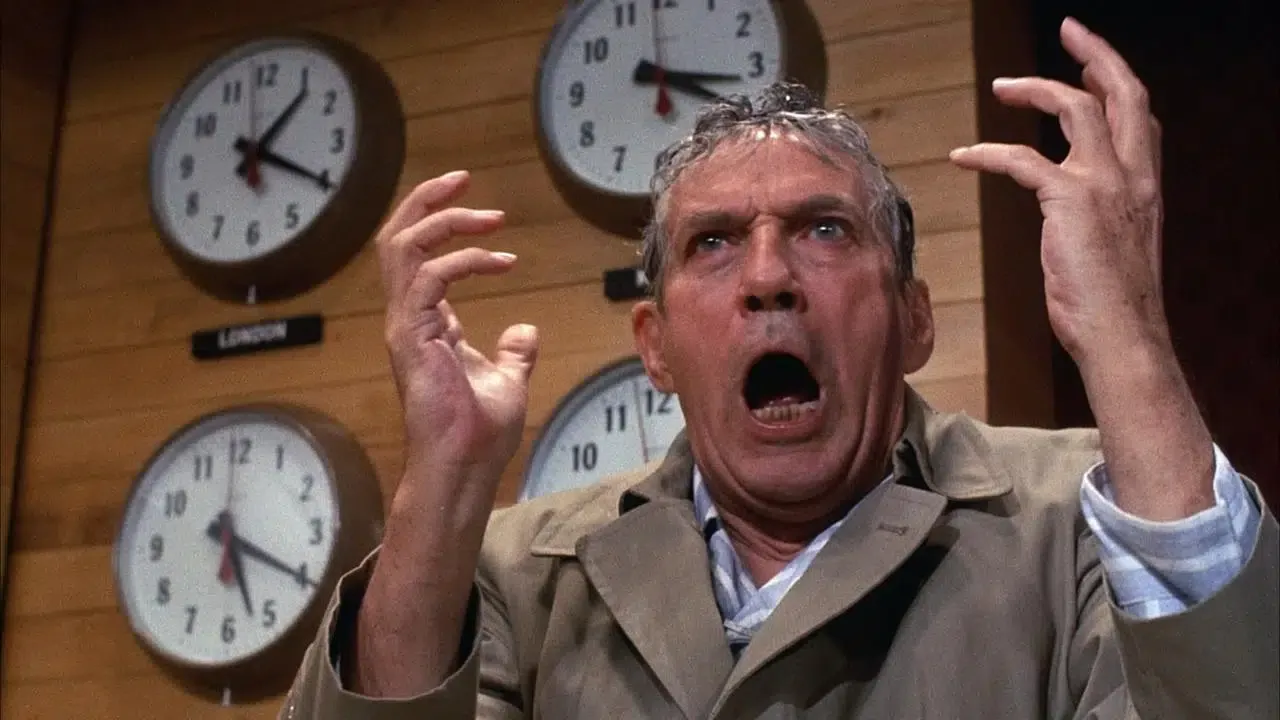
But this is the most brilliant moment of Beatty's career; and he only needs five minutes on screen to absorb all the air the audience breathes and deliver one of the most memorable speeches in cinema.
Because if Howard Beale is the prophet of the new truth - illuminating the masses with his evangelical television speeches - Beatty's Arthur Jensen is simply God, who has come down from the mountain to rebuke his shepherd and give him a new gospel.
Now we are in a huge conference room and the confident Beale - who has only encountered admiration and affection from the public, as well as being a television phenomenon who breaks ratings records with every broadcast of his show - sits at one end of the table, believing that the head of the UBS network is simply going to give him a huge pat on the back for his impeccable work in opening the minds of Americans in these times of despair and cynicism.
But nothing could be further from the truth!. Because Jensen has a mission, and that is to show Beale how the world works from the heights of corporate leadership. It is a brutal discourse because it breaks down one cultural barrier after another: there are no enemies, there is no politics... there is no United States, no Soviet Union, no Arab world: there are only business interests. Corporations are the ones who control the world's destiny, and they speak the universal language of money. And corporations are managed by a naturally balanced ecosystem, where every loss is offset by a gain elsewhere. And when Beale's nationalism comes out - saying that UBS is going to fall into Arab hands, the ultimate sacrilege since the nation has been in crisis since 1973, when OPEC raised oil prices, increased the cost of living, and turned Arab nations into economic superpowers capable of acquiring everything on the planet - it directly harms Jensen's interests, who can't wait to sell the chain to the Arabs and has been negotiating with them for months.
“We no longer live in a world of nations and ideologies, Mr. Beale. The world is a college of corporations, inexorably determined by the immutable bylaws of business. The world is a business, Mr. Beale. It has been since man crawled out of the slime. And our children will live, Mr. Beale, to see that... perfect world... in which there's no war or famine, oppression or brutality. One vast and ecumenical holding company, for whom all men will work to serve a common profit, in which all men will hold a share of stock. All necessities provided, all anxieties tranquilized, all boredom amused.”
Having spoken the word of his new God, Jensen approaches Beale, puts his hand on his shoulder, and assigns him the sacred task of spreading his gospel.
“Why me?” asks Beale.
“Because you're on television, dummy,” replies an exultant Jensen.
Of course, it's an admirable speech and an unforgettable performance. The image of Beatty screaming his cosmological vision of business like a man possessed is as powerful as the memorable “I'm as mad as hell and I'm not going to take this anymore!” that Finch roared an hour earlier in the same film.
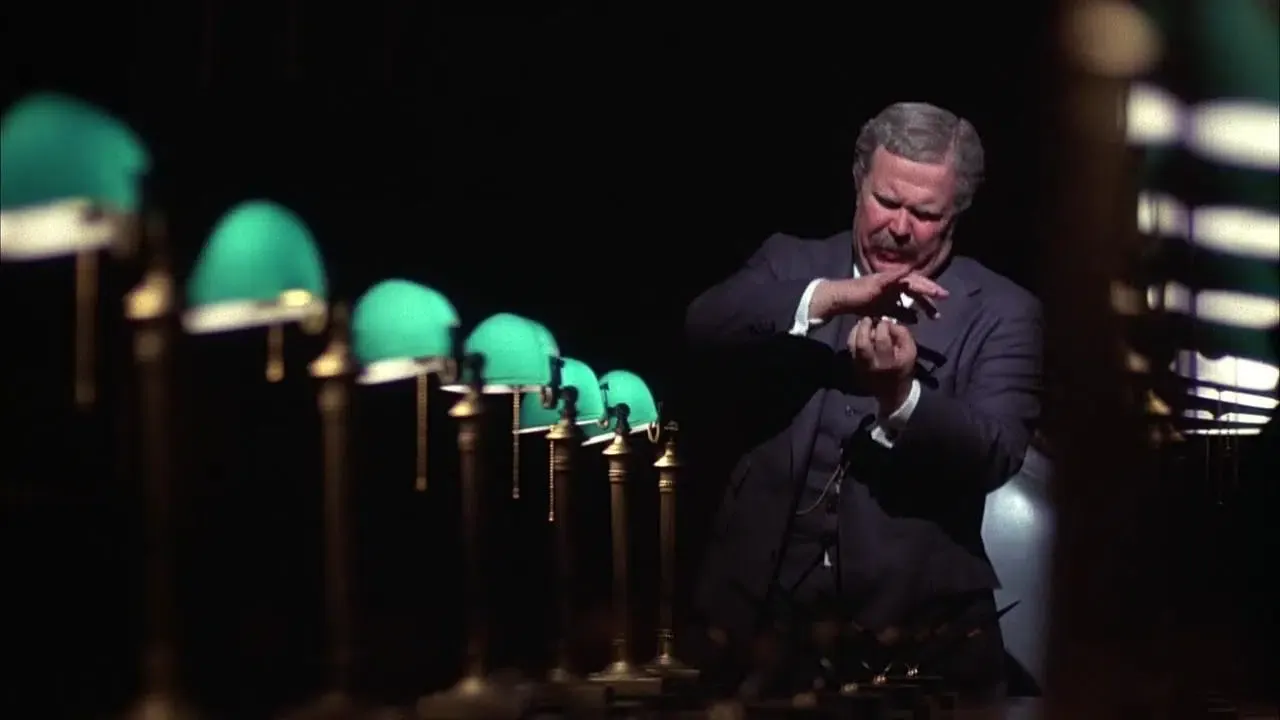
There's no mystery as to why Beatty didn't win the Oscar. The 1977 Academy Awards were a Roman circus fought to the death by giants, including Network, Rocky, Taxi Driver, and All the President's Men (wow, what a brutal year for cinema!). And in a year when journalism took center stage (especially after Watergate), Jason Robards won the statuette for his role as Ben Bradlee in All the President's Men. Beatty was left empty-handed.
Network is one of my favorite films, and the themes it deals with anticipate the future of the media with astonishing accuracy. Even today, it wouldn't be too hard to see how Paddy Chayefsky's script could be adapted to the present day - UBS would be a multimedia network; Arthur Jensen, a tech and social media mogul; and Howard Beale could even be seen as an influencer... the mad prophet of cyberspace -. The drama here is finding other monsters who can fill the iconic roles of Finch, Beatty, Dunaway, and Holden. The latest theatrical version of the play - for which I would have paid anything to attend one of its performances! - found a more than worthy successor of Finch in Bryan Cranston, a delightful overactor if ever there was one.
But... where will we find another Arthur Jensen of Ned Beatty's caliber?






Comments 2