Conclave for necessary changes
Recommendations
When reality surpasses fiction.
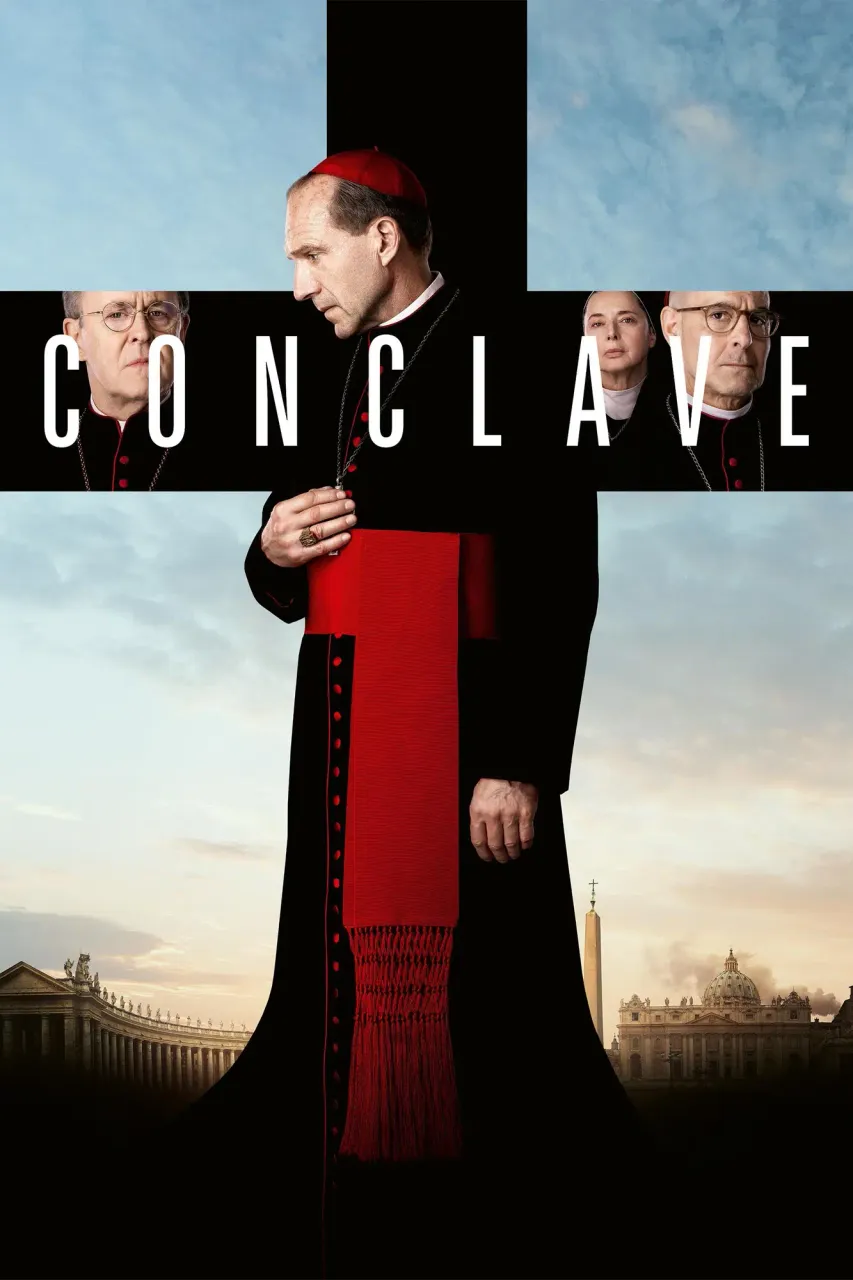
Among all the repertoire of premieres that 2024 has left us, which have not been few, I dare to highlight as a profoundly necessary film the work Conclave (2024), released in the United States on October 25 of the recently culminated year, and whose development was in charge of the Direction of Edward Berger, who proved to know how to manage well with just $20M budget, to bring to the screen the story that the author Robert Harris would have captured in his homonymous book published in 2016, guided, surely, by the public intrigue that would have awakened the peculiar events that revolved around the Conclaves of 2005, following the death of Pope John Paul II, with which a very controversial Joseph Ratzinger was promoted to the Gestatorial Chair, and the necessary call for the election of a new Pope, after his even more boisterous abdication in 2013, resulting in the ministerial elevation of the First Latin American Pope – and rightly so, an Argentine – Jorge Mario Bergoglio, in the hope that his reformist ideas will guide the Holy See towards the necessary changes of perspective that will allow the Catholic Church to regain the path towards its reunion with a humanity that has continued to evolve on its own.

Why do I not revere them with their respective honorary credentials within the ecclesiastical hierarchy, nor consecrate them with their self-conferred papal names? To help you understand, let me turn the focus of this analysis back to the film, and join me in unpacking the technical, moral, ethical, and, of course, philosophical issues that make it the best cinematographic work of 2024.
Lights and shadows that tell the story behind the smoke of a Conclave.
Berger, previously consecrated as a director before the Academy in 2023 for his precedent work “All Quiet On The Western Front (2022)” – which won the award for Best International Film at the Oscars and its pleasing consideration for Best Adapted Screenplay – immediately renewed efforts for the development of a film that, as of January 15, is giving 12 testimonies that tell us about the masterful quality with which it has been executed, so I wouldn't be surprised if some "conspiranoic" come out to establish some absurd numerical comparison with the very foundations of the Christian Faith, but, in any case, I won't be the one to arouse your curiosity for wanting to find it? Or maybe, I already did it?

Continuing with the technical arguments that are taking Conclave to the top of the mentions among the upcoming BAFTA Awards 2025 of the British Film Academy, I offer you what in my opinion, represent the key pieces within the contextual narrative that make Conclave an authentic jewel with a “fresh film focus”, destined to give us back the taste for good cinema, renewing the hopes of not losing it as an Art among all the filmic banalities with which they have been saturating the box office, for the pure love of the money they can get from an increasingly conformist and naive public.
For those whose ear is their most acute sense, let me tell you that Conclave is one total rhythmic and sonorous praise after another, even though the pertinence in the choice of music is de facto predictable, as for the incorporation of choirs and Gregorian chants, given the context of the work itself, the impeccable handling of silences becomes the key resource that feeds its essence within the genre of psychological suspense. For my part, the play of effects that Edward Berger generated through silence, was one of the things that most attracted me to its contemplation within a cinematographic retrospective that points towards honoring the origins of the most purely artistic cinema, so if you haven't watched it yet, I recommend you do so in the most absolute environmental calm that you can.

As is well known, access to the vast majority of the facilities belonging to the Vatican is a privilege that accompanies very few under the religious dome, let alone any mortal human being without the approval of St. Peter himself, to enter with camera in hand, defiling the white purity of a cassock adorned with a script instead of a Bible, becoming this in one of the greatest challenges for the development of any film, that dares to cross the barrier of what is publicly permitted by the investitures, that guard the theological treasures of Christian doctrine, being that, in addition, the presentation of an allusive and, clearly misrepresented image, both in terms of physical facts and intangible realities within the Vatican, continues to be firmly questioned – and punished – as a vile act of pagan heresy, with multiple examples of works censured, deservedly or undeservedly, before the eyes of all.
Berger's visual sagacity, however, demonstrates the level of respect and adaptability with which his direction has matured over the years, resolving the intricacies of the scenography towards a graphic contextualization centered on shots sufficiently closed to embrace the idea of the greatness of Catholicism, in face the insignificance of what individualized human actions represent for his empire; close-ups oriented to the confrontation within the imaginary of the spectator, of the behaviors and actions that, however sacrosanct the highest representatives of the Holy See may be, do not escape the fact that they are still human at the service of their own personal intentions; and big close-ups that reveal reliable ecclesiastical details to everyone's satisfaction, including, apparently up to now, the members of the Roman Curia, and all of this, even in the very neat editing of the film, whether it was actually shot in the rooms of the Casa di Santa Marta itself and inside the Sistine Chapel, or in a very well-appointed Cinecittà studio, using a few legal shots of the “Googleable” exteriors from the Piazza San Pietro.

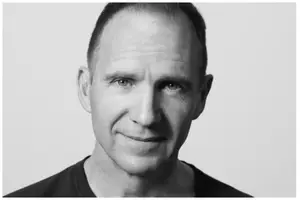
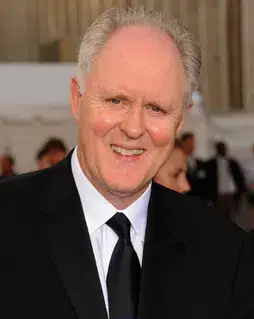
The risky bet on a cast of actors intermingling the most notorious male figures within the soberest genres through the world-famous Stanley Tucci, Ralph Fiennes, and John Lithgow, with a cast of equal relevance within a script in which each character is essential, allowing the necessary development of an exquisite physiognomic coherence through the faces of Brían F. O'Byrne, Carlos Diehz, Jacek Koman, Sergio Castellitto, Thomas Loibl, and Merab Ninidze, which in no way suggests a complacency towards the forced multi-ethnic and cultural inclusion of the new regulations that increasingly envelop cinema, but rather, but rather, it demonstrates the meticulousness in detail with which Berger directs his works, but, in case there was any doubt, the very forceful performance of Isabella Rossellini, is in charge of balances the balance, without depriving the plot of the most reliable ecclesiastical reality and the exclusions of its masculine dogma.
Now, I really come to the narrative point on which I suggest you sharpen your eye: the struggle between good and evil, subtly symbolized by means of lighting throughout the Conclave.

As I am one of those who think that making Spoilers is a discourtesy of bad taste towards those who have not yet seen the film, I limit myself to invite you to analyze for yourself the evolution of the clarity in the scenarios, and, the darkness on the characters, in an unusually deep way, and without major adjustment to the brightness on your screen, in fact, if you plan to watch it on a device that has its balance on automatic, please dispense with this utility at least for the 2 hours of its duration, I assure you that you will not regret it, discovering much more beyond what its pertinent and restrained dialogues suggest you may know, and giving you much to think about.
Human perversion even in the Divine
Now, just as one should not judge a book by its cover, neither should one judge the totality of a film by its mere technical aspects, even less so when these far surpass the few works that have preceded it within the same genre, such as “Angels and Demons (2009)”, and not to mention the other films that have competed, in this case, along with Conclave throughout 2024, to win the recognition of the public and the Academy.
The ambitious moral argument of the film - and I speak only of this one, because I confess that I have not yet read the book - confronts us head-on, with such much boldness, the necessary changes within the codes of conduct and visions of the human realities that the Catholic Church requires to continue prolonging its already very cracked religious leadership.

Beyond the judgment that each one could have formed through the lurid facts in the last decades and that involve not few members of the clergy, about the origin of the perverse moral deviations of these, as well as of the existing ecclesiastical complicity and the possibilities of reform of the foundations that “force” its members to a celibacy by “own will”, as the alleged direct responsible of these, indeed punishable, acts, Conclave presents us with an opportunity to contemplate, in a much broader sense, a potential renewal of all the limiting biases under which the church itself has judged humanity, departing from it, perhaps even from its own origins, and from its true purposes as a conciliatory entity between the needs of the care of the human spiritual component and its corresponding Divine guidance, for the prevalence of good, at least for those who are clear about the possible destinies towards which the fact of electing a new Pope directs, let us say that all this seen from the most neutral possible idiosyncratic flank, so as not to fall into rhetoric that would not lead us to anything, since my analytical intention is entirely directed towards the film and in no way towards religion and its practices.

From necessary confinement to obligatory liberation
As part of the events involved in the realization of a Conclave for the ordination of the Supreme Pontiff successor, I find particularly interesting – both in reality and the fiction that this film represents – the marked transcendence of the confinement of the Cardinals and how this event allows the ethical assessment of a politically democratic mechanism, within a dogmatic hierarchical system that differs little or nothing from any system of popular government, in which each candidate uses everything possible and necessary to sell himself as the best option; except for the fact that in the Papal case, the people have not been delimited by geographical boundaries, nor does have any option to participate, except for the waits patient for a Fumata Bianca coming out of the chimney.

This cloister contemplated as a preventive measure, however, has bilateral repercussions about which, at least I, had never heard or seen anyone dissertation on these, let alone in such a conscious way as the theme has been developed among the edges of the plot of Conclave, leading the viewer to question even socially less valued ecclesiastical details, This daring approach can be considered a “Fresh film Focus” that renews the power of works that, through fiction, respectfully present us with the opportunity to think freely about facts and circumstances much more real than what we are capable to see in our daily lives.
Let me know in the comments if you, like me, also fully enjoy a film that forces you to think. 💡

Conclave of a biology “by” God
On the other hand, an unpredictable outcome, that presents itself as half criticism, half reaffirmation, of the ideological transformations, cultural biases, and axes of discrimination on which the necessary changes towards which humanity is directed as an increasingly globalized society revolve; is offered to us as a fair balance for philosophical analysis, on ways how in which a balance in terms of inclusion could perfectly be reached.

In this sense, Conclave ends up locating on one side the scientific foundations; the biological evolution; the technocratic development; and the “worldly” realities, as well as everything that would have been inquisitively seen by Catholicism – as a reflection of itself, any other religion and societies themselves – while in the other, it poses the need to renew the Faith, through a vision that opens space, at the right hand of God, also for the Faith that we should cultivate in ourselves; the evolution of the foundations on which the Catholic Church is built, contemplated from the very values it should share with and for humanity; and the reflection of its own actions as an institution, through the representations of the various sins and virtues in each of the possible candidates to carry the Anello del Pescatore.
As a final point that I cannot avoid emphasizing about this magnificent work – which in case you have not yet seen it, I hope I have awakened your desire to do so – is the way in which Berger managed – I reiterate with deep respect – to expose both sides of this balance as inherent aspects and, for the first time, totally inalienable to the human condition, giving us a reflective jewel that would deserve to be talked about for a long time and in all languages, so as not to forget that, we have reached the point in our human history where we must begin to question our true purpose in this world, beyond the positions, titles and names with which we adorn ourselves.

💝 Thank you for having accompanied me this far and for having endured such a complex presentation, I hope you enjoyed the reading and that it provided you with new perspectives for a more nourishing understanding of this great film! 💝
🌟 Other articles to keep thinking about cinema in Spanish:
Genialidad disléxica en el Silencio ✅
Marvel: La Evolución de un Universo sin Stan Lee ✅




Comments 29