The Wild Robot Review - DreamWorks Builds an Effective and Emotional Family Film #TIFF2024
General Reviews
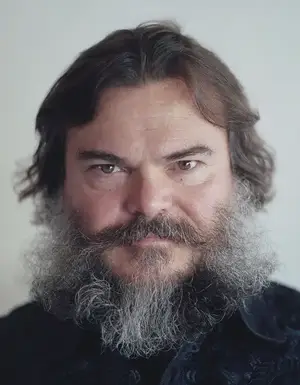
“Each year I do one DreamWorks project, then I take all the money to the Oscars and bet it on Pixar.” - Jack Black, 2009 Academy Awards.
That quote was part of a pre-planned bit, but there was some truth to it. The previous year, Black had starred in DreamWork’s Kung Fu Panda, and though the film was nominated for best animated feature, it indeed lost to Pixar’s Wall-E. The subtext of Black’s joke was clear: DreamWorks made commercial family movies, and Pixar made good ones.
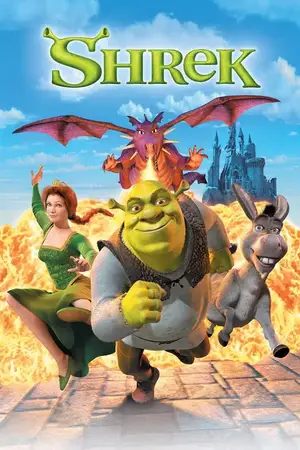
Considering DreamWorks Animation’s origins, this was a strange place to end up. Founded in part by Steven Speilberg and ex-Disney exec Jeffrey Katzenberg, the studio was supposed to be a more mature alternative to Disney Animation. For a while, it delivered on that promise. The 90’s saw DreamWorks release a series of risky, more adult oriented animated films, including The Prince of Egypt, a critically acclaimed retelling of the passover story. People forget this, but DreamWorks’ second foray into computer animation - the original Shrek - was also a critical darling, even competing for the Palme d’Or at the Cannes Film Festival.
After the critical and commercial success of Shrek, DreamWorks sought to replicate it, and doubled down on some of its most obnoxious qualities. The studio’s 2000’s output saw an emphasis on celebrity voice actors, pop-culture references, and a smug, self-referential tone. Just seven years after Shrek went to Cannes, DreamWorks was already considered a commercial sellout in comparison to Pixar’s cinematic visionaries.
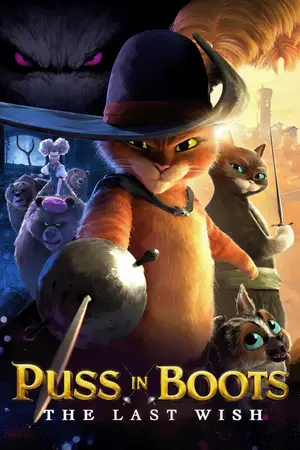
That image has remained, even if it isn’t entirely fair. DreamWorks has released a number of good movies in the years since Black’s joke - including How to Train Your Dragon and the improbably strong Puss in Boots: The Last Wish. Even still, a DreamWorks movie garnering buzz at the Toronto International Film Festival feels like some sort of glitch in the matrix.
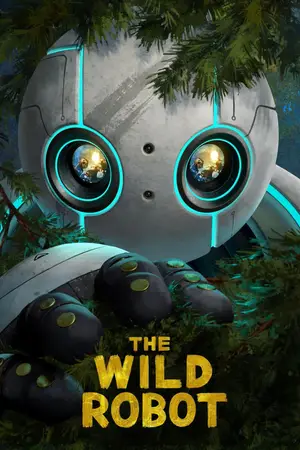
Which brings us to The Wild Robot. The film hits wide release in a few weeks, and everything about its marketing feels like a targeted message to the studio’s fans: “guys, we made a real movie again!”
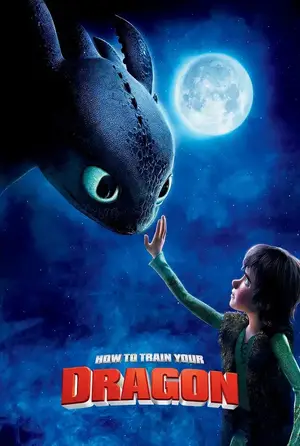
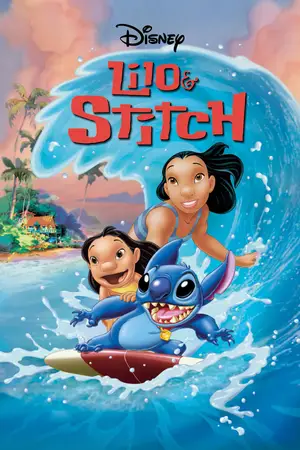
First is the involvement of director Chris Saunders. With co-director Dean DeBlois, (credited as an executive producer on The Wild Robot), Saunders directed How to Train Your Dragon and Lilo & Stitch, both beloved by Gen Z animation fans. There’s visual signifiers too. The Wild Robot also bears hints of the sketchy, cel-shaded animation style popularized by Spider-Man: Into the Spider-Verse, which in recent years has become a signifier that a mainstream animated movie will have value for adult audiences.

Early reactions to The Wild Robot were overwhelmingly positive, but I remained skeptical. Some critics my age tend to get hyperbolic when mainstream animation studios do anything slightly above their usual standard, and after seeing the film I remain unconvinced that it’s a masterpiece. Even still, I have to admit it; folks, they made a real movie again.
That real movie follows ROZZUM 7134, later known as Roz, a robot crash landed on a remote island. Roz is designed to serve human customers, and struggles to adapt to her forest environment. A violent encounter with a bear leads Roz to accidentally crush a nest of birds, and she discovers a single egg is the sole survivor. As Roz learns to communicate with the animal inhabitants of the island, a quirk in her programming makes the protection of the egg into her prime directive.
With the help of a slick fox named Fink, Roz sets out to raise the baby goose, (who she names Britghtbill), until he’s strong enough to leave the island and fly south for the winter.
The Wild Robot’s opening scenes are frantic, and I worried the movie would remain in the breakneck pace of so many modern family films. Luckily, things eventually slow down, and in retrospect the chaotic early scenes reflect Roz’s unease in her new environment.
Still, it’s in the middle section that the movie really comes alive. There’s a lovely, shaggy nature to the scenes where Roz first explores the island. These scenes are borderline episodic - a stark contrast to the fast pace and overplotted nature of so many mainstream Hollywood films. At their best, these scenes reminded me of Disney’s Jungle Book, as Roz meets a series of memorable side characters in quick succession.
While the scenes appear slight at first, many of them are setting up important payoffs later, some funny, and some genuinely moving. The movie builds to an effective emotional climax early in its runtime, and I was sort of puzzled by what could come next, but I think this is a structural quirk of the adaptation. A bombastic adventure sequence follows a bit later, and I can see the change of gears rubbing certain audience members the wrong way.
The shift is worth it however, as it is not only exciting in its own right but also brings the movie’s themes to a head. Both the film's overt parenting metaphor and some darker environmental ideas bubbling underneath. The third act not only slyly confirms the bleak backstory of the movie’s setting, but also presents a stirring sequence of community coming together in the face of environmental disaster.

Speaking of dark content, I cannot imagine a Disney movie allowing this amount of on-screen animal death - despite its environmental messages, the film doesn’t pull punches in its depiction of the cruelty of nature.
Ultimately though, this is a hopeful movie for a dark time. Roz’s design, especially as moss begins to grow on her shell, harkens back to a character from Miyazaki’s Castle in the Sky. And while The Wild Robot is nowhere near as ambitious or artful as that film, its eco-anxiety justifies the reference. Under the cover of its louder parenting theme, Saunders has snuck in a clever parable - Roz’s capitalist programming is incompatible with the natural world. This is a movie about abandoning our robot hearts for something more humane, putting community care before customer service.
“Storytelling is lying adjacent” says Roz’s fox friend Fink. Yet The Wild Robot is special precisely because it wants to tell the truth - it’s one of very few mainstream films to address the climate crisis, even indirectly. The film’s most resonant scene lays out its thesis in no uncertain terms: when disaster strikes, we’ll have to learn to come together, or die alone.
In summary: This year - don’t bet it all on Pixar.






Comments 0
No comments yet.