‘Fitzcarraldo’: Being with Cinematic Ghosts in a Decaying Jungle(Part 4)
Sociocultural
Micaela Saxer was born during the long and torturous filming of Werner Herzog’s movie “Fitzcarraldo.” Now, she and her father, Walter Saxer, who served as this film’s producer, have returned to the rainforest of Iquitos, Peru, where they run a small estate-like hotel named after the movie. After hearing many stories of the past in the jungle that houses the spirits of cinematic figures, I delved deeper into the Amazon, imagining the absurd scenes from Nobel laureate Vargas Llosa's novel “Captain Pantoja and the Special Service,”(which was inspired by this region) and appreciating the grandeur of “Fitzcarraldo” and the hardships of producing it.
(This long cinematic travel literature published in four parts. Below is the Part 4. And here is The Part 1, Part 2 and Part 3)
Decline of the Rainforest and the Endless Flow of Time
“I wanted a mission, and for my sins, they gave me one. Brought it up to me like room service.”
The travel agency’s van arrived punctually at La Casa Fitzcarraldo. As I recalled this line from the opening scene of “Apocalypse Now,” I said my goodbyes to the Saxer father-daughter duo and began my journey deep into the Amazon rainforest.

Whether it’s overnight stays at simple jungle lodges or multi-day luxury cruises, most upstream journeys start with an approximately two-hour drive along the sparse road system around Iquitos. This leads to the end of the road at the bustling river town of Nauta. From the Nauta pier, visitors will take a one-hour-long ride along the Marañón River, which is the upper section of Amazon, on either small boats covered with thatched roofs or large cruise ships, before turning south toward the Ucayali River, the Amazon’s main source. Nowadays, it is generally agreed that the Marañón River ends at its confluence with the Ucayali River, after which most cartographers label the subsequent waterway as the Amazon River. How long you’d travel on the Ucayali River depends on the location of your lodge—it can range from half an hour to half a month.
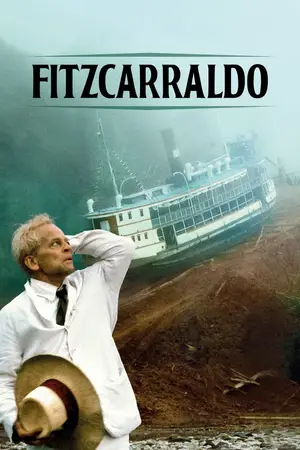
The primary events of “Fitzcarraldo” also take place in the Ucayali River basin. In the film, Fitzgerald, eager to achieve great things, sails up the Ucayali River at the suggestion of a rubber baron. He notices that the Pachitea River, a tributary of the Amazon, comes within a few hundred meters of the Ucayali River at its nearest point. This inspires his absurd idea of dragging a steamship across a narrow isthmus between the two rivers. In reality, the Pachitea River is a direct tributary of the Ucayali River, and the two rivers don’t run parallel. Their actual geographical confluence lies more than 500 kilometers south of Iquitos. Werner Herzog and his team took some creative liberties with the story. There was, indeed, a real-life figure named Carlos Fitzcarrald, who led a team, with the assistance of horses , to transport a boat overland from one river to another in the 1890s. But that boat only weighed 30 tons (as opposed to the 300-odd-ton one in the film) and was dismantled for transport before being reassembled at its destination. The mountain-crossing scenes in the film were indeed shot in what is now called the Isthmus of Fitzcarrald.

Most tourists go on rainforest expeditions to see wildlife. Tour operators that arrange for them to stay at lodges along the riverbanks usually promise the opportunity to observe, and even interact with, a wide range of animals, including monkeys, tortoises, caimans, birds, insects, snakes, dolphins, and sloths, in their itineraries. However, the guides would often make a disclaimer at the start of the trip that they’re exploring pure nature, not entering a wildlife park or watching an animal show, so their sightings along the trip depend entirely on luck. As a result, much of the time during their sail or hike through the jungle would be spent in idleness. The villages next to the lodges aren’t as primitive or isolated as one might expect. My arrival coincided with a village’s 95th-anniversary celebration. Many young people and children had returned from work in Iquitos, and thanks to the clear weather, abundant solar power enabled them to party all night to the sound of jungle techno. But the noise was so overwhelming that the village chief couldn’t arrange an Ayahuasca ceremony for the visiting tourists.

The Italian guy traveling with me, Gabriele, had to pass up his Ayahuasca experience as a result.“Ma ybe it’s for the best—less of a potential danger. I don’t have any spiritual or inner confusion to resolve; I’m just curious to know how it feels, much like taking drugs,” he admitted. Without the ceremony and having seen little wildlife aside from howler monkeys, macaws, and the Amazon pink river dolphins, we were left with seemingly endless hours of boredom in the jungle. During mealtime, I decided to show off my knowledge of jungle films to Gabriele and a group of young Europeans—none of whom had even heard of “Fitzcarraldo.” After all, the appeal of cinema as a form of entertainment has declined, much like the vast rainforest that continues to lose its territories. “Italians made a whole bunch of outrageously disgusting cannibal films set in the Amazon back in the 1970s and 1980s. They became a unique subgenre of horror films,” I explained, hoping to expand their cinematic knowledge. Gabriele vowed to find and watch some of them when we returned to the “civilized world” with internet access.
I couldn’t help but wonder if my knowledge flex had offended our indigenous guide, Ouri. Leveraging on his background as a former paratrooper in the Air Force, I steered the conversation further. “I’ve just started reading Mario Vargas Llosa’s ‘Captain Pantoja and the Special Service.’ I watched the movie adaptation a while ago—it was equally great. You’ve probably had similar experiences related to the military’s special services, right?”

Ouri chuckled and changed the subject. “I’ve worked on something similar—I assisted in the production of and provided knowledge for a jungle survival reality show.” He pulled out his phone and showed me a video of one of the hosts being treated for a snakebite. “It’s all real, you know. Let’s hope I won’t have to use my survival skills for our upcoming jungle hike,” Ouri joked.
Aside from getting bitten relentlessly by vicious mosquitoes, we encountered no danger. Lying in a hammock, I continued reading “Captain Pantoja and the Special Service ”while swaying to the rhythm of the village’s broadcast:
“Good evening, dear listeners! Once again, I am speaking to you through the shaky radio waves of Amazon Radio, the largest broadcasting station in the eastern Peruvian city of Iquitos, which is nestled in the midst of this vast green forest and dubbed the Pearl of the Amazon. To the men of this cosmopolitan city, the tribal women taking their first steps toward civilization, the prosperous merchants, the humble farmers in the remote Tahuampa region, and all those who work hard for the progress of our untamable Amazon region, the following is a friendly, entertaining, confidential, and highly debatable 30-minute broadcast…”






Comments 0
No comments yet.