School of Rock is Surprisingly Deep
General Reviews
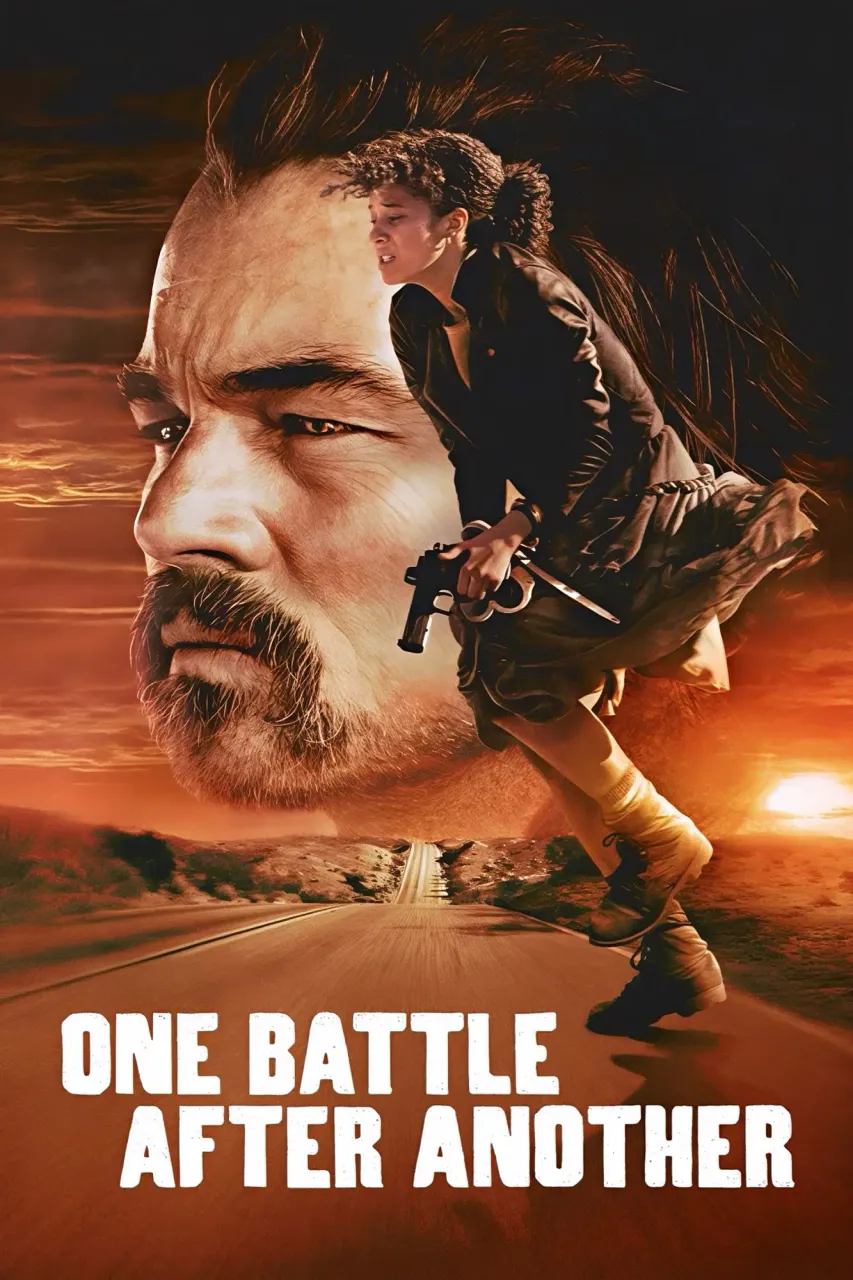
Extra-curricular cinema is one of my favourite sub-genres. The first article I ever wrote for Peliplat was about a scene in Didi (2024) where Chris Wang (Izaac Wang) signs up for a school club. Best Picture winner One Battle After Another is extracurricular cinema. Willa (Chase Infinitii) thrives in karate classes after school, and Sensei Sergio (Benecio Del Toro) is the film’s unsung hero. Today, I’m here to talk about a lighter movie- one about extra-curricular activities as a way to stick it to the man- the man who all too often does not want to fund them.
That film is School of Rock (2003). It follows an aspiring rock star, Dewey Finn (Jack Black), who gets kicked out of his band. Short on rent, he adopts the identity of his roommate to take a substitute teaching gig at a private school. When he discovers the kids in the class possess musical talent, he creates a band with them so they can enter the Battle of the Bands. He dedicates the entire school day to rock history, rock appreciation, and band practice. Over time, the kids open up to Dewey about their personal problems. Dewey nurtures their talents. Eventually, he gets caught. He gets kicked out of the prep school. The kids track him down so the band can perform in the Battle of the Bands. They don’t win, but they get called onstage for an encore. The epilogue shows that Dewey founds an after-school program called School of Rock, dedicated to music education and, for experienced members, band practice. Richard Linklater directed the film.
Richard Linklater was born in Houston. As a teen, he played high school football and baseball and won a Scholastic Art and Writing Award. He is someone who took advantage of and benefitted from extracurricular activities in his youth. Many of his movies pay tribute to a Texas upbringing. School of Rock is his most commercial film, grossing over $100 million at the box office. He is decidedly not a political filmmaker. He likes to play with time. He doesn’t make time-travel movies or movies with non-linear narratives. He instead offers a more realistic examination of the passage of time. He does not, however, make movies with social messages.
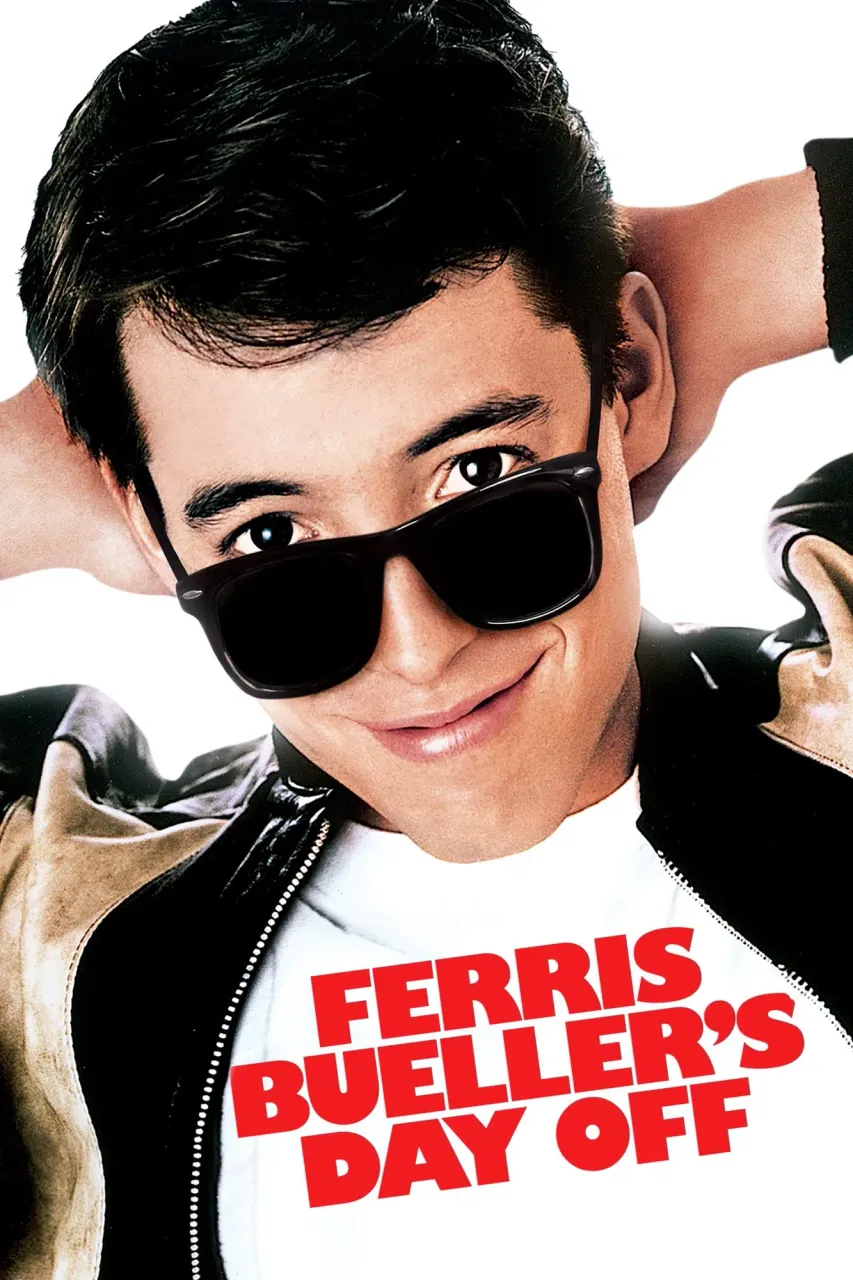
Much of Richard Linklater’s best work involves capturing a vibe and building an ensemble cast to match that vibe. I think of that painting, A Sunday on La Grande Jatte. You know, the one that Ferris and friends go look at in the Chicago Art Museum in Ferris Bueller’s Day Off (1986). The painting depicts a busy promenade on a sunny day. I grew up in the Great Lakes region. I know many such places. Cameron (Alan Ruck) zones in on a single crowd member’s indistinct face in the painting. Rapid edits show increasingly close-up shots of Cameron’s face and the crowd member’s face. That painting is how I picture a Linklater ensemble cast. Cameron’s journey with a single painted figure is how I picture a vignette with a Linklater character.
Richard Linklater released two movies in 2025- Blue Moon and Nouvelle Vague. I have not seen the latter as Netflix has not released it in Canada yet. Blue Moon captures a single 1943 night in a Manhattan bar as creative circles intertwine. It feels like the end of something. We, the audience, know that World War II will end in a couple years. We also know that the film’s events mark the beginning of the end of Lorenz Hart and Rodger Hammerstein’s playwriting partnership. We know Lorenz Hart has six months to live. In contrast, we see seeds planted for what will define the arts in the post-war era. E.B. White gets the idea for Stuart Little, a young Steven Sondheim studies musical theatre. It is a phoenix rising from the ashes story. It is also a vibe.
While Blue Moon pays tribute to high art in the early and mid-20th century, School of Rock pays tribute to the rock music of the century’s last quarter. The film is anachronistic. Dewey Finn laments that MTV represents “the man” appropriating rock music. MTV was two decades old in 2003. Dewey Finn would have grown up watching it. Much of the film’s soundtrack is songs released over twenty years prior. There is a longing for a time when it felt like real change could happen, if it ever existed.
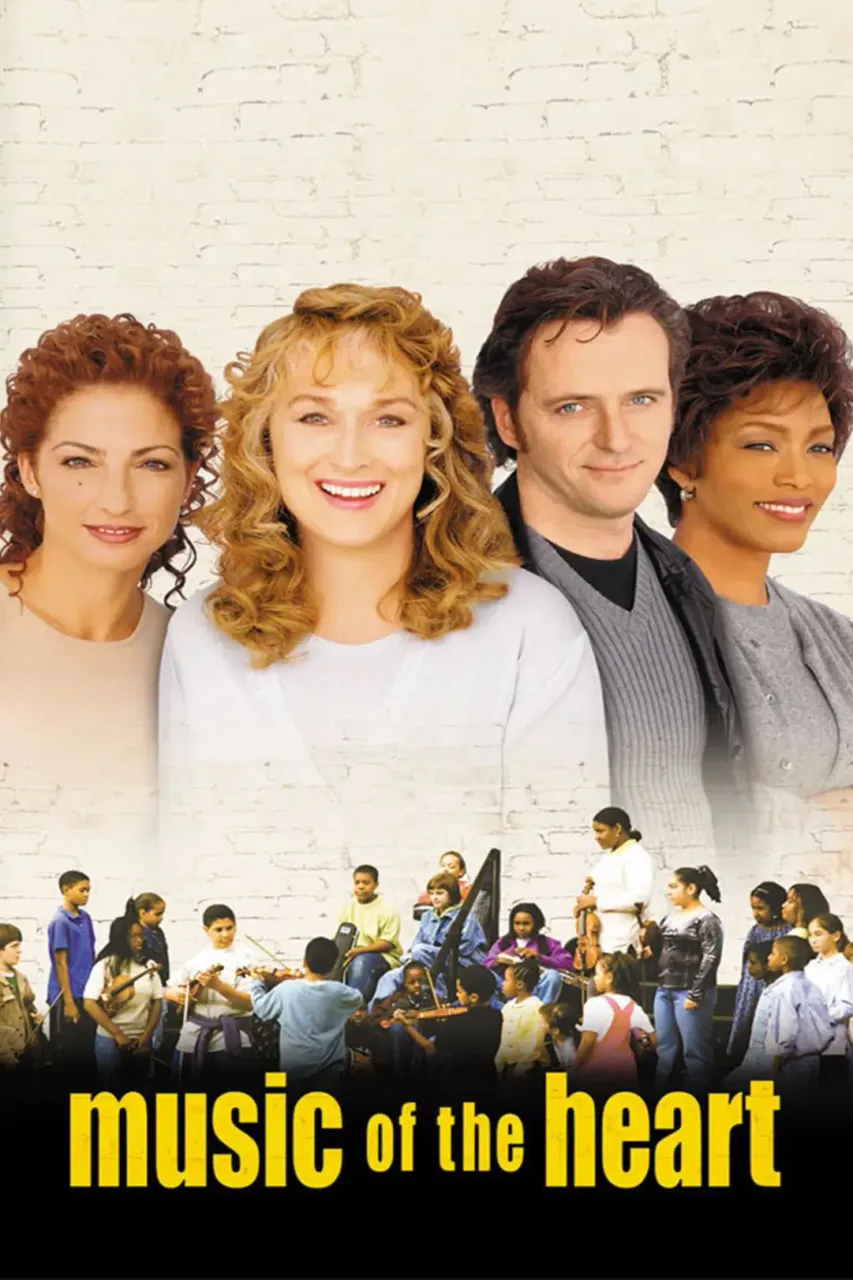
The film can be contrasted with 1999’s Music of the Heart. That film follows violinist Roberta Guasparri (Meryl Streep) as she launches a violin program at an inner-city school in New York City. I discovered this movie when I was fifteen, mainly because I was on a Culkin brothers kick at the time (Kieran Culkin has a small role as Roberta Guasparri’s teenage son in the film). I found it inspiring. I now realize that it’s a white savior movie, but I still consider it a guilty pleasure. There are comforting aspects to it. The feel-good story and Wes Craven’s grainy, warm lighting make me feel like I’m in my middle school’s music classroom. It was a dull yellow-beige room, covered in monochrome posters of dead composers and The Beatles, barely lit by a string of multicoloured Christmas lights. That classroom is stuck in a permanent December for me. I switched school boards for high school. At fifteen, Music of the Heart took me back to my roots. I missed them.
Both films end with kids performing music at iconic venues. I sort of wonder if Richard Linklater and screenwriter Mike White intended to respond to Music of the Heart when they conceived School of Rock. I mean, it’s unlikely, but cool to think about. They swap violins for electric guitars. They squash the white savior narrative. Both Linklater and White are straight white men. It’s not their place to solve racism. They know their lane. They built a diverse cast, including numerous kids of colour, for School of Rock and told a story about the power of extra-curricular activities that doesn’t bite off more than it can chew.
School of Rock has a better hold on our collective memory than Music of the Heart or similar films like Dangerous Minds. Music of the Heart is the movie that played in your classroom on a TV that was rolled in on a cart. School of Rock is the movie you caught on YTV on a sick day. There’s a cool factor there.
School of Rock is not a movie without flaw. It has some problematic jokes. Perhaps more importantly, it offers an uncritical look at the private school system (and parents who presumably use school vouchers). That said, I doubt many kids watch School of Rock and see privileged private school kids. If anything, they might pity them for having to wear uniforms. They will probably try to locate a kid who is like themselves.
I admit, Miranda Cosgrove’s character in this movie makes me wince. It has nothing to do with Cosgrove herself. The character is a high-strung, try-hard little white girl who auditions for a singing role, but lacks the pipes. I felt personally attacked. Like, shut up, Mike White and Richard Linklater! I will say, upon rewatching the movie for the first time since high school, I had forgotten that the character comes up with a ploy to get School of Rock into The Battle of the Bands despite a full programme. And she didn’t even do it for the grade. I dig that representation.
I would hope some other kids feel represented in the characters of Lawrence (Robert Tsai), a pianist turned keyboardist who realizes he can be cool; Tomika (Maryam Hassan), a singer who overcomes body image issues; and Zack (Joey Gaydos Jr.), who wants to be his own person in the face of overbearing parents.
Kids in Roberta Guaspari’s violin program went on to pursue medicine and classical music. Music of the Heart makes sure you know that. School of Rock lacks such an epilogue. It only makes a case for the good extra-curricular activities can do right now. Maybe the scene that best illustrates this idea is the band practice montage scored to one of my favourite protest songs, “My Brain is Hanging Upside Down (Bonzo Goes to Bitburg)” by The Ramones. The song was written to criticize Ronald Reagan for a visit to Bitburg, Germany, where he laid a wreath at a cemetery where Nazi soldiers were buried. Over a decade earlier, as the Governor of California, Reagan slashed public school funding. It is a song about “sticking it to the man”, a phrase Dewey Finn repeats. It was never a hit outside of college radio. Its inclusion feels deliberate. Maybe Linklater can get political.
School of Rock paints an aspirational picture of what a well-funded school can look like. Yes, its subjects are private school students. Dewey Finn only discovers his students have musical talent in the first place because their prep school offers band class. Many schools don’t. Still, a lot of powerful people who make decisions about schools- trustees, PTA members, and every citizen with a vote- would have taken their kids to see School of Rock in 2003. (I miss post-credit fourth wall breaks that address the audience in the movie theatre, by the way. Shout out to Ferris Bueller and School of Rock.) The idea of a rock music after-school program feels like a fantasy, one that likely appealed to boomer and Gen X parents in 2003. These folks might have been convinced. The inclusion of “Bonzo Goes to Bitburg” screams, “Hey, look what we could have if not for the Republican Party”. Sometimes, revolutionary ideas in come in conventional packages.

Sources:
The Cutting Edge The Educational Legacy of Ronald Reagan by Gary K. Clabaugh pages 256-257
Wikimedia Foundation. Bonzo Goes to Bitburg. Wikipedia. https://en.wikipedia.org/wiki/Bonzo_Goes_to_Bitburg
Wikimedia Foundation. Richard Linklater. Wikipedia. https://en.wikipedia.org/wiki/Richard_Linklater
Other Films Referenced:















Comments 5