The Mount Rushmore of Non-Christmas Songs in Christmas Movies
General Reviews
As a kid, there were certain movies I would rewatch all the time, primarily because I wanted to hear the songs in them. It’s well established that kids do this with Disney movies (“Let it goooo. Let it goooo”), but I was just as, if not more, intrigued by the pre-existing songs licensed for my favourite movies. I grew up during the transition from VHS to DVD. YouTube wasn’t a thing yet. It was hard to get songs on demand, especially as a kid. I had Disney compilation CDs full of songs from classic and Renaissance-era Disney movies. I had the Lilo & Stitch soundtrack, blending traditional Hawaiian music with Elvis. I had the Shrek and Shrek 2 soundtracks, both full of great songs spanning decades. I wanted more.
Say what you want about Daddy Day Care (2003) as a movie, but its soundtrack was highly formative for seven-year-old me- Katrina and the Waves, The Jackson Five, Cheap Trick. I asked my parents several times to rent the VHS from Blockbuster, largely because I wanted to hear the songs. Cheaper by the Dozen (2003) was another favourite- Sum 41, Simple Plan, Tom Cochrane. Cheaper by the Dozen, while not a Christmas movie, ends with the Baker family having Christmas dinner. “Rocking Around the Christmas Tree” plays.
Christmas has historically been a time for resurrecting old songs, often ones older than anything you’ll hear on your local classic rock station. Really, when else do you hear Bing Crosby in 2025? The Christmas music catalogue is versatile, but finite. Sometimes a movie comes along that adopts a non-holiday song for a Christmas movie. That song takes on a new meaning. It becomes a musical Die Hard- an honourary entry into the canon. This season, I’ve taken on the task of drafting the top four honourary Christmas needle drops in cinema.
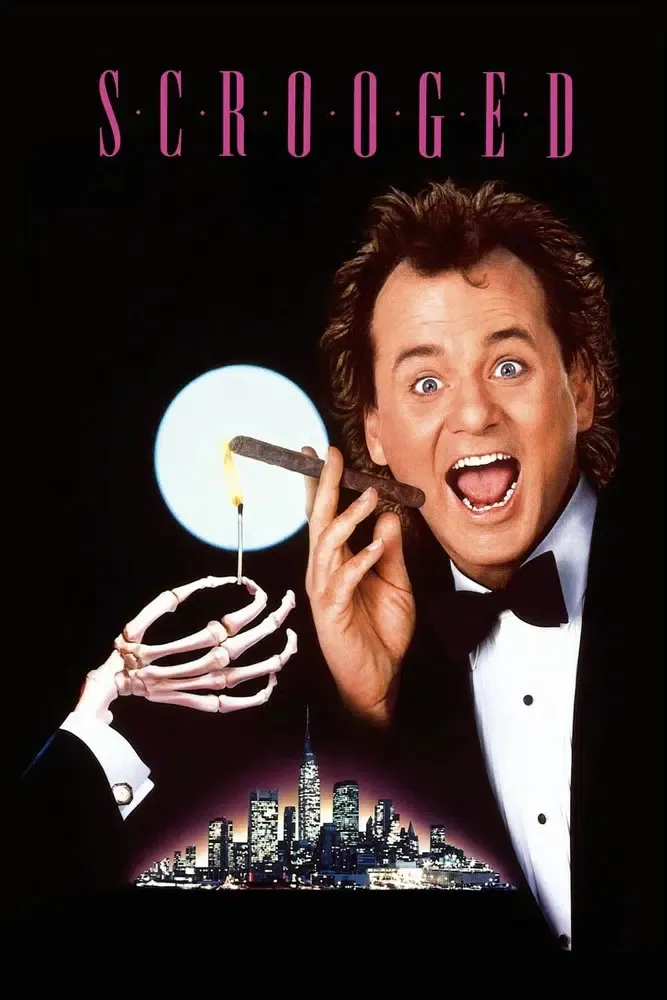
- “Put A Little Love in Your Heart”- Al Green & Annie Lennox from Scrooged (1988) Genre: Pop
This oft-covered song began its life as a Jackie DeShannon hit from 1969. I tend to associate that era with loud, angry rock music- anti-Vietnam War sentiment, the sexual revolution, social change. DeShannon’s track, while softer, offers a message for the revolution- practice radical kindness. You see, it’s getting late, oh please don’t hesitate, put a little love in your heart, urges that it’s never too late to turn things around. This idea has been tied to Christmas for nearly two centuries. A Christmas Carol, first published in 1836, tells the story of a selfish old man learning to change his ways later in life. In 1988, director Richard Donner adapted Dickens’s longtime public domain novel for the modern day. He set it in the office of a New York City television station and cast Bill Murray in the role of the cold and cynical station president who gets visited by three ghosts on Christmas Eve.

I admit, I don’t care much for this movie. It has its moments, but the humor style is not my thing. I prefer the humor in another Bill Murray movie, Groundhog Day (1993). I like to think of Groundhog Day as being in the tradition of A Christmas Carol, and I do think that the work Murray does in Scrooged helped prepare him for that later, more iconic movie.
I do love the version of “Put A Little Love in Your Heart” that appears in Scrooged. It was performed by Al Green and Annie Lennox and recorded specifically for the movie. I love every version of the song, but Al Green’s influence infuses it with R&B Soul vibes that reveal a sensibility in the song that remained hidden for nearly two decades. The song first appears in the movie when The Ghost of Christmas Present drops in on Grace (Alfre Woodard), Bill Murray’s character’s assistant, who is struggling financially (the Bob Cratchit analogue). The song plays on the small TV in Grace’s kitchen. The film ends with the TV station crew and audience singing the song on the annual Christmas broadcast.
I likely have Scrooged to thank for paving the way for Mary Mary’s cover of “Put A Little Love in Your Heart” that plays during the opening credits of Stuart Little 2 (2002). Really, like the other turn-of-the-millennium kids’ movies that were formative for my music taste, the Stuart Little movies had great soundtracks as well. I should revisit them.
2. “Mr. Brightside”- The Killers from The Holiday (2006) Genre: Rock
This one’s for the adults who don’t quite fit in on Christmas. English journalist Iris (Kate Winslet) and Los Angeles movie marketing pro Amanda (Cameron Diaz) struggle in their romantic lives as Christmas approaches. They need a getaway. They connect on a house-swapping website in the days before Airbnb and decide to trade places for the holidays. Iris enjoys her SoCal vacation. Amanda is less hot about cottage life in Surrey. Instead of exploring England, she holes herself up in Iris’s cottage for the night. She pours some red wine, puts on a white sweater that puts the Knives Out one to shame, and rocks out to “Mr. Brightside”.
Today, “Mr. Brightside” is sometimes considered the song of the first decade of the twenty-first century. In ten or twenty years, it will likely replace “American Pie” as the song suburban parents sing in the backyard after dinner at summer barbeques on Labour Day weekend. Maybe it already has. When first released in 2003, however, it was more of a middling hit. The lyrics mirror the plot of The Holiday- your ex has moved on. You haven’t. What now? The Holiday predicted it would become an iconic song to belt while tipsy.
Who among us hasn’t had a terrible day where the only remedy is dancing to a song you love more than you might admit? Those nights come up a lot during the holidays. If you’re feeling stressed with last-minute planning or shopping, remember “Mr. Brightside” and The Holiday.

3. “Invisible”- Zara Larsson from Klaus (2019) Genre: Ballad
I grew up with ballads written for Christmas movies. “Where Are You Christmas?” from How The Grinch Stole Christmas (2000), “When Christmas Comes to Town” and “Believe” from The Polar Express (2004) all played a rotation in my school choirs’ setlists at the elementary, middle, and high school levels. As a kid, I thought these songs were heartwarming and profound. Now, I find them generic.
“Invisible” is my least favourite song on this list. I adore Klaus. It’s a movie I wish I had as a kid. It offers explanations for different components of the Santa myth. I grew up watching The Santa Clause (1994). That movie has a similar premise, but its script is written like a children’s fantasy novel. Worldbuilding is woven into the explanations for Santa. Charlie (Eric Lloyd) describes “some sort of time continuum that breaks down when Santa’s in the sleigh” as an explanation for how Santa visits houses all over the world in one night. Klaus’s explanations are more mundane. They feel like old-timey legends, preserved for a museum. The film’s humor style is reminiscent of the Disney masterpiece The Emperor’s New Groove, but Klaus has more heart than that film.

“Invisible” first plays at the height of Jesper’s redemption arc. The modern pop sound doesn’t fit the film’s old-timey Nordic setting. Unlike many ballads written for other family movies, this one is not diegetic or sung by a character in the story. That’s why I’ll count it as a needle drop, despite the song being written for the movie. The lyrics are about how great kindness is, even when it’s invisible. I was an adult when Klaus released. I don’t know if this track has made its way into our nation’s music classrooms yet, but it does have a great message for kids. Let them find enjoyment in it. They can make fun of its generic lyrics and melody when they’re grown.

4. “Crying, Laughing, Loving, Lying”- Labi Siffre from The Holdovers (2023) Genre: Folk
Like The Holiday, this one’s for the adults-and the kids forced to grow up too fast-who don’t quite fit in at Christmastime. The film explores class, race, grief, depression, and a desire to break the cycle. The three leads each carry an acerbic wit that they use to mask their pain.
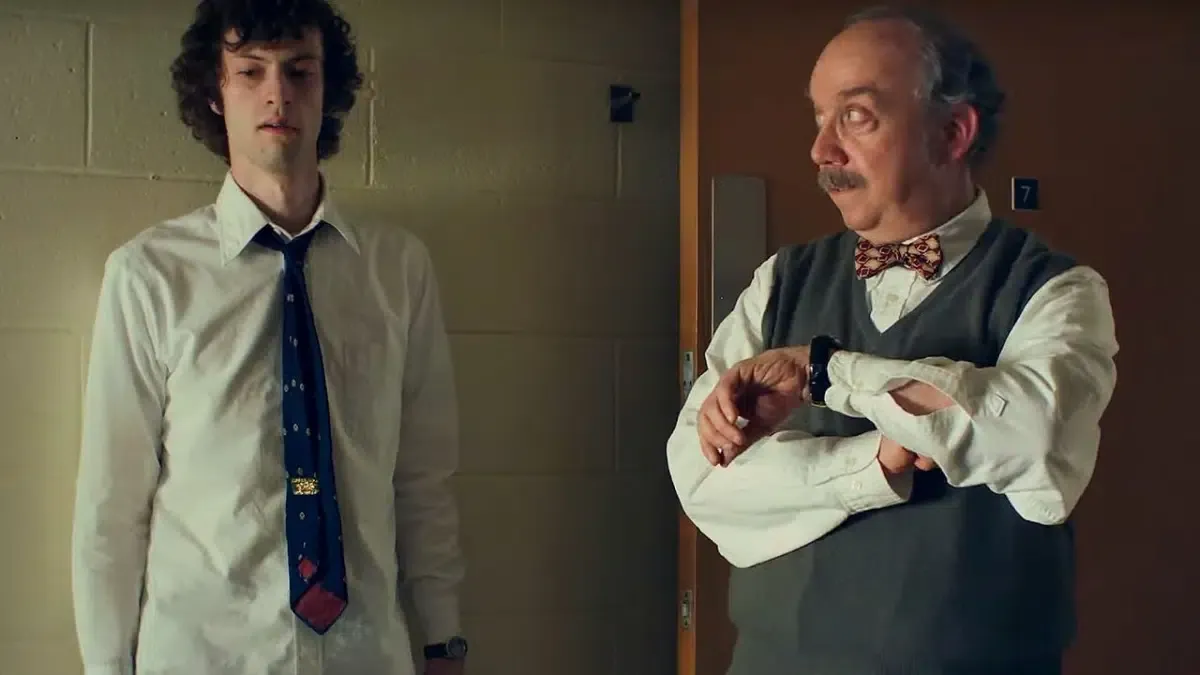
“Crying, Laughing, Loving, Lying” plays twice in The Holdovers: once when Angus (Dominic Sessa) wanders Barton Academy in the dead of night and once in the final scene as Paul (Paul Giamatti) drives away from the school for the last time. Its lyrics are like dialogue from a therapy session. The narrator tries to make sense of their behavior and how they process emotions. It fits a film about three broken hearts and the journey to healing.
“Crying, Laughing, Loving, Lying” released in 1972, a year later than when The Holdovers takes place. It creates the impression that The Holdovers is a memory. I like to think that the film takes place in the mind of Paul or Angus in the years after the events depicted, as they reflect on a two-week period that changed their life.









Comments 2