The Emerald Fennell Problem
Directing
I think I’m thinking about Emerald Fennell too much. Even ten days after seeing Wuthering Heights, she’s still occupying an embarrassing amount of mental real estate. It’s kind of humiliating devoting this much thought to a filmmaker whose work I fundamentally don’t respect. It’s borderline parasocial. But my fixation isn't really about Emerald Fennell herself, but the meaning that’s accrued around her.

When a woman wins, she becomes representative. There aren’t enough female filmmakers at the top for Fennell’s success to live in a vacuum. With an Oscar, strong box office numbers, and now a major adaptation under her belt, Fennell has become the industry’s example of what a successful, “daring” female filmmaker looks like.
I’m detting the vest.
I believe women should be allowed to make mid films. Men do it every damn day. But we’re not there yet. Hollywood is not a meritocracy. Women are not afforded the same margin for mediocrity that men are. So with Emerald as the contemporary gold-standard, the poster-child for successful female filmmaking, the work she’s putting out really fucking matters.
I am a Female. I am a Writer. I would love to be a Female Filmmaker one day when I decide to start trying. So, yeah, I pay attention to who gets awarded in that space. I pay attention to who wins Best Original Screenplay, to who gets a blank check, to who gets to have wide theatre releases. To see Fennell’s career ascent the way it has feels personal. But envy alone doesn’t sustain this level of irritation, something else is off.

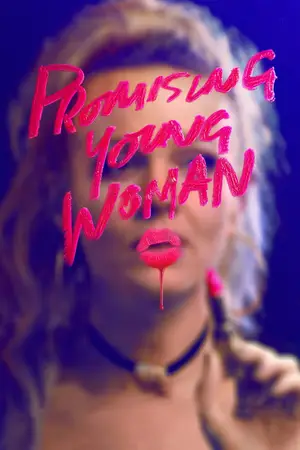
It started with Promising Young Woman, a film I detest with my entire being. I hate it because it packaged itself as a daring, pastel-coated female vengeance story—something I would very much be into—but what it delivered was actually something deeply conservative.
Now for this next part, you can imagine steam coming out of my ears as I write.
Emerald, you do not get to construct a revenge fantasy around systemic sexual violence, around institutions that fail women, around men who commit or enable assault, and then conclude it by restoring faith in those same systems. You do not get to preach moral lessons to would-be rapists and call that vengeance. You do not get to sacrifice your protagonist and then leave justice to the police. But you did! And you won a fucking Oscar for it.
Emerald packages trauma in millennial pink and calls it radical feminism. Did I miss the part in the rad-fem manifesto where it says to always fall back on men? Because that is literally the lesson of Promising Young Woman. The film’s core message is that men will learn a lesson from female sacrifice, and that is incredibly irresponsible, stupid, and anti-feminist.

Anyone writing a sexual assault revenge fantasy needs to understand that victims are owed catharsis that the justice system is historically incapable of giving. The only answer is a clear one: kill your rapist. (In movies. I do not condone murder.)
Compare it to something like Ms. 45 by Abel Ferrara. It’s exploitative and absolutely problematic, sure. Made by a man. And yet it is still more inherently feminist than Promising Young Woman. At least it understands that if the system fails you, the narrative cannot politely restore it at the end.

The only rationale that lets me sleep at night is that Fennell’s brand of feminism is the only one that Hollywood is comfortable with—which isn’t actually feminism at all, but old-fashioned moralism. Rebellion that never destabilizes anything. Safe enough to reward but ‘bold’ enough to get a pat on the back because it’s a woman’s story after all.
So that was her first offence.
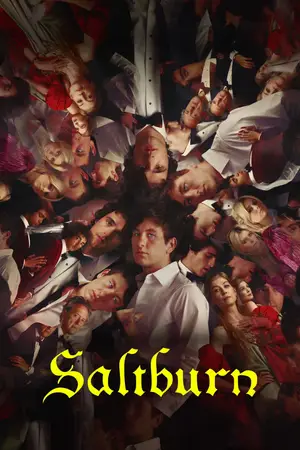
Then came Saltburn, the prude’s idea of perverse. Of all Fennell’s films, I like this one the most. It committed to excess in a way that PYW never did, so I’ll give her that. My main qualm with it is that no matter how nasty and depraved Fennell thought she was being, none of it meant anything.

And for the record, I love transgression. I am a Von Trier defender, a Haneke lover. I don’t clutch pearls at the sight of bodily fluids. And I don’t think Saltburn needed to go further; it just needed to go deeper. Every attempt at provocation felt hollow, like engineered for discourse rather than driven by the character’s psyche.
And then, as if afraid we might misinterpret its perversion, the film explains itself. The final monologue spoon-feeds us the thesis, flattening whatever ambiguity the film might have had. It doesn’t trust the audience. It doesn’t even trust itself.
I honestly believe Fennell thinks she’s some crazy sicko. Please. She’s about as weird as any other Facebook-using, Colleen Hoover-reading wine-mom.

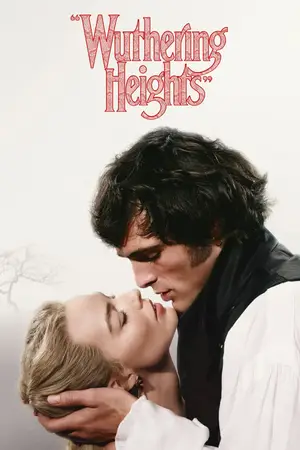
As Wuthering Heights arrived, I lowered the bar accordingly. Fine. If depth is off the table, at least give me chaotic, smutty, unhinged romance between two hot people. That felt achievable.
Instead, I sat through another Fennell flop. I didn’t even feel outraged this time. Just a sour feeling of boredom and whatever the opposite of horny is.
And for the record, I never read the novel. I have no allegiance to Bronte. In fact, I’m all for artistic liberty in adaptations. Change the title. Change the characters. Call it “Love Triangle in the Moors.” It would still be inert.

We live in a sexless society. Shock is purely a visual aesthetic now, not emotional. It’s an extreme close-up of runny egg yolks. Slug slime on a window. Aggressively kneading dough. All of those things sound way more sensual as written words than on screen.
How did the twisted mind behind Saltburn come up with something so puritanical?
And, you know, fine, they never show full hog, I can live with that. I don’t even need to see explicit sex for this to work. But I do need to believe they actually want each other. The chemistry between Robbie and Elordi felt lobotomized. "Come undone,” the slogan promised. The only thing coming undone were my hopes for modern feminism.

The engine of this kind of love story is youthful folly. Young people discovering their sexuality and making catastrophic decisions in the name of love. That is what creates tension in drama and tragedy. Watching two fully grown adult movie stars learn tonsil-hockey in the rain does not create emotional volatility.

The scariest part of all of this is how deeply this movie is resonating with millennial women everywhere. The bar is subterranean. Fennell’s brand of vapid, girl-boss feminism ‘dares’ to pose the questions like: What if the corset hurts…but she likes it? What if repression was empowering? What if white symbolized purity and black symbolized sin?
It makes Poor Things look like Barry Lyndon.

How does that quote go, “once is an accident, twice is a coincidence, three times is a pattern?” We’re at three, Fennell, and there’s no benefit of the doubt left to extend. At a certain point, you stop assuming miscalculation and start recognizing authorship. The pattern that emerged is clear: a fundamental misunderstanding of what makes moral ambiguity compelling.
Fennell knows how to write characters that behave badly. She can signal obsession, dysfunction, perversion, etc. But behaviour does not equal interiority. Being unlikeable isn’t enough, you have to understand what makes someone unlikeable. Emerald doesn’t.
And much to my chagrin, Hollywood keeps rewarding it. Three films. Three tidal waves of buzz, prestige, discourse, praise, awards. Cultural coronation. That’s where my irritation stops being personal. Emerald Fennell doesn’t make female filmmakers look shallow on her own. The industry does that when it elevates her as the model—the proof that provocative, female-driven storytelling is alive and well. When this becomes that standard, the margin narrows. It becomes harder to argue for risk that actually risks something.
I don’t think Fennell should stop directing. Her visual eye is far more interesting than most right now. But she needs to retire the pen. Maybe then I’ll stop thinking about her.




Comments 9