'Lucid' and What's Behind the Door | A Conversation with Deanna Milligan and Ramsey Fendall
Directing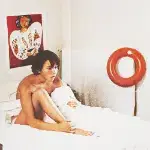
An art student struggles to create an authentic self-portrait. Every attempt feels depersonalized and detached. To make something honest, she'll need to knock down a few walls, open a few doors, and fight off a few monsters.
Does that resonate with you? Struggling through the creative process because it requires facing parts of yourself you'd rather avoid? If not—first of all, congratulations—then how does a psychedelic art-punk romp shot on Super 8 sound?
Luckily, Lucid has it all.

Beneath the candy-coloured aesthetics, trippy dreamscapes, and grungy milieu, Lucid is a story about creative paralysis. Not the typically romanticized writer's block kind where the protagonist keeps ripping up pages from his typewriter. I'm talking about the kind of block where the only way out is through a messy yet complete excavation of past traumas, repressed memories, and deeply ingrained core beliefs about yourself.
It's a theme that filmmakers Deanna Milligan and Ramsey Fendall understand intimately. As we discussed the origins of Lucid, its handmade world, and its distinctly Vancouver Island sensibilities, a parallel kept emerging. Just like Mia, the film's main character (portrayed extraordinarily by Caitlin Acken Taylor), they found themselves repeatedly confronting obstacles that called for deeper self-examination.
So, let's step through the door.
Tell me about the process of adapting the short film Lucid into the feature. Was it always the goal for it to be a feature?
Deanna: No! In fact, I really resisted that at first, because I felt that the concept of the short—Mia discovering that her love language is the beautiful grotesque, that she loves things that are gross and accepts that about herself— felt like only enough for a short.
Ramsey: There was a period where we were going to say goodbye to Lucid and start working on another project. Then there were two things that happened. At the time we were talking to filmmaker Guy Maddin and he said, “Well, you guys have this cool short called Lucid, why don't you just make that into a feature? You guys have a house, why don't you just make it in your house?” The wheels starting turning. The other thing was that we were invited to go to the shorts to features program at Fantasia Festival, which was a huge thing. Lucid was fighting its way back to us. There, we really had to develop the script and refine the idea. We had to pitch to a room of producers, and we got this smackdown saying “I don't see the point of your story.” We had to retool and recalibrate everything, but it was the tough love that we needed. Then we came out of it and we really understood the story as a result.

The theme of familial trauma causing creative blocks is so fascinating to me. I've never seen it in a movie, but it's probably true to most artists' lives and creative processes. I really felt like you had a very deep understanding of what you were trying to say, even in these very abstracted, surreal ways.
Deanna: It's weird because we knew that we were doing a film about facing these creative blocks and critical voices, and that we'd be speaking directly to them, so Ramsey and I kept trying to listen. When it would pop up for us, we would actually try to hear it and ask what voice is that? Where is it coming from and who is it? Sometimes it's actually a voice from your life, but weirdly, sometimes it's quite monstrous. It was really interesting and I feel like it's still teaching us. We're still uncovering a lot of it. I do know now from going through this whole process that those blocks are gems. You need to go and look at those sticky blocks because there is so much good stuff in there for you as an artist. It's really kind of scary, but when you're creating, you're constantly coming up to these doors just like Mia. It's vulnerable and it feels awful at first, but you have to open them and see what's in there. Because even if you don't address or solve everything, you have to look at it and accept it all as being part of yourself. And that takes courage.
It's a wild subject but there is 100% a reward on the other side of the door. So if you open it, you're blessed with all this like amazing, juicy stuff that is yours to claim. It's real. Lucid is real.
Do you think that artists need to suffer in order to make good art?
Deanna: I thought about that so much when we were filming and it was such a big part of my life as a young actor. A lot of the inspiration that we had for the art class scenes, for me, was these acting classes I took in the 90s that were all about suffering. Now, what I really think is, life is suffering, and that we need to accept that. There's good and bad, shadow and light, and to accept all of it is to be an artist. To accept what you have as being your toolkit because you earned it. My pain is what brought me Lucid, and that connects me to people like you and that makes me feel good, you know? So this is healing me. This is alchemy.
Ramsey: There's definitely the trope of the suffering artist and it easily becomes a self indulgent thing; suffering for suffering's sake. I would think for an artist that's suffering for suffering sake, you're gonna suffer anyway in this life, you don't need to jack it up. If you really are deeply committed to your artistic practice, if you are trying to meaningfully engage with the deeper aspects of yourself, there are gonna be moments where you feel liberated and there are gonna be moments where you experience terrible suffering. That is just part of it. And so, I think the message is, yes, you have to suffer for your art, but don't be self indulgent about it. And also don't kid yourself that there's this magical shortcut.
Deanna: That's the joke of the Lucid elixir, she thinks it's this shortcut to finding artistic fulfillment, but there is no such thing. It's not gonna do that for you, it's gonna unleash all kinds of other crazy things and there's no end to it. You scale one wall and then there are more walls after that. But it is an evolution, right? You are moving forward. You're moving through these things. Don't get just stuck in revelling in your own suffering.

What made you approach these themes with lucid dreaming and these very surreal, absurdist monsters. Why did you choose that as the vehicle?
Ramsey: We wanted the world to be stylized, and we also didn't want to make this a totally brutal kitchen sink drama. Because there is a version of this movie that could be like that. And even though we play with a few darker elements, we didn't want it to be that movie. There's a lot of those kind of "artist's process" movies where they just dissolve and then they die. We didn't wanna make a bleak movie. There's a playfulness to it that we wanted, but we also wanted it to have this authentic emotional core.
In terms of the monsters, they had to feel like they came out of Mia's psyche. There was a certain aesthetic alignment with that, to all have this incredibly handmade feel. This is Mia's world, she has art school materials and scrap piles around, so of course, that's why those monsters look like that. But for us, we were trying to play with this idea with a gardening permaculture idea of showing edges. So you can you can see when you look deeply into these monsters, you can see the edges, you can see where the puppet gloves end. If you look really closely at the chicken monster, it's Amber [who plays] Mama. She's the ultimate monster, all monsters are Mama.
I love that. All of our monsters are just our moms.

The film is mainly set in the 90s, some in the 70s. There's a lot of nostalgia for the 90s and early 2000s right now, but Lucid felt very authentic. Why did you want to set it in that time period?
We became adults in the 90s. It's sort of our love letter to the last vestige of the analog world, the old world, you know. We love that era and playing in that. Especially because Lucid is so tactile and hands on, to keep computers out of that world seems right.
That made Victoria just the perfect setting for this story, in my opinion. It did have a huge punk scene in the 90s. It also just has this macabre occult art scene. It's really perfect.
Ramsey: Totally, and it still does. There was an article years back about how Victoria was sort of the perfect place for underground culture because it was on an island and we were so cut off from everything else that you could do whatever you wanted, and there was permission to be bad at what you're doing. So you could suck and people would still show up for it. It's kind of a beautiful thing.
That spirit really inspired us for Lucid, because if you wait for everything to be sorted out, it will never happen. You need to do the thing. Do the thing, get it done, and people will come help you, or the project will develop, things will get better. But you have to start. And there's a real creative block that happens where you get hijacked and frozen and you can't do anything. You start thinking about outcomes like will I be famous? Will I be successful, will I make money? But in the Vancouver Island punk scene of the 80s and 90s, there was a this whole culture where you could not sell out. If you actually did become wealthy or famous, you were just selling out, and that was contemptible. You were betraying the counterculture if you were famous. So experiencing that atmosphere at the time really inspired the idea of Lucid.
These have all been beautiful answers. Last question, what do you hope your audience thinks or feels after they see the movie?
Deanna: I've been calling the audience lucid dreamers, because the people that connect with the film, I really believe they could change the world. There's a sense of hopelessness with a lot of people right now. But really, truly, art is the antidote. This is how people can rebel against AI and against a lot of the stuff that we're being told all the time. “You can't just go out and make a movie,” “You can't do that, you're supposed to do it this different way, you can't do it like this.” And it's like, yes, we can. We all can. And I would just hope that these audiences feel the same, that it sparks some motivation in them to go ahead and just do what they feel like they really need to do.
Ramsey: I think with art and in film in particular, there's that idea of you have to wait for permission. You don't have the money, you don't know this, you don't know that, you don't know the right camera. You're always looking for some excuse not to do the thing. What we're saying is, don't wait to do. For people that have experienced as we have, having to work through these creative blocks, these critical voices, that there is a path through it. It can be challenging, it can be maddening, but ultimately it's going to enrich your life.
People have come up to us and they've said that they finally feel seen, or they come up and they say “I am Mia.” So many people said that. And so even to acknowledge that those things exist in your psyche means that there is the possibility of getting up and over.
It really gave me that feeling. Like, I need to go make stuff. Now. I need to finally do the thing I've been wanting to do.
That's why we're doing it. We're talking to you the whole time. When Mia clocks the camera, we're looking at you.

Thank you to Deanna and Ramsey for the lovely and inspiring conversation.
Catch Lucid in theatres:
Victoria - June 10, 11
Hamilton - July 7
Toronto - July 8
Montreal - July 9, 10



Comments 3