The Most Hopeful Scene in the History of Cinema?
General Reviews
Romantic comedies inevitably reflect the cultural reality of their time.
Many conclusions can be drawn from studying romantic comedies across decades, but if there’s one constant, it’s that these films cannot connect with audiences unless they incorporate elements of daily life—aligned with the events of that year and embedded in the common situations of the decade. Ghostbusters: The Frozen Empire, released in 2024, is the latest in a series of films that treat the spiritual realm as a tangible and normalized reality. This fascinating trend began on December 25, 2020, with:
- Soul (2020, directed by Pete Docter)
- Ghostbusters: Afterlife (2021, directed by Jason Reitman)
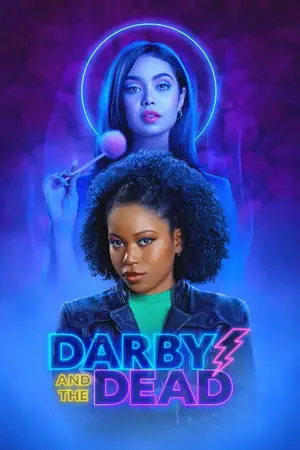
- Darby and the Dead (2022, directed by Silas Howard)
- We Have a Ghost (2023, directed by Christopher Landon)
- Ghostbusters: The Frozen Empire (2024, directed by Gil Kenan)
This series of films is characterized by expanding basic spiritual concepts and pushing them into previously unexplored territories.
- Soul shows us the immortality of spirits—ourselves without bodies—and Earth as a school.
- Ghostbusters: Afterlife normalizes interaction between the spiritual and material planes, presenting a scientific perspective on understanding the causes of these phenomena.
- Darby and the Dead portrays the everyday nature of communication with spirits, along with some basic principles of moral laws.
- We Have a Ghost dismantles the fear of spirits, placing them in a context of normalcy.
Although these elements have been explored many times in countless films, the next step—one that went largely unnoticed—deserves admiration from the audience and even from humanity as a whole.
The character Phoebe (played by McKenna Grace) participates in two of the most WTF moments in recent memory.
The first occurs when the spirit of Egon Spengler (portrayed by the late Harold Ramis) appears to help Phoebe at the end of Ghostbusters: Afterlife.
The second, fulfilling the premise of this discussion, occurs in 2024’s Ghostbusters: The Frozen Empire, which breaks the boundaries of imagination by portraying a machine capable of separating the spirit from the body on the big screen. Much like the surprise in Ghostbusters: Afterlife, the initial impression of this scene—lasting less than five minutes— is the WTF moment of 2024.
Until now, the most common relationship between technology and the spiritual world was communication.
Instrumental Transcommunication has a history of nearly 100 years, dating back to the early attempts of inventor Thomas Edison in the last century, as highlighted in the documentary Rinaldi: Instrumental Transcommunication to The Other Side (2022).

However, the idea of separating the spirit from the body using a machine has rarely been conceived, even by researchers, scientists, or the strictest literature on spirituality.
This phenomenon naturally occurs when we sleep, as the spirit leaves the body, and it was also observed in the early works of Franz Anton Mesmer with magnetism, induced somnambulism, and later hypnosis—all techniques inducing a temporary separation of the incarnated spirit.
The moment when Phoebe uses the machine to separate her spirit from her body—while assuring it was safe—is literally brain-blowing and WTF just happened...! moment.
If that wasn’t enough, the entire five-minute sequence is a masterpiece in sound design, where silence plays the leading role.

For all these reasons—and for portraying a possibility for the future, perhaps not so distant—it is, in our humble opinion, the WTF cinema moment of 2024.
God bless us all.







Comments 0
No comments yet.