"Cinema Speculation" Review: Is It the Reason Tarantino Abandoned His Film "The Movie Critic"?
Directing

Quentin Tarantino recently canceled the production of his originally planned final film, The Movie Critic. The story of his tenth movie remains undetermined.
For the past five years, the only entirely new work by Tarantino we’ve had access to is his 2022 essay collection, Cinema Speculation. Through this book, we might speculate what The Movie Critic could have been and why Tarantino canceled this project.

Cinema Speculation, a book Tarantino released during the pandemic, is hard to categorize. It is a collection of film reviews, a study of a specific period in Hollywood (1968-1981), a gathering of gossip about a small group of filmmakers, and a memoir of Tarantino’s youthful passion for cinema.
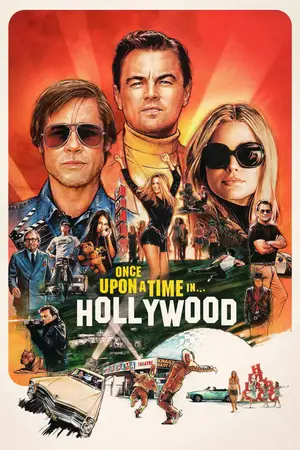
Although the book has a generic title, we should add a time frame to Tarantino’s book. Most of the movies he discusses come from the late 1960s and 1970s, coinciding with the period of his last film, Once Upon a Time in Hollywood.

Tarantino explains his reasoning for this choice—he believes that to discuss films, he must express his opinions without reservation and without lying. Doing this with contemporary films and directors would inevitably offend many colleagues, so he chose to focus on the 1970s, the period when his cinematic visions took shape.
The core concept of Cinema Speculation is very similar to Once Upon a Time in Hollywood. The word "speculation" in the title means conjecture and guessing, fitting the central premise of Once Upon: What if the Manson family murderers were stopped by the neighbors of Sharon Tate? How would Hollywood have changed? If Sharon Tate hadn’t been tragically killed, how would her husband Roman Polanski’s directing career and the ecosystem of American cinema in the 1970s have developed?

Alright, Tarantino didn’t actually extend these speculations in the film; he ended the story at the moment when the good guys defeated the bad guys. But in Cinema Speculation, Tarantino seriously pondered these "What If" questions:
If Polanski hadn’t experienced such a tragedy, would Brian De Palma have still become the “new Hitchcock” of Hollywood?
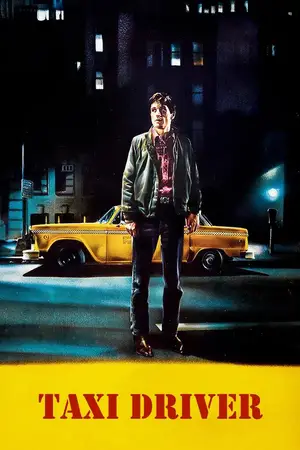
And if he hadn’t seen the genre film throne left vacant by Polanski and pursued it vigorously, would he have accepted the script for Taxi Driver (which he rejected in reality) and transformed it into a completely different version from Scorsese’s?
Similar speculations abound in Tarantino’s new book. For instance, although he loves the Vietnam veteran revenge film Rolling Thunder (1977), he fully compares Paul Schrader’s original script, Heywood Gould’s adaptation, and John Flynn’s final film version, leading him to ask: If Schrader’s script had been filmed, would the result still be the same as the existing Rolling Thunder? Which version would be better?

Other times, he speculates on how different casting choices, different endings, and different media feedback could have affected a specific movie or even the larger film history.
For example—if Jeff Bridges had starred in Taxi Driver, or if Al Pacino and Robert De Niro had accepted the offer to star in Stallone’s directorial debut Paradise Alley, how would these films have turned out?
What If De Niro’s character in Heat hadn’t chosen revenge in the last 15 minutes but had stuck to his professional principles and escaped?

If Kevin Thomas, the B-movie-loving critic from the Los Angeles Times, didn’t exist, and Tarantino hadn’t noticed Robert Forster’s performance in Alligator through Thomas’ article, how different would Tarantino’s film Jackie Brown be without Forster?
In these senses, Cinema Speculation feels like a sequel to Once Upon. Once Upon ends at the moment when the timeline diverges, while Cinema Speculation explores the butterfly effects in these parallel universes, imagining Hollywood in ways completely different from reality.

In terms of emotional expression, Cinema Speculation is also consistent with Once Upon. The tenderness for actors, stuntmen, special effects guys and directors in Once Upon is all present in Cinema Speculation:
When he describes character actor Burt Reynolds facing challenges head-on in Deliverance and showing his masculine smile;
When he mourns the passing of Daisy Miller star Barry Brown, contemplating the mercilessness of death and the futility of life;
When he praises Ali MacGraw’s performance in The Getaway, calling it the soul of the entire movie;
When he laments Stallone’s waste of his directing talents, expressing regret that “if only Stallone could love a movie like he loved Paradise Alley once again.”
Tarantino even dedicates a chapter ("Second-String Samurai: An Appreciation of Kevin Thomas") to a relatively obscure film critic, simply because of Kevin Thomas’s love for movies. If we extend our imagination from this chapter to the ultimately abandoned Tarantino film The Movie Critic, it’s hard to imagine the core of this film not being about a film lover’s obsession with movies. It’s also hard to imagine the film not expressing the tenderness towards all the filmmakers. It’s still hard to imagine Tarantino not recreating the Hollywood of the 1970s, where his cinephile personality was shaped, through fictional means.

The question is, Tarantino has already achieved these goals twice: first in the film Once Upon, then in the essay collection Cinema Speculation.
So, does he really need to do the same thing a third time?
I highly doubt it.
And this might also be the reason Tarantino himself abandoned the project.
Tarantino is a child of cinema. In a way, all his films are about film itself, and his entire creative drive comes from his love for cinema.
However, in recent years, his love for cinema has become somewhat overly explicit. We all love to see "love letters to cinema," but sometimes, shooting a great story, with superb craftsmanship, and bringing joy to the audience is itself the best love letter to cinema.
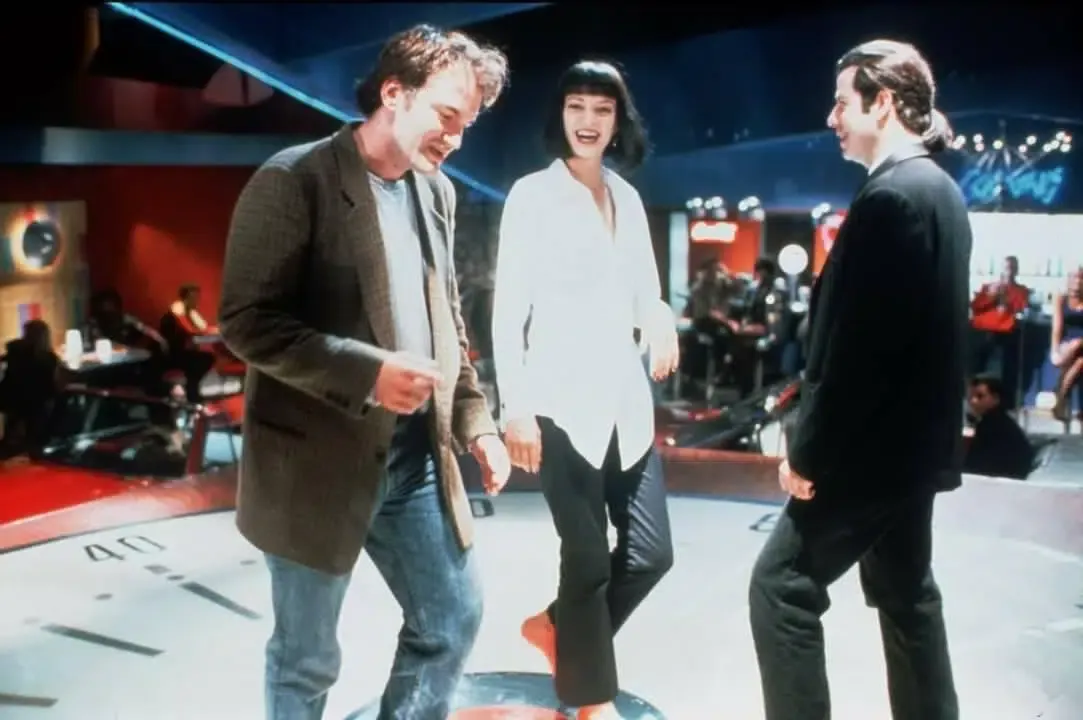
This is something Tarantino understood when making Pulp Fiction and even Jackie Brown. We don’t need Tarantino to consciously sum up his career with a film (that can be left to documentaries). We need him to bring back the joy we felt the first time we watched Pulp Fiction.




Comments 0
No comments yet.