The contemporaneity of architectural terror: "Backrooms" and the labyrinth of late modernity
Sociocultural
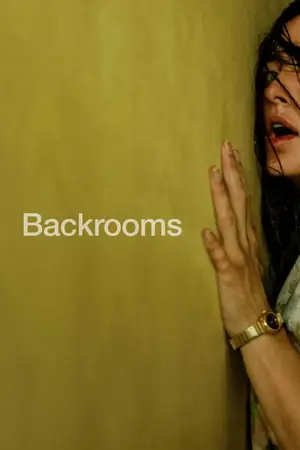
In 2022, YouTuber and recently minted director Kane Parsons released his debut feature, Backrooms, a horror film produced by A24 that not only revolutionized the genre with its low-fi aesthetic and fragmented narrative, but also captured with surgical precision the existential angst of our time. Produced on a modest budget but with a visual intelligence that adapts to the aesthetic criteria by which we came to know creepypasta, Parsons' work transcends commercial entertainment, transforming his film into a psychological exploration of the loneliness, anonymity, and spatial disorientation that characterize contemporary life. What makes Backrooms memorable is not its cheap scares or practical effects, but its ability to transform the monotony of office spaces, endless corridors, and waiting rooms into settings of profound and reflective terror. It is, in essence, the most accomplished cinematic exploration of what we might call the "architectural horror" of our time.

The contemporary nature of architectural horror merges the industrial design of the organizational monotony of office spaces, the digital scenery of video games, and the transitional spaces—or "non-places"—of spaces designed for mass gatherings. This horror stems from an individual perspective through which we dreamily interact with spatiality via video games, while this same individuality is absorbed into the anonymity of mass gatherings in real life within those same industrially designed spaces.
Here, an existential loop is formed, with an unresolved question, triggered by the awareness of the space—or mold—in which we are contained. Indeed, in classical literature, we find the exploration of architectural horror through abandoned castles and Gothic mansions, which evoke a past ignored by the protagonist and haunted by the persistent nostalgia of its ghosts. Meanwhile, Backrooms becomes the empty shell of our present civilization, and we, the ghosts who inhabit it, are trapped in an eternal, unresolved transition, unable to realize or fulfill the dreams and promises of our time.


Just as abandoned castles have their immediate reference in historical events, these liminal spaces take their reference point from abandoned shopping malls in the United States. It is important to point out this particularity, since the Latin American public—and Argentinians in particular—is unaware of the material basis of the North American public that gives rise to the sensationalism and dissemination of these narratives, turning us into mere recipients of foreign myths. The gradual abandonment of commercial spaces, driven by a trend toward individualistic consumption through streaming platforms and digital commerce, has transformed the former social infrastructure into the current "forests" inhabited by the ghostly nostalgia of an era never lived, which we inhabit in a mixture of myths, dreams, and memories.

A striking aspect of the film Backrooms is its faithful reproduction of ambient sound, described as "government funding," which aims to convey tranquility amidst a stressful and anxiety-inducing experience. Alongside the absence of shadows and the aesthetic monotony—which, while aesthetically set in the 1990s, is curiously paralleled with contemporary minimalism, where the marketing of houses and apartments is done with an aesthetic identical to a doctor's office, with lighting that eliminates all shadows. This has been replicated not only in housing but also in the minimalist aesthetic of logos, web design, and the visual construction of films with a distinctly "Netflix" style that stylizes details to "save" on outlines—including narratives—and, ultimately, on the very ideas they revolve around.
Another noteworthy element is the exploitation of secondary phobias in the horror genre, which become the central focus of the story. Such is the case with kenopsia, the phobia experienced in the presence of large, empty spaces that would normally be crowded. This phobia was experienced on a massive scale during the COVID-19 pandemic in 2020-2022, coinciding with the peak of the dissemination of stories and accounts on digital forums. While experiencing the anxiety of empty places—wide avenues, busy shopping streets, and abandoned buildings—we were exposed to an exploited discomfort that, on a psychological level, justified the retreat into our own "public" privacy of digital avatars.


While the cultural industry was paralyzed by travel restrictions, digital sedentary lifestyles gave structure to the cultural hearths of postmodernity, cultivating perceptions that reacted to the "new normal," from the political—with the current experience suffered in Argentina and deepened in the United States and Europe—to the cultural, with the rise of "indie" or independent horror, which interprets the stories and video games of the virtual community into profitable blockbusters. Reality is no longer the origin of fiction; rather, fiction itself feeds on interpretations of what we believe to be real. Falling into a digital ouroboros, we find ourselves facing the question of what we can reflect on, if we suffer narratives—or "shadows" in the cave—instead of reality itself, which we can modify.
This leads us to the introspective pinnacle of Backrooms: spaces not pre-existing, but rather the consequence of the memories of those who inhabit them. Just as modernity marked a process of adapting spaces and objects to the mass commercial demands placed upon them, postmodernity is the cultural outcome of that process. The inability to create or imagine based on spontaneous interaction with reality, instead reducing it to a speculative calculation of pre-existing emotions, transforms lived experience into a permanent memory of the unexperienced, exposing us only to the terror of the spatial emptiness of what was never inhabited, turning life itself into an infinite Backroom.

Are we the entity or the visitor? The answer will depend on how much we accept the lack of control we have over what has been made of our lives, and on our capacity to escape the labyrinth of white lights they want us to inhabit.
If these reflections on terror, architecture, and the digital void resonate with you, I invite you to continue exploring these ideas on my Instagram account https://www.instagram.com/joshualent26/ . There, I share analyses, excerpts, and discussions to continue deconstructing together the spaces (real and virtual) that inhabit us. See you on the other side of the screen.



Comments 2