THE ONLY OPTION. And the mirage of the American dream on the Korean peninsula. Part 1
Sociocultural
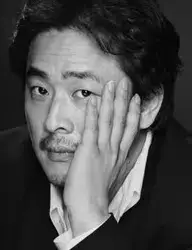
The release of Park Chan-wook's latest South Korean film in February 2026 highlighted two characteristics of the global perception of post-Covid cinema: artistic indifference and vulgar sensationalism. "The Only Choice" was promoted by appealing to two well-known brands: the "Made in Korea" label, which, as with Hollywood films, often leads to numerous stereotypes that prejudge a film's quality (ramen, karaoke, K-dramas, inept police officers, etc.), and references to other productions with their conceptual themes of social critique, such as "Squid Game" and "Parasite." However, like "Oldboy," the flagship film of 21st-century Korean cinema, Park Chan-wook's latest film repeats a simple premise interwoven with the protagonist's psychological journey. It is in this anthropological mirror that Western audiences are rendered incapable of being truly engaged by film narratives. This is not due to a failure on the part of the director, but rather a failure of the viewers themselves, as demonstrated in the aforementioned social commentary films.

In "Parasite," a vulgar debate arose surrounding the exploitation, or "parasitism," of one social class over another, emphasizing the lower class in this situation, but without neglecting the dependence of upper-class assistants. However, the imposition of Manichean parameters of Western morality was so complex that the central debate had to be diverted by highlighting the environmental message through the flood scene suffered by the protagonists. In the other case, "The Squid Game" had a striking and memorable first season, with the effective establishment of each character's historical background and their relationships, but superficial symbolic sympathy overshadowed the object of the critique. “The fool points at the moon, but the simpleton looks at the finger” was the premise that unleashed the commercial folly of a second season, extending the public's fetishistic demand for art.
While parties and memes referencing the series flooded our perception, this became our only way of relating, in a kind of third person, to the artistic interpellation of our reality. Like two facing mirrors that repeat our reflection to infinity, the multiple layers of interpellation end up obscuring the clarity of the “moon” pointed out by art. This doesn't mean justifying the “foolishness” of pointing at the obvious, the moon, as certain artists obsessed with their mediocrity and pride do, but rather understanding and differentiating between a work well-executed in its composition, uncomfortable in its interpellation, and simple in its premise, and a complex and convoluted work that stems from the creative yawns of arrogant directors.

“The Only Option” was screened at festivals such as Venice, Toronto (where it won the Audience Award), and Sitges, among other internationally renowned events. The new film from the director of Oldboy: Five Days to Revenge, The Axe, and Decision to Leave is based on the book The Ax by Donald E. Westlake. Its premise revolves around a family man who falls victim to layoffs by the new US management of the paper mill where he has worked for many years. The opening minutes, packed with information, define three sociocultural illusions relevant to the entire story.
The first is the “American Dream,” or in this case, the “Korean Dream,” of the father who indulges his wife, lives in a house that, as in “Parasite,” fulfills an important symbolic role, owns two cars, and whose children enjoy idleness, distracted from reality by Netflix and cello lessons. The image of the mirage is established through the theatrical performance of roles forced upon the husband and wife, not by falling into a falsehood whose cynical collapse we predict, but rather through the automatic practice of rituals in which we ourselves are convinced. Meanwhile, the presence of sunlight becomes predominant, narrating the blinding brilliance of a monotheistic spotlight, which, with its darkness, dictates the stark contrasts between reality and illusion.

The second turning point comes with the discovery of a potential reality: the dismissal of staff by the new management. It's worth noting a tradition we should emulate in Korean cinema: the portrayal of Americans as a negative influence that hinders Korean development, regardless of the film's thematic context. In response, the protagonist, Mansu (Lee Byung-hun), rehearses a union protest speech with his coworkers outside the factory. Their speech is drowned out by the noise of trucks and machinery, highlighting how the noise of the system prevents any communication among workers about a completely ignored problem. The film also points to the absence of what is ideologically called "class consciousness," but above all, it highlights the historical detail of the destruction of the union system in South Korea, a subject rarely explored in cinema. This absence reveals the hegemony of a proletarianized economic liberalism.
The third illusion is that of the exceptional nature of circumstances, where Mansu, in a failed attempt to communicate his grievance to an American executive, is informed, ignored along with the translator, that he has already been dismissed upon receiving an eel as a reward for his years of service to the company. His son, upon seeing the eel on his plate, despises it, mistaking it for a snake. This symbol, the snake, is predominant throughout the film, reflecting the son's perception and highlighting a reality that his surroundings seek to obscure. While the meat was indeed eel, the idea that it was a snake, given the protagonist's betrayal of his professional loyalty, is more consistent with the event and the events that follow.
This is a brief exploration of the cinematic surface of Park Chan-wook's latest work, with the intention of delving deeper into its symbolism in future viewings. And indeed, one viewing is not enough to translate the audiovisual dialect of stage productions; it is necessary to experience the shifts in consciousness between the before and after of seeing our reflections in the celluloid mirror. Coming soon, the next chapter.




Comments 0
No comments yet.