Dune: Part 3. And the Self-Fulfilling Prophecy
General Reviews
When we find future answers to present-day events in film, we are faced with a predictive model that, through fiction, instills in the viewer a predisposition to adapt to that future. What future does Dune: Part 3 present? The events of a holy war on a galactic scale, fueled by the rebellion of the Fremen people of the planet Arrakis. Currently, we are experiencing the second part of a global drama, where the arrogance of House Harkonnen (the United States) seeks to seize total control of the planet Arrakis (the Persian Gulf) and the exploitation of the spice (oil) necessary for space travel. But facing this arrogance is House Atreides, known for its honor, justice, and loyalty, who seek an alliance with the Fremen to gain a ground military power with which to project themselves while governing the planet justly.

This geopolitics of diplomacy contrasts sharply with the immediate events of Dune Part Two, where we witness the empire's betrayal of Duke Leto's legitimate regency on Arrakis and his subsequent death at the hands of the Harkonnens. Meanwhile, Prince Paul goes into exile in the desert and joins the Fremen resistance, developing a messianic leadership driven by vengeance and the destruction of the empire. This messiah is referred to in the story as the "Mahdi," a reference to the Mahdi of Islamic belief, the "guide" who will lead humanity toward a world of justice and prosperity. However, in the story, he is transformed into the archetype of the antihero who fervently leads fanatical legions down the path of war and destruction.
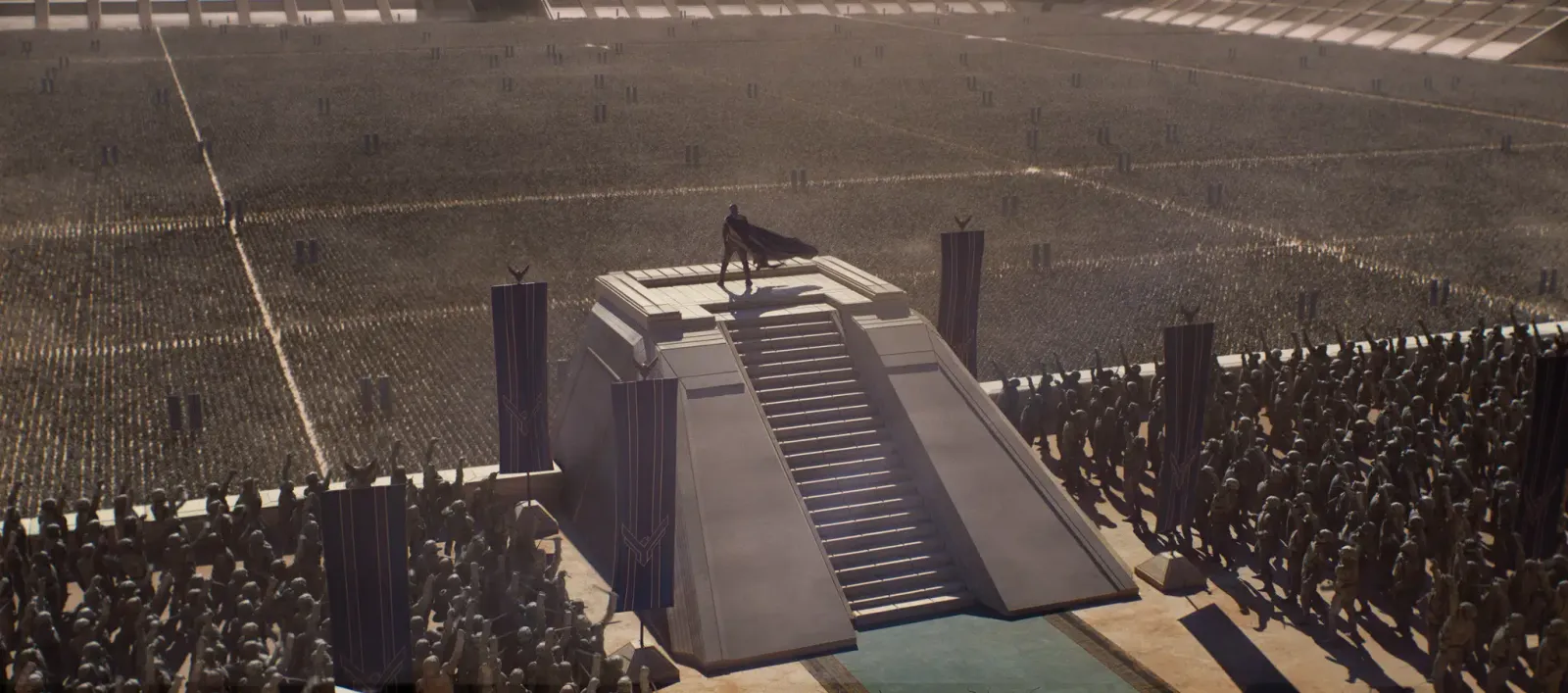
The trailer for the third installment, set to premiere this December, depicts a galaxy engulfed in a war initiated and led by Prince Paul, now the Mahdi. In a conversation with his stepmother, he reveals a doubt implicit in a desire: the end of the war. How can he end something that persists and intensifies the enemy's reaction? He appeals to his father's wisdom to resolve this doubt, and the answer is, "He never started a war." Currently, we are experiencing a war with religious undertones, with President Trump anointed as the "Mahdi" of the film, tasked with carrying out Armageddon. He faces growing resistance and abandonment from his former allies, while the Iranian Muslim people maintain their resistance against the false prophet in a war told from the Harkonnen perspective.
Cinema, in the mouthpiece of American politics, has become the banality of force and arrogance, appealing to the primitive realism of fear of violence and submission to the tyranny of the strongest. But what happens when we find in fiction a narrative that predicts the end of that banality in its most monstrous evocation? The hope of a people will be the enemy of an empire and the confirmation that in resistance they will find their own path to redemption. For the nature of war is founded on faith, not as an incentive, but as a cause, since what good is conquering and defending without a faith that redeems you from your sins and forgives those of your neighbor? Will we find in the third part of Dune the answer to Paul's question, and to the question of the entire world at this moment? Let's hope we make it to December to find out.

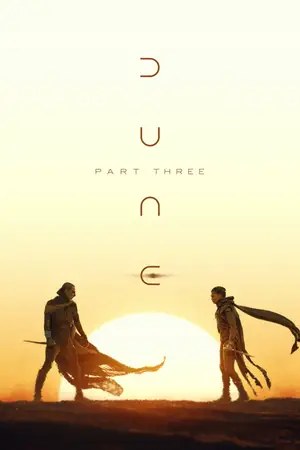
Directed by Denis Villeneuve and written by Villeneuve and Brian K. Vaughan, Dune: Part Three is based on Frank Herbert's novel Dune Messiah and presents the epic conclusion to Villeneuve's trilogy.
RELEASE DATE: DECEMBER 17, 2026
ONLY IN THEATERS



Comments 1