A film that teaches you to change your thoughts
General Reviews

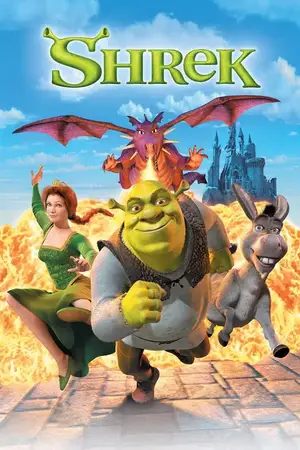
The first time I saw Shrek, I was impressed by the beauty of each figure in the somewhat strange tale—I wouldn't know what else to call it. My first impression was, "What kind of story is this?" It wasn't a common fairy tale, the one you're used to, with the handsome prince in his shining armor who will save the sweet, delicate princess.
No, this was a baffling, strange, and whimsical version by a writer who wanted to change the rules and impose his own, giving us an ugly, fat, green, chubby creature with trumpet ears and a big, round face as the main character. My subconscious criticisms went off, but the story was strange and disconcerting, yet interesting: its colors, the movement of each character, their appearance.
The ogre was always in a bad mood; he was strong and fearsome, and he loved his swamp, his solitude, and his stillness. Anyone who approached his territory was terrified by a fearsome growl from this character—terrible, ugly, and frightening. I watched the film with rapt attention and curiosity, drawn by how well-made it was and how it presented something new.

In a shop where Lord Farquaad's soldiers bought these fairytale characters who had once been free and were now trapped, sold as slaves, it reminded me of the era of slavery when people of color were sold. This is about magical beings being sold like objects. These strange and imperfect beings, according to Lord Farquaad, had to disappear. Their own owners, or parents in Pinocchio's case, were the ones who sold them to soldiers.

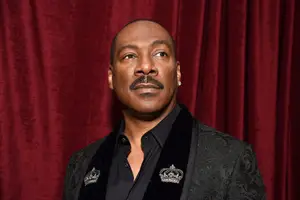
Among them was a talking donkey who never shut up, like my niece who wouldn't let me watch TV and was stressful and exasperating. Perhaps my niece inherited that behavior from watching Donkey so much, who is anything but a donkey, because this character is very intelligent, and Eddie Murphy acts in and lends his voice to the character.
The most epic moment was when, searching for Lord Farquaad, he heads to Duloc with Donkey as his guide. Once there, he wants to speak with Lord Farquaad to have his swamp released after his victory against the knights. Shrek manages to speak with this haughty, arrogant, and insecure ruler of very short stature and goes straight to the castle guarded by a fierce fire-breathing dragon to rescue Princess Fiona.
Here the story gets interesting. He enters with Donkey and manages to reach the princess's chambers. She is rescued abruptly, yet with agility and ingenuity, demonstrating incredible strength and unique dexterity—never learned, but invented at the necessary moment. The ogre overcomes any obstacle to escape with Lord Farquaad's prize, but first he looks for Donkey, knowing he didn't go in alone. While Donkey faces the worst of it, with his intelligence and knowing he's about to be eaten by this female dragon, he charms her by flattering her and saying sweet things.

They manage to escape, and outside, far from the dragon's castle, Princess Fiona demands to see her rescuer's face. Upon seeing the face of such a worthy knight, she expresses her disdain for his less-than-handsome appearance. To be honest, I thought the same thing myself. That ogre is ugly and green and has nothing elegant about him, but he is cunning, fast, strong, brave, and capable. I remember a conversation with a girl I didn't know at the bus stop.
We started talking about the picture of the handsome Backstreet Boys that I had in a folder I was carrying at the time, and in that conversation, she told me that her boyfriend was a monster, ugly, hideous. She brought it on herself because he exuded male pheromones and was macho through and through, and no one would take him away from her because he was ugly. I saw her, who was pretty, with a good face and physique, and in my mind, she deserved a man of equal caliber.
Seeing Shrek reminded me of that conversation I had with that girl some time ago. Yes, a woman can fall in love with a monster if he proves to be intelligent, brave, strong, and courageous. Shrek had everything to lose in terms of physical beauty, but everything to gain because of his inner strength and mental capacity. Shrek was going to show us that beauty only exists in the imagination because true beauty is internal.

On the journey back to Duloc, after so much talking, playing, and facing enemies along the way, night fell, and the princess had to hide. No one could see her, so she hid and listened to Shrek and Donkey's conversation. Shrek was telling her how upset he was that the villagers feared and despised him simply because of his appearance, shouting, "You huge, stupid, ugly ogre!" He said it with pain: "They judge me without knowing me." The princess heard all of this in the darkness of her hiding place, for she too carried a burden.

Shrek's words hurt me deeply. It was as if every hurtful word he said to Donkey resonated within me, because I was mentally doing the same thing. I was judging him, thinking and criticizing him internally: "What an ugly, hideous thing they drew! Why not an elegant and handsome prince? Why that green creature that looks like a giant meatball with skinny legs?" I was judging him, and his words hurt because I was mentally behaving like just another villager, only on the other side of the screen.

I started to feel uncomfortable with myself, and I realized that even though it was a mixed film for children and adults, since it had its funny jokes, it was teaching me a lesson: that one shouldn't judge a person by their appearance but by their character. It hurt me somewhat. I haven't told anyone about it, but I judged the ogre in my heart.
The film conveyed a very clear message, which is why they created the ogre to be so ugly. Its creators knew he would be judged and criticized by everyone who saw the film, and that's exactly what happened. Later, it was revealed that Fiona was under a spell and had fallen in love with the ogre.
They arrived near Duloc and ate field rats. She hid as night fell, and Donkey entered and discovered her secret. Shrek was listening and heard: "Who could love such a repulsive and ugly beast?" He thought it was him and handed her over to Lord Farquaad without delay at dawn. Fiona didn't want her future husband to be a short man with a pride bigger than himself and a wicked heart.
But he had Duloc, immaculate, perfect. Duloc looked like a Disney theme park, and he needed a princess's hand to be king and for everything to be perfect in his perfect world. Advised by the talking magic mirror, he wanted Fiona purely for his own gain, which is why he sent the ogre to do his work. He wasn't going to give his life to save the princess from the dragon's clutches.
And honestly, I started feeling bad for Shrek because he didn't know Fiona's secret and felt like he'd been scorned and betrayed with those words. Donkey reveals the truth to him without saying a word, and Shrek, Donkey, and the Dragon rescue Fiona from an unwanted marriage to someone she doesn't love.
In this Shrek movie, they included many playful nods to classic Disney films, such as the Peter Pan reference where Tinker Bell lands on Donkey, who exclaims, "I can fly!" and everyone echoes in amazement, "He can fly! He can fly!" We also hear Donkey say, "You've seen a bat fly, and even a big bird fly, but I bet you've never seen a donkey fly!" This is a reference to Disney's Dumbo. Shrek references virtually every Disney film, and we also see Princess Fiona showcasing her karate skills, seemingly frozen in time for a moment, where every angle of her is visible—a reference to Bullet Time from The Matrix.
This film uses metaphors to address the themes of prejudice, intolerance, and the constant struggle for acceptance. In this way, it seeks to change how audiences treat minorities in real life and to critique hatred towards those who are different. DreamWorks established itself as a competitor to Pixar in feature-length computer animation. Three sequels have been released: Shrek 2 (2004),
Shrek the Third (2007), Shrek Forever After (2010), and possibly Shrek 5 (2027). Shrek is an influential film because of the emotional aspects it touches upon regarding rejection, bullying, and the loneliness, bitterness, and resentment that result from the unjustified mistreatment of others.
It's one of the most influential films of the 2000s and one of the best animated films of all time. Shrek definitely taught me not only not to judge others without knowing them, but it also reached the deepest recesses of my conscious and subconscious mind to reshape my thinking. Even though I didn't criticize with my voice, I did it in my mind, and if we change our minds, we change our verbal criticism.



Comments 5