The Era of Precision Celluloid: An Audit of the Oscars (2000–2025)
General Reviews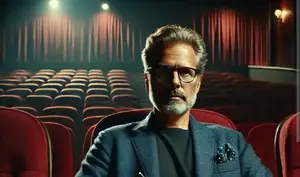

Foreword: Cinema Isn’t Measured; It’s Inhabited
Before you dive into this breakdown of figures, structures, and "calculation errors," I need to confess something. This article wasn’t born from a database or a search for what’s trending. It was born from that shared solitude that only happens in a darkened theater—when the projector’s light cuts through us and, for a couple of hours, the outside world, with its laws of physics and its budgets, stops existing to make room for the truth.
I’ve spent years analyzing structures. I know when a bridge is solid and when a shot is about to collapse under the weight of its own pretension. But with 21st-century cinema, something different happened to me: I learned that the most "perfect" films aren’t always the ones with the most flawless technical sheets, but the ones built with a level of honesty that just disarms you.
What you’re about to read is my "personal audit." It’s the result of watching twenty-five years of celluloid pass under the magnifying glass of someone who values technical rigor, but who still gets a lump in their throat discovering that, behind a three-million-dollar scene, what’s actually holding the movie up is the tired eyes of an actor or a director’s obsession with catching one specific ray of sunlight.
I wrote this for those who, like me, notice the one missing bolt, but also for those who stay until the very last credit rolls—sitting in silence, processing the impact of what they just saw.
Come on in. Don’t look for a popularity algorithm here. Here, there’s only cinema, analyzed piece by piece, like someone taking apart a watch just to understand why time stood still at the exact right moment.
By: An Observer of Structures and Realities
“Beyond the Red Carpet: Measuring Excellence in the Modern Era.”
"Twenty-Five Years of Gold: Where Art Meets the Numbers."
Act I: The Statics of Beauty and the Chaos of the Set
If you, like me, have spent decades analyzing blueprints, calculating load-bearing capacities, or managing projects with zero margin for error, you know that perfection is no accident. It is the result of constant friction between vision and material. In cinema, that material is time and light.
Entering the 21st century, the Hollywood Academy seemed to have lost its magnetic compass. We were coming off the 90s, a decade of grand romantic epics, when suddenly the year 2000 hit us in the face with American Beauty. To an engineer, that film is a study of material fatigue: how a seemingly solid family structure collapses due to an invisible crack in its moral foundation. But is that the best metric for judging the cinema of a new millennium?
Since then, we have seen 25 statuettes for "Best Picture." Some are cathedrals of technique, like Oppenheimer (2023); others are small Swiss clockwork mechanisms, like The Artist (2011). But if we are to compare the finest works of this century, we cannot do it with just our hearts; we must do it with a scale ruler in hand.
The Anecdote of the "Calculation Error" in Gladiator (2000)

Ridley Scott, a director who films with the precision of an architect, faced a massive logistics problem on Gladiator. To reconstruct the Colosseum, he didn't rely solely on the incipient CGI of the time. He built a one-third scale section of the original in Malta, using plaster and wood.
· The Curious Fact: The production was so tense that Oliver Reed (Proximo) passed away before finishing his scenes. How did they solve it? In a show of pioneering visual engineering, they used a body double and digitally "mapped" Reed's face onto him. It cost $3.2 million for barely two minutes of footage. To an engineer, this isn't just cinema; it's problem-solving under critical conditions.

Act II: The Structural Comparison (The Century Under the Microscope)
To analyze these works, we must divide them by their "coefficient of resistance" to time. Not all Oscar winners age the same.
1. The Engineering of Spectacle: The Lord of the Rings: The Return of the King (2003)

If there were an award for cinematic project management, Peter Jackson would be the dean. Filming three movies simultaneously is a logistics nightmare that would make the most experienced construction manager tremble.
· Technical Curiosity: 27,000 latex prosthetics were created and real swords were forged. But the most impressive thing for a logical mind is the MASSIVE software, designed specifically for the battles. It allowed each "agent" (digital soldier) to have an individual AI brain to decide how to fight. It wasn't static animation; it was a simulated ecosystem.

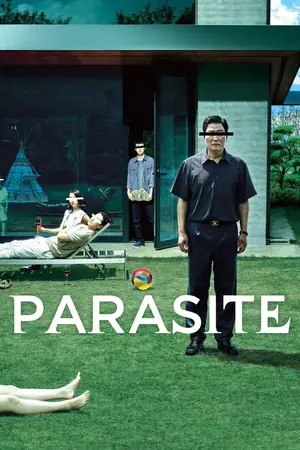
2. The Analysis of Social Systems: Parasite (2019)

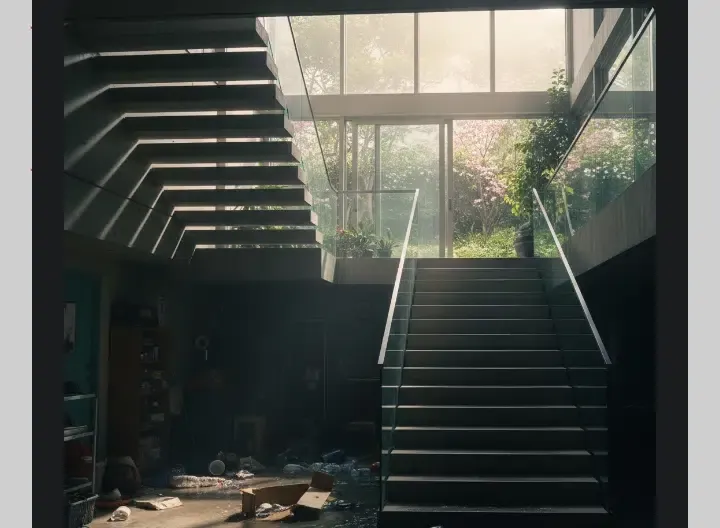
Here, the engineering is not mechanical, but architectural and social. Bong Joon-ho designed the Park family house before writing the complete script. The house is the plot's engine.
· The Expert Detail: The staircase in Parasite is not a decorative element; it is a vector of class. The director demanded that sunlight enter at specific angles to accentuate the difference between the basement and the garden. It's a film about flows: flow of money, flow of waste, and flow of people. A civil engineer would appreciate how urban infrastructure (the sewer that floods the semi-basement) dictates the protagonists' fate.
3. The Thermodynamics of Power: Oppenheimer (2023)

Christopher Nolan is perhaps the most "engineer-like" director working today. His rejection of total CGI and obsession with practical effects led him to recreate the Trinity test without using a real atomic bomb, but rather a chemical mixture of gasoline, magnesium, and aluminum powder to achieve that blinding flash.
· Anecdote of Precision: The production team had to rebuild Los Alamos from scratch in New Mexico. They did not allow anything not from the 1940s to be in sight. That rigor with materials is what gives the film a density you can feel in your skin.

[To be continued in the next part...]
Note to the reader: In the second part of this article, we will delve into films that explore the human psyche as a complex system (like A Beautiful Mind or The Father) and reveal why, after analyzing 25 years of cinema, there is one specific film that an engineer and senior adult will find not only fascinating, but necessary.
---
It is a pleasure to continue this analysis. For an engineer, the world is not only what is seen, but how the unseen functions. In this second stage of the article, we will raise the stakes. We will move from the engineering of large structures to the engineering of the soul and mind, exploring how 21st-century cinema has attempted to decipher the most complex system of all: the human being.
Act III: The Strength of Human Materials (Psychology and Systems)
If in previous acts we spoke of physical structures, here we enter the fatigue of emotional materials. For an adult who has seen decades of technological and social changes, cinema is often the mirror of how we adapt—or break—under pressure.
1. The Mind's Algorithm: A Beautiful Mind (2001)

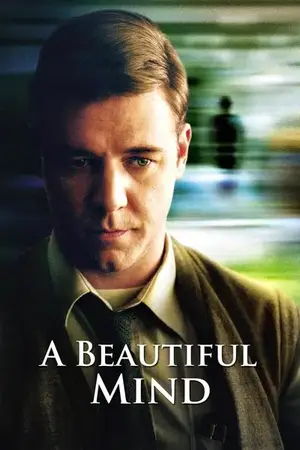
As a man of science, you know that mathematics is the language of the universe. But this film showed us the "bug" in the system. Ron Howard uses direction so that we, the audience, experience John Nash's system error firsthand.
· Technical Curiosity: For the famous scenes where Nash sees patterns in codes, the visual effects team didn't want something "magical." They wanted something that looked like an organic computation process. Russell Crowe spent hours studying the eye movements of real mathematicians to mimic how they "scan" invisible data. It is a masterclass in how a brilliant mind can manage its own collapse.

2. The Structure of Time: The Father (2020)

This is perhaps the most "architectural" film of the decade. For an engineer, space is sacred. In The Father, director Florian Zeller uses production design as a weapon.
· The Visual Engineering Trick: If you observe carefully, the apartment changes subtly between scenes. The furniture, wall colors, and layout of doors shift. It's not a continuity error; it's a deliberate design to make the viewer feel the disorientation of dementia. It is cinema used as a precision tool to measure the loss of reality.

Act IV: Curiosity as the Engine of the Story
An article for Peliplat isn't complete without those anecdotes that separate fans from true scholars. Here are three "golden nuggets" of 21st-century production:

· The Silence of No Country for Old Men (2007): The Coen brothers, known for their mathematical script precision, made a radical sound engineering decision: the film has almost no music. They wanted the audience to hear the acoustics of the desert, the crunch of boots, and the metallic sound of Anton Chigurh's captive bolt pistol. It is an exercise in "structural minimalism" where emptiness fills more than noise.

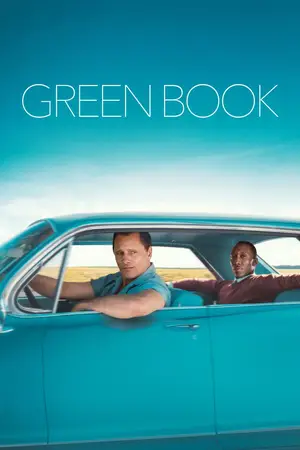
· The Logistics of Green Book (2018): To recreate 1960s America, the team had to conduct a road audit. It wasn't just about the cars, but the road signage and lighting. For a highway engineer, watching this film is a journey through the infrastructure of an era that no longer exists, recovered through surgical production design.

· The Challenge of Birdman (2014): Alejandro González Iñárritu designed the film to look like one continuous take (an endless shot). This required actors to rehearse with stopwatch precision. An error of one second in an entrance meant throwing away 15 minutes of perfect work. It was an unprecedented feat of human and technical logistics choreography.
Act V: Which movie is the best for senior adults and engineers?
We have traversed 25 years of excellence. We have seen epic battles, intimate dramas, and visual experiments. But if we apply an analysis of Emotional Cost-Benefit, Narrative Efficiency, and Structural Legacy, only one film emerges as the perfect construction for someone who values experience and rigor.
That film is: Oppenheimer (2023).
Why for you and for me?
It's not just because of the nuclear physics theme. It's because of the management of complexity.
· The Dual Structure: Nolan divides the film into "Fission" (in color, Oppenheimer's subjective perspective) and "Fusion" (in black and white, the objective, political perspective). This segmentation is purely logical, almost like a flowchart of morality.
· The Engineer's Dilemma: As an engineer, you understand that the implementation of a project is just fifty percent of the responsibility; the remaining fifty percent involves managing the repercussions of your choices.The film is about the ethical responsibility of technology, a theme that resonates deeply with those who have dedicated their lives to building the modern world.

· The construction quality of Oppenheimer resembles a machine operating at peak efficiency. Every gear (editing, sound, acting) fits with micron-level tolerance.

Conclusion: The Grand Finale and Call to Action
Ladies and Gentlemen of the Peliplat Jury, fellow cinephiles:
21st-century cinema is not just entertainment; it is the Engineering of Dreams. We have moved from physical celluloid to digital bits, but the essence remains the same: how to support a story that weighs tons without breaking the spectator's interest.
To you, reader, who have seen the world transform under the weight of steel and silicon, I say: cinema is your best ally for understanding what it means to be human amidst so many machines.
And you, Peliplat cinephile? Do you agree with this cinematic audit? Do you believe Nolan's "technical perfection" surpasses the "visceral passion" of directors like Scorsese or Bong Joon-ho?
Leave your comment below! We want to know which film you think has the perfect structure. Don't just say you liked it; tell us how it's built. Cinema, like life, is best appreciated when we understand how its foundations are supported.
This article is a tribute to precision, to memory, and to that projector which, in the darkness, remains the most powerful tool ever invented.
---
Technical Appendix: The Strength of Materials in Winning Films
If you've made it this far, it's because you share with me that fascination for understanding what's behind the curtain. We aren't content with just the story; we want to know how the bridge held while the train passed over it. As someone who values precision, I wanted to break down these case studies that, for me, represent the true "field engineering" in the cinema of this century.
Let's talk about 2017. Although that year many celebrated Parasite's triumph, from a technical standpoint, Sam Mendes and Roger Deakins' work was a feat of civil logistics. They designed the film to look like one continuous take, but what few know is that the set was built based on dialogue. Literally. If a conversation scene lasted four minutes, the trench had to be exactly the right length so the actor wouldn't run out of path before finishing his line. There was no margin for calculation error: if the sunlight changed or an actor stumbled at the one-meter-ninety mark, the entire day's work was lost. It's a study on flow synchronization in a hostile environment that any construction manager would respect.
On the other hand, there's the lesson in thermodynamics and pressure Kathryn Bigelow gave us in The Hurt Locker. Shooting in Jordan at over 113°F (45°C) isn't just a challenge for the human crew, but for the very chemistry of filmmaking. The extreme heat affected the viscosity of the camera components, and yet, Bigelow operated with astonishing systems efficiency, using four 16mm cameras simultaneously to capture every angle of tension. For me, the editing of that film is the most faithful representation of a safety protocol failing under material fatigue.

And speaking of materials, I can't leave out the brutal honesty of Mad Max: Fury Road. Although it narrowly missed the Best Picture Oscar, its technical legacy is a lecture in mechanical engineering. George Miller, with an almost scientifically analytical mind, used 3,500 storyboard panels instead of a traditional script. The famous "Doof Wagon," that truck full of drums and a flamethrower guitarist, wasn't a digital trick; it was a real 15-ton vehicle with a roaring V8 engine in the Namibian desert. Seeing real metal twist at 50 mph (80 km/h) restores to cinema a physical truth that computer algorithms simply cannot replicate.

I also enjoy analyzing the visual hydrodynamics of Guillermo del Toro in The Shape of Water. Del Toro is a craftsman who understands the chemistry of his images. For the "underwater" scenes, he used an old-school technique called Dry for Wet. Instead of submerging the actors, they were suspended with wires on a set filled with nitrogen smoke and fans, using strobe lights to project refraction patterns. Why this technical detour? For total control over lighting and optics. It's a reminder that sometimes, well-executed simulation is more real than reality itself.

Finally, there's something we professionals with experience appreciate: the economy of structures. Clint Eastwood, in Million Dollar Baby, gave us a lesson in resource optimization. While other directors waste weeks on endless takes, Eastwood filmed this masterpiece in just 37 days, finishing under budget and almost always using the first take. It is the paradigm of efficiency; like a well-designed steel bridge that needs no adornments to stand for a century.

The Final Reflection for my Peliplat Colleagues
When evaluating these works, don't just look for the easy emotion of a happy ending. Look for structural integrity. A great film is like a well-constructed building: we might not like the color of the façade, but we must respect the genius of its foundations.
In this 21st century, cinema has ceased to be a simple dream factory and has become a laboratory of realities. As someone who has seen the world transform from tracing paper blueprints to computer-aided design, I know that the only thing that endures is what is well made.
My call to action for you: Go today to your shelf or your favorite platform. Choose one of these Oscar winners. But this time, don't watch it just with your heart; watch it with the eye of someone who knows how to build a bridge. Analyze the rhythm, the light, and the sound as if they were components of an internal combustion engine. And when you find that perfect piece, that film without a single loose bolt, share it here on Peliplat.
True film criticism isn't just talking about feelings; it's recognizing excellence in the design of the human soul. I'll read you in the comments, where I hope you'll tell me: What, in your opinion, is the film with the most resistant structure in history?
---
Calculation Errors: When the "System" Fails on Set
As every engineer knows, there is no perfect system. Even in productions costing hundreds of millions of dollars, where every millimeter is supervised, the human factor or entropy eventually seeps through. Detecting these failures isn't being pedantic; it's recognizing that cinema, like life, is a prototype in constant adjustment. Here are my favorite "calculation errors" in the great winners of this century.
Let's talk about Gladiator (2000). In one of the most intense action sequences in the Colosseum, a chariot flips over and, for a brief second, amidst the dust and chaos, you can clearly see a propane gas tank attached to the underside. It's a fascinating technological anachronism: 20th-century pneumatic energy powering the action of ancient Rome. For an engineer, it's a reminder that behind the magic, there's always a machine trying to do its job.
In The Lord of the Rings: The Return of the King (2003), Peter Jackson gave us visual perfection, but not even he could prevent "field makeup" from failing. If you observe the famous scar on Frodo's cheek, you'll notice it changes position and size between shots. It's a quality control error in the production chain that reminds us that, under the pressure of a years-long shoot, consistency is the most difficult material to forge.
But my personal favorite is a detail in Braveheart (which, although from the last century, set the tone for the winners to come). In the middle of a cavalry charge, you can spot a white car parked at the back of the valley. It's the ultimate clash of eras: modern logistics interrupting a medieval epic. These errors are the "seams" of cinema; they show us that reality is always there, lurking behind the set.
And to close with a note of technical ingenuity: did you know that for Oppenheimer (2023), Christopher Nolan had to commission a type of 65mm black-and-white IMAX film stock that didn't exist? Kodak had to develop the material exclusively for him. However, the most observant viewers noted that in a 1945 scene, among the celebrating crowd, there are people waving American flags with 50 stars. In 1945, the flag only had 48. An inventory error of history that, far from ruining the film, humanizes the great Nolan: even the most obsessive architect can overlook a detail in the blueprint.
The Definitive Closing: An Invitation to Debate
With this, my esteemed friends of Peliplat and members of the jury, I conclude this audit. We have gone from managing massive projects in Middle-earth to the quantum dilemmas of Los Alamos, even allowing ourselves to smile at the system's small failures.
Cinema is the only engineering where error can be beautiful and where the most rigid structure only serves if it is capable of moving us. I have analyzed these films with the logic of one who builds bridges, but I have felt them with the vulnerability of one who knows that time is the only judge who accepts no bribes.
Now it's your turn:
What calculation error have you detected in your favorite film that no one else seems to notice? Or do you believe that in cinema, as in quantum physics, it is the observer who truly finishes constructing the work?
I await you in the comments. Let's dissect cinema, not to destroy it, but to understand why, after more than a hundred years, we still need the lights to go down so we can see the truth.

Mentioned in this piece
 Gladiator2000
 The Lord of the Rings: The Return of the King2003
 Parasite2019
 Oppenheimer2023
 A Beautiful Mind2001
 The Father2020
 No Country for Old Men2007
 Green Book2018
 Birdman or (The Unexpected Virtue of Ignorance)2014
 Million Dollar Baby2004
 The Shape of the Future2005
 The Shape of Water2017
 The Hurt Locker2008
 Mad Max: Fury Road2015



Comments 5