A Legacy, No Matter How Small
General Reviews
It's that week between Christmas and New Year's. I'm at my parents house and I'm looking for any excuse to get out. Like the promise of a sunrise on the horizon, what came across my feed but Rebuilding, a new film playing at the VIFF Centre (until Thursday). I made the call and drove downtown for the matinee showing.
There was really only one tangible that made me want to see Rebuilding, and that was Josh O'Connor. Even my parents know who this guy is now, and he's definitely more than Prince Charles in The Crown. This year alone, O'Connor has starred in Knives Out, The Mastermind, The History of Sound, and that doesn't include the new trailer for Disclosure Day (directed by Spielberg) and his amazing 2024 role in Challengers. The guy is taking the cinema world by storm, tossing his name in the ring with Chalamet and Mescal as a new-age superstar.

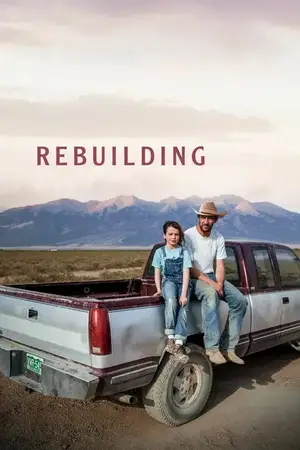
Rebuilding is an indie film, having its premiere at this year's Sundance, and it frames its narrative in an interesting fashion. It is a man-versus-nature story, but it's unique in that it only picks up the story after the disaster. I liked this because it minimized the story to one section of a larger tale, but still managed to hit the necessary beats to keep me engaged. Although it makes for an arguably slow pace, this man's journey is heartfelt enough to keep the audience rooting for him through the more mundane scenes.
Rusty (O'Connor) is a silent-type cowboy. Owing a fair bit to the many westerns that came before it, this neo-western focuses on a character that is quite familiar but not entirely stale. It's refreshing to see such an archetypal character in a modern setting without going full outlaw like in Hell or High Water, and the film's slower, more sentimental plot worked for me. Rusty's stoicism was reminiscent of Grainier in Train Dreams, although with more modern sensibilities.

Before the movie even begins, Rusty has lost all of his things in a big wildfire. Apart from losing everything, a key aspect of Rebuilding is Rusty getting closer with his daughter, Callie Rose (Lily LaTorre). Why he is so distant from his daughter, considering they evidently live in the same town, is unclear. They speak like they haven't seen each other in ages, with Rusty explaining things to Callie Rose that she probably forgot, but there's never much of an explanation regarding the long gaps in their relationship.
Despite the murky backstory, their relationship is the strongest of the film. There's a clear generational gap between them, and writer-director Max Walker-Silverman uses this gap to provide some subtle social commentary. For example, on their first hangout together, Dusty is still trying desperately to piece some semblance of coherency together in his life while Callie Rose needs the wi-fi to do her school work on her school-supplied iPad. Walker-Silverman is too smart to bring too much attention to their differences, but Dusty's efforts to support Callie Rose is evidence of his good parenting.

What Rusty really seems to desire is to develop his own story within his family's heritage. The land and farm that burned down was in his family for generations, and there's this unsaid feeling that Rusty blames himself for its ruin. Knowing that he has nothing to leave behind for Callie Rose, unlike how his parents left things behind for him, Rusty spends Rebuilding coming to terms with this realignment of his path. Without bogging Rusty down in sentimentality, Walker-Silverman still uses this theme as an undertone to tie his film together.
While searching for a new understanding of home, Rusty discovers the importance of community in creating a place of comfort. In a small FEMA camp for those displaced by the fire, Rusty discovers the community that, although he may not admit it, he needs during his time of trouble. Despite this aspect of the story feeling less than original (see Nomadland), I still liked it because it was honest in its sentiment and its heart was in the right place. They may not have been the most original of characters, but I ended up enjoying their presence, especially the handyman who helps Dusty get water in his trailer home.

The aspect of the film that I most struggled with was its reservation of anger regarding the uncontrollable disaster. There is only one scene where the stoic Rusty really lets his emotions loose, and though that scene was nice, I felt that there was more room for anger within this story. I know that it's a bit like shouting at a rain cloud, but I can't help but feel that these characters would be more upset about losing so much of their history to a natural disaster. They felt too passive, in my opinion, and this passivity robbed the film of a certain level of intensity.
My biggest takeaway from Rebuilding was the idea that it's okay to let your dreams evolve. I feel that we tend to believe that our dreams are singular and etched in stone, but this film reminds us that, sometimes, life will make you re-evaluate things in a scope that you previously had never thought possible. Dusty, for a majority of the film, fights against this change forced upon him, and its his realization of a new future that drives the film's conclusion. It may sounds simple, but I think it takes a lot for a person to realize that their dream has changed, with or without their permission, and that there are new opportunities waiting within this new outlook on life.

I picked up on parallels between this film and William Faulkner's stories, although i don't know if this was Walker-Silverman's intentions. For one, the family grave plot reminded me of the Sutpen plot in Absalom, Absalom! The shot of Dusty allowing the dirt and dust to flow through his hand and into the wind additionally reminded me of Absalom. There is another scene that reminded me of the premise of As I Lay Dying. Both Faulker and Rebuilding deal with getting over loss and attempting to move on from the past, so maybe that's why I'm seeing the similarities.
When the film isn't reminding my of heady, Southern writers, it's reminding me of books I read growing up. Nowhere did this movie scratch my nostalgia itch more than when Callie Rose is reading a Magic Tree House book. Until that moment, I forgot that those books existed, but I read them countlessly in my childhood. Although this scene came close to the end of the film, it made me identify with Callie Rose all the more.

The final reference I caught was one that nearly every neo-western includes… it's practically obligatory. I'm not sure if it's because of film school or because it's just a really good movie, but The Searchers has become known as the movie that all modern western or western-adjacent movies must reference. It's not the entire movie, but specifically one shot that has basically become known as The Searchers shot, and, yes, Rebuilding includes one. It's slightly different than the original, but the framing is still reminiscent of that John Ford classic, and, as a classic-movies buff, I appreciated the reference.
Rebuilding is a small, slower movie, but it has more of a pulse than The Mastermind. I liked it because I enjoy the western genre and am partial to modern reworkings of that classic genre. At 96 minutes, it doesn't overstay it's welcome, but it still manages to tell a heartfelt story. With themes of familial duty and community, Rebuilding is sure to be a crowd pleaser for those who like movies that simmer rather than boil.






Comments 4