'Wake Up Dead Man' Review: When God’s Light Exposes the Darkest 'Knives Out' Mystery Yet
General Reviews
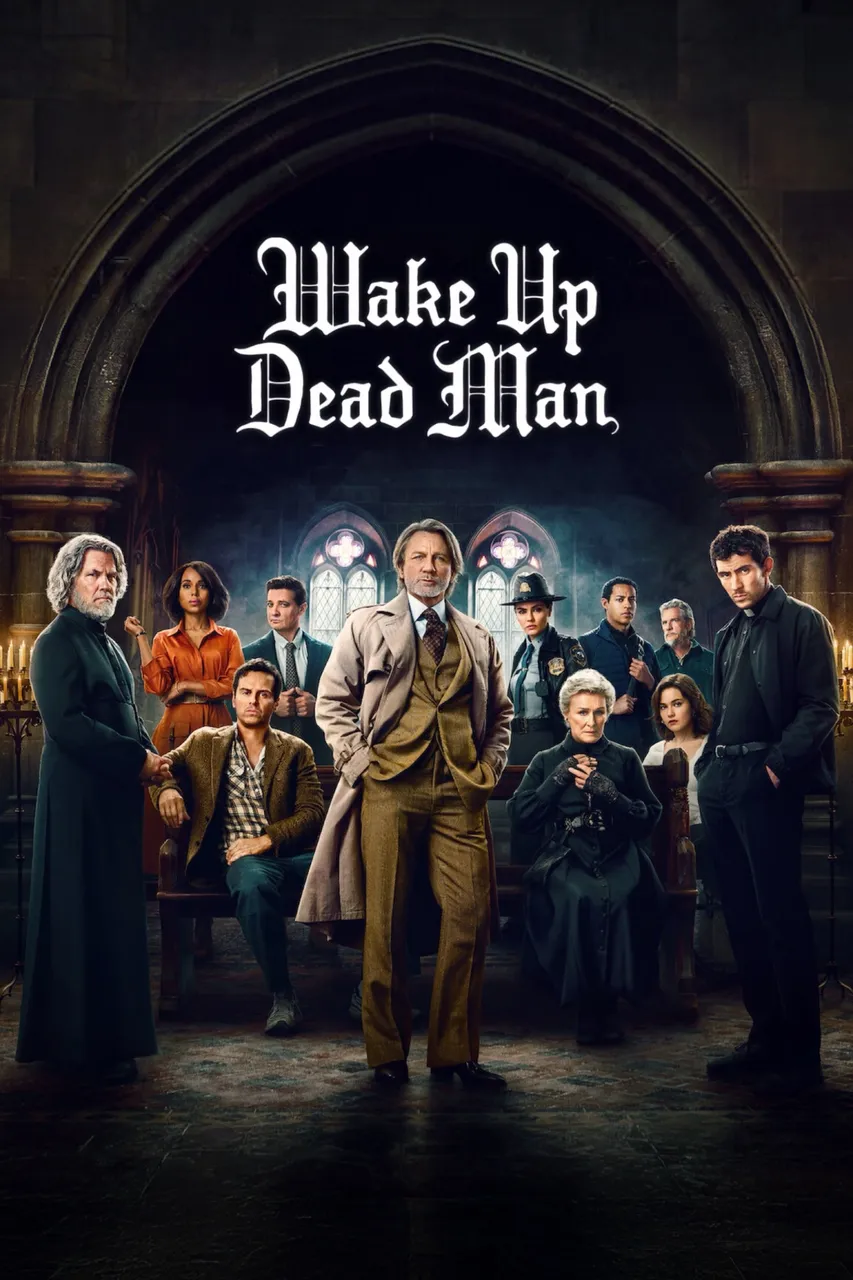
There are a few moments in Wake Up Dead Man: A Knives Out Mystery when the sun cuts through the stained glass windows of a church, washing shadows away with a golden glow. In these moments, it feels fittingly like God’s touch, but it also represents why Rian Johnson’s mysteries work so well. They’re stories of shadows and secrets, absolutely, but they’re also stories about illumination, about truth burning through deception even when it only shines briefly. Johnson’s third outing with Benoit Blanc, unfolding in a space defined by faith, is a story about belief; that slippery, treacherous thing that binds people and breaks them.

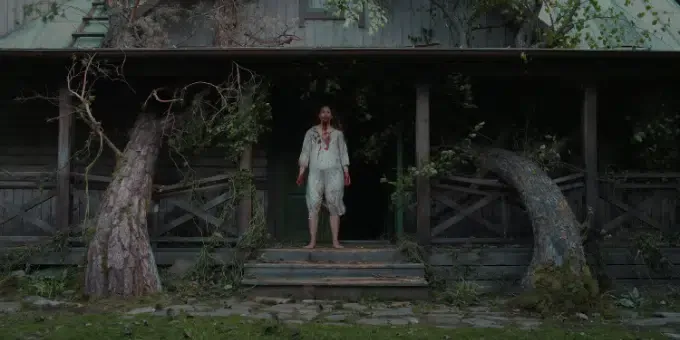
After the lustre of a Mediterranean vacation in Glass Onion, Johnson steers his franchise into colder, foggier territory. Wake Up Dead Man is a chilly locked-door mystery inspired by classic novels like The Hollow Man and The Murders in the Rue Morgue, yet it crackles with an irreverent warmth that has become this series’ signature. Visually, the film may be Johnson’s most striking. The play of natural light through the church windows heightens every emotional beat: scenes dim when hope falters and blaze with near-divine brilliance in moments of understanding. The cinematography shapes the moral landscape as much as the script.
Daniel Craig’s Benoit Blanc is once again spectacular as the fashionable, charismatic Southern detective. But introducing himself as a heretic, he clearly feels uncomfortable in the setting of his next case, proving deeply to be out of his element. He steps into the echoing chill of an old New York parish, where the congregation is small, anger is potent, and the air is thick with incense and unspoken sins.
But before Blanc ever crosses the threshold, Johnson gives us a new protagonist: Reverend Jud Duplenticy (Josh O'Connor), a young priest with bruised knuckles and carrying heavy guilt. Jud, once a boxer, killed someone in the ring and has spent every day since attempting to atone for that death and for the rage inside him that made the fatal blow possible. When the film opens with him slugging a deacon, and the story unfolds, you begin to realize that this is a story where sins stick like hot glue. Despite a violent past, Johnson writes Jud with tenderness. Jud wants desperately to be a priest who opens his arms, not raise his fists, even as his instincts betray him again and again.
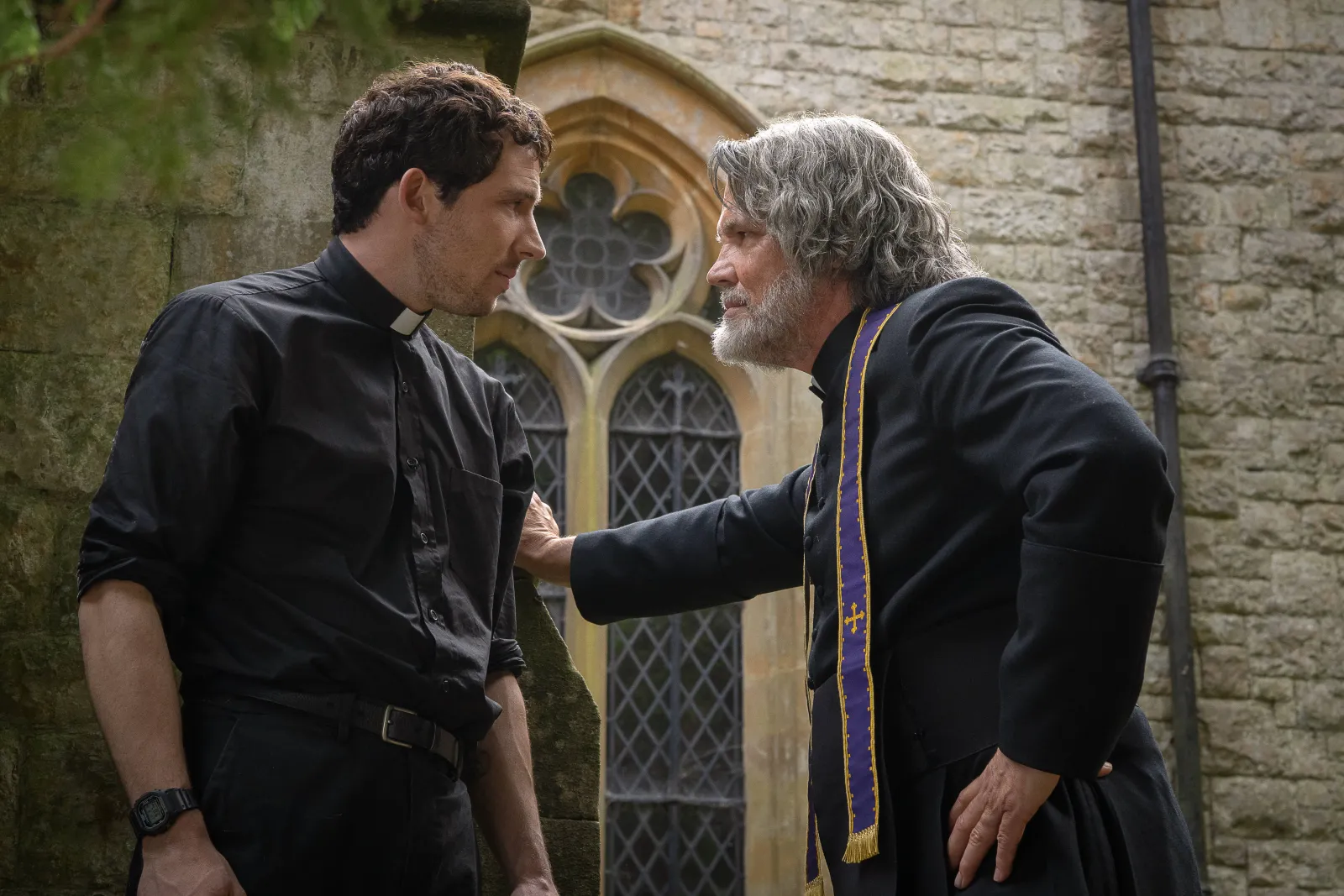
After the deacon bust-up, Bishop Langstrom (Jeffrey Wright) ships Jud off to a struggling parish run by a controversial Monsignor Jefferson Wicks (Josh Brolin), hoping the young priest can be an agent of peace. Langstrom insists that Wicks requires a little light to his holy communion, and perhaps Jud can inspire that change. But the bishop might as well have tossed a lit match into a powder keg.
Wicks is one of Johnson’s most fearsome characters, simmering with resentment and utterly convinced that anger is the way to preach the word of God. When both Jud and the audience first meet him, he freely confesses many things, including that he envies the power and wealth of men. His past is steeped in darkness: the vanished fortune of his priestly grandfather; a mother (Annie Hamilton) who desecrated the church in a demonic fury chasing that lost inheritance; a childhood shaped by greed, rage, and secrecy. This is a man who learned early that love is conditional and that control is survival. His flock feels this, and they appear outright afraid of him.
Martha Delacroix (Glenn Close) is his most steadfast acolyte as a lifelong servant of the church who cleans, manages the finances, and even plays the organ. Samson Holt (Thomas Haden Church), the groundskeeper, remains devoted to Wicks as the man who saved him from alcoholism. Then there’s Dr. Nat Sharp (Jeremy Renner), whose wife left him and who now sinks into drink and casual misogyny under Wicks’ influence. Lee Ross (Andrew Scott), once a respected sci-fi author, has become a paranoid conspiracy theorist, spiralling into delusion. Simone Vivane (Cailee Spaeny), a gifted cellist tormented by chronic pain, clings to Wicks’ false promises of divine healing. And lawyer Vera Draven (Kerry Washington), like Wicks, is living under the shadow of legacy, while her scheming son Cy (Daryl McCormack), a failed political aspirant, weaponizes the internet like a preacher uses a pulpit. Every one of these characters shares a single binding trait: they are regulars. Wicks’ regulars. They are the only people who still attend his Mass, standing firmly under his control even as he drives away newcomers and poisons the community with his fury.
Jud, in contrast, represents a very different kind of faith. He wants honesty, not dominance. Compassion, not fear. When he starts a prayer group, a small circle of truth-telling in what is a house of lies, Wicks twists it into a betrayal. A coup. A threat to his dominion. Slowly, the congregation turns on Jud, pushed by Wicks’ whispered warnings and emotional manipulation. Even Jud’s attempts at peacemaking escalate into violence, with his bare-knuckle instincts reemerging. Their conflict becomes a psychological war, an ideological duel between hope and fury, between belief that heals and belief that consumes.

Johnson builds this conflict on dualities: faith versus logic, greed versus sacrifice, lies versus truth, insider versus outsider. The factions brewing inside this church mirror those dividing the United States, sharpening a political edge that ties the franchise together. Johnson’s trilogy has always taken aim at entitlement, corruption, and the seductive pull of power. Here, he examines how institutions, especially religious ones, can twist belief into a weapon, turning faith into fear and fellowship into fanaticism. All this tension finally snaps when blood spills on the church floor in a murder that seems to defy logic; an impossible crime so bewildering that even the famed Detective Benoit Blanc may not be able to solve it.
Craig once again devours the role with theatrical glee. Blanc waltzes into the church with his syrupy Southern drawl and his flair for storytelling. And yet, this case, this “Scooby-Doo shit,” as it’s described, rattles him. He deems it an impossible crime and the sort of puzzle that should exist only in fiction. This is a locked-room mystery story that is made even more complex by the characters Johnson creates, turning the mystery into a battle of wits not only between suspects and detective but also between the film’s two moral poles: faith and logic.
Wicks’ greed, Jud’s guilt, Martha’s judgment, Cy’s ambition, Nat’s resentment are just some examples of the narrative’s drivers as each character is controlled by something within themselves, and Johnson shows how easily that something can be stoked and controlled. Johnson crafts a killer plot with cunning calculation. It’s unexpected for both detective and audience, making this another memorable installment in the franchise. Wake Up Dead Man may be the darkest Knives Out film yet, but it also feels the most hopeful as a story that insists that truth is not found in tribal loyalty or blind faith but in community, compassion, and the courage to be honest. Like the “apple of Eden” that the film often references, temptation and sin lurk at the edges, but redemption glows faintly, stubbornly, in the center.

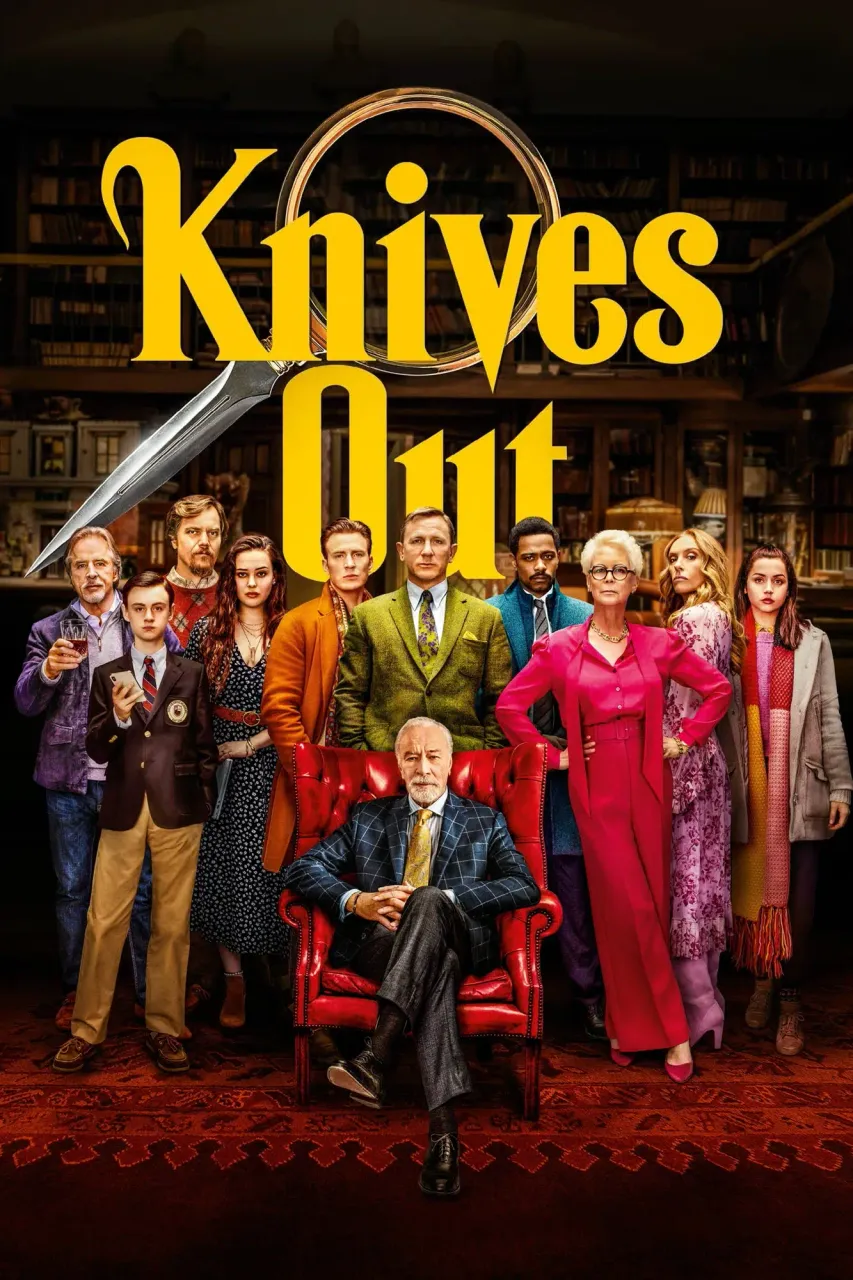
This third film is also a thematic bridge connecting Blanc’s earlier adventures. From the familial greed of Knives Out to the tech-bro entitlement in Glass Onion, Johnson has explored how ego, power, and modern politics corrode human decency. Wake Up Dead Man widens that lens to examine spiritual authority and the ways leaders (religious, political, or social) distort truth for personal gain. It’s a timely commentary wrapped in genre comfort food.
Johnson has crafted not only his best script yet, but perhaps his most human work as a sermon disguised as a whodunit, offering unlikely grace to a broken, divided world. And if we listen closely, it suggests that waking up may require setting aside the fists we’ve been clenching for far too long.












Comments 2