Laura Palmer and the Existential Pitfalls of 'I Can Fix Her'
Characters
‘I can fix her/him/them’ is a phrase that echoes in the minds of all those desperate to be vitally important to someone, to be the life giving star around which they orbit. If you've ever had a period of insecurity - as I assume we all have, at the very least in our teens - then this should be a familiar feeling, even if you now know (and may have known at the time) that this is usually a fallacy. You likely won't get close enough to get out your tool belt, and once you do, you're probably going to find your fixing efforts frustrating at best, and devastatingly ineffective at worst.
I'm certainly not arguing against the concept that loving someone can bring out the best side of them, especially as my husband has undeniably done that for me in our decade long relationship. But this isn't the same as fundamentally changing them to the core or, as much as we wish we could, reversing the irreversible damage that has been inflicted upon them. You can work with it - nurture them, create safety for them - but rarely can you ‘fix’ past traumas as you would hairstyle or a broken blender.

Try telling all of this to town of Twin Peaks, a nightmarish world with a tortured population that since 1989 has been fixated above all else on one central goal: solving, saving, and fixing the deceased homecoming queen Laura Palmer, dead and wrapped in plastic. Our protagonist Special Agent Dale Cooper, an outsider to the town, is pathologically wired to do good, and can't leave Laura's fate alone; conversely, a brigade of boys and men who have loved and used her, close up and from afar, seek to cover, unravel, confront, run from, and scream in the face of their part in her death.
It's easier to forgive the need to fix Laura that comes through in a naive sense of duty among the younger cast. The teenage drama that we're first introduced to where two boys fight for her love feels well intentioned enough; the sweet but unfortunately embarrassing James Hurley is consistently tender to Laura, and greaser for the 90s Bobby Briggs, though something of a mess, does seem to genuinely love her. Even Cooper himself, with his fresh face and can do attitude, feels like he slots in with this naive approach to her at points - armed with a suit, a tape recorder, and strong black coffee, surely he can triumph where they failed?

In the older men, however, the percolating of a need to be important in the life of a beautiful young woman has corrupted them and their loved ones beyond repair. Community pillar and part time brothel owner Benjamin Horne laments that he couldn't possess her, while the drug peddling Renault brothers used her up and discarded her, their desire to dominate and control her life ultimately serving as their undoing. Others in this category are much more tragic. Shut-in Harold Smith has only Laura's diary left for company, eventually hanging himself in a tomb of his own making, and psychiatrist Dr Jacoby weeps while listening to her tape recordings - remnants of her existence that should be truthful, but that still only capture one false side of this möbius strip of a character.
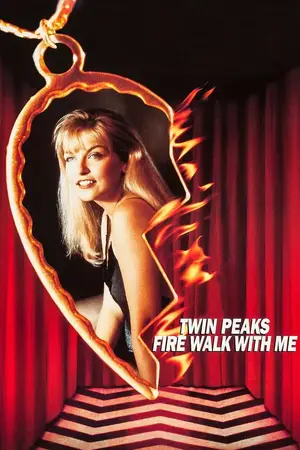
Of course, this becomes much more tragic and disturbing when Leland Palmer - Laura's father, abuser, and murderer - is considered. Introduced as a blubbering mess mourning the loss of his only child, the reveal of his crimes is sickening, especially as they're told to us through a repeat of his actions. More upsetting is that the wider franchise gives us so much conflicting information as to his innocence: in the show he's repentant and seemingly unaware of what he's inflicted on Laura and other young women, while in Twin Peaks: Fire Walk With Me he almost revels in it, lucid even during his cruelest acts. At times, it seems even her perpetrator is trapped in the desire to fix his victim, to undo the horrors he subjected her to long before the series began.

But what has been done can't be undone, and ‘I can fix her’ - which could be the battle cry of half the show's male characters and several of the women - eventually leads to an entire world's undoing. In Twin Peaks: The Return, after spending most of the episodes floundering as Mr Jackpots himself Dougie Jones, Dale Cooper returns to Twin Peaks. Not just the location, but the moment, casting himself back with the help of Phillip Jeffries to the exact moment where Laura could be saved; where her problem could be fixed. From this moment on, all is lost.
A series of bizarre encounters eventually lead Cooper and Laura to a dream world, where she isn't herself, but Carrie Page, local waitress and notably much older than Laura was ever permitted to become. But this doesn't last long; after Cooper takes not-Laura to her family home and she hears her mother cry her name (a familiar sound for viewers). She screams, horrified as her alternate past comes flooding back, and all goes black.

Even if you bend the rules of time and space itself, creating a whole new world to do so, no one can fix Laura Palmer.
This fixing of Laura has even bled out beyond the show and into the online communities that have crowded around the doomed girl as a symbol of whatever spuriously feminist catchphrase is having its fleeting moment in the sun. From female rage to being designated Brat, the tragedy of Laura has become distilled down to a girl-gone-wild narrative, one that irons out her complexities, her less appealing trauma responses, and the stomach churning tragedy of just how far she was pushed in Lynch's nightmare and its grizzly redux. Her oft-criticised memeification serves as the most callous and careless kind of fixing, a band-aid over the darkness within her that allows her to be easily shared and consumed as content or TikTok fodder.

…really? (A cursed Pinterest find)
Crucially, the Laura/Carrie we see in 2016's Twin Peaks: The Return is rarely if ever given this treatment. Internet fame venerates Laura as a teenage girl, but can't fathom her as a grown woman in her 40s, even if that's what we all desperately wanted her to have the potential to one day become. In fixing Laura, she has to remain the perfect ingenue - an eternal homecoming queen, grinning out from the photo frame that haunts the credits of every episode.
This is really where the problem lies, the one that Lynch and Frost have been trying to highlight since the early 1990s: Laura Palmer can never be a human being, and yet undeniably is one. She's a creation, a walking corpse designed to be treated like an animal and discarded as the catalyst for mystery solving and coffee drinking. But through retroactive humanising, she becomes something altogether more tragic, never having existed within Twin Peaks or in the real world as anything other than a container for suffering and a target for violations. As a fictional character, her doom is prescribed; as a girl who lingers in our hearts and minds regardless, her salvation is painfully and permanently out of reach.
Laura Palmer can never be fixed, and God help those who try.






Comments 4