Movie Scenes of 2025 That Stuck To Me Like Glue
Recommendations
I'd never say I'm totally above it, but I do find it very difficult to give a film a meaningful rating when I first watch it - partially because of the arbitrariness of it all, but mainly because I desperately need some time to let them marinate. In doing so, the films with the most memorable moments bubble up to the top, even when I may have thought they were weaker overall than some of my favourites.
So that's what this list is: the movie scenes from this year that stuck with me more than any other. It isn't a genuine top ten movies blog - though there's significant overlap - and there are some I've left off that felt a little too obvious. Hopefully this list encourages you to check out one of the lesser seen movies I've mentioned, or to share your own favourites in the comments.
The Life Saving Honey of Marty Supreme
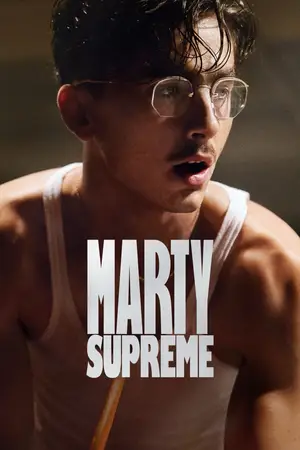
A recent addition to the list having watched Marty Supreme through an FYC screener a few days ago, but I can already tell that Kletzki's bizarre, sensuous story of helping others survive the horrors of Auschwitz will stick to my mind like the miraculous honey to his bare chest.
As Kletzki found the honey in his flashback, I assumed he would unabashedly dig in, experiencing his first decadent meal in what seems like eons - and perhaps his last. But that's a Marty Mauser move. Instead, he brings it back to the camp, helping his community by sacrificing his own chance for an understandable moment of indulgence, transforming it into something altogether more meaningful.
Of course, Marty finds this hilarious. What a movie.
Becoming God in Little Amelie or the Character of Rain
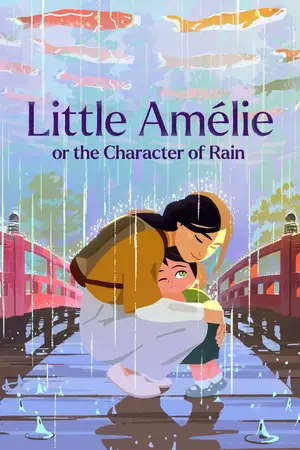
This fascinatingly transnational flick flew under the radar this year, but Little Amelie or the Character of Rain is a gorgeous, small scale story about adjusting to the transience of the world as a toddler, something we've all done but that few remember.

The way the story unfolds is lovely and poignant, but it's the strange 2001 esque opening sequence that grabbed me: Amelie, as a baby, is God. She consumes, creates, destroys, and has no concept of similar interiority of the the living beings that surround her. The film was apparently inspired by the idea that, in Japanese culture, children are closer to kami (Gods) than humans for their first few years of life - Amelie convinced me that this is fact rather than myth.
Memento Amoris in 28 Years Later
I've already discussed my love for 28 Years Later and its fascinating tonal shift, so I'll keep this short. This spot was a tossup between the ‘Boots' montage (Young Fathers not being shortlisted at the Oscars for their work is a travesty) and the sequence I'm about to discuss, and after a recent rewatch the latter won out.

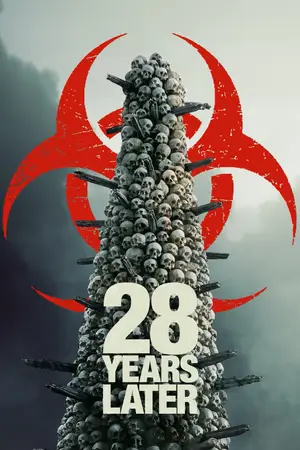
Death isn't rare in zombie narratives, and there are plenty of tragic demises in other movies, but the reverence that the wonderful Dr Kelson has for every single deceased is a breath of fresh air. This culminates in Spike, our preteen protagonist, placing his own mother's skull atop a mountain of bones, turning her head so they can watch the dawn together one last time - what an image to pick for your promotional posters.
Never Going to School in Chainsaw Man - The Movie: Reze Arc
Again, this isn't the first time I've discussed the first big screen outing of Chainsaw Man, but the ending - which is perhaps more tragic here than it was in the manga - is worth mention, primarily for how it turns Reze into far more than a temptress antagonist for our hapless antihero Denji.
Struck down before their final meeting by Makima, Reze's death, unlike most in the series, isn't spectacular. She isn't ripped to shreds by a Lovecraftian being or swallowed whole -she's hurt, and she bleeds out, her last words reaffirming her alignment with Denji as a tool of the state: ‘I’ve never been to school either'. The two strive for normality, but for Reze, that dream will never come.
Execution in From Hilde with Love
A German movie that premiered at the Berlinale last year, From Hilde With Love tells the true story of a pregnant woman imprisoned by the Nazis for her rebel activities. We see her fall in love and become more involved in the Red Orchestra group through a (slightly clunky) nonlinear flashback structure, her life in prison serving as the more compelling frame narrative. It's here that she births her son, begs for their survival, and is ultimately still lead to her fate.

The final ten minutes of this film have haunted me since I watched it back in summer. Moments like the guard fetching Hilde a new gown because she (as a new mother) has leaked milk through her original one are devastating, but its the understated quality of her actual death that I found most disturbing. She's presented to a panel of Nazi higher-ups, a curtain opens, she's quickly marched to the now-revealed guillotine, and within a couple of seconds the Hilde we knew is unceremoniously gone. The camera doesn't linger, the score doesn't rise, we don't even get a reaction from other characters. She's just gone, in a way that few films are bold enough to try with their titular protagonists.
Dinner with the In Laws in What Does That Nature Say to You
A borderline Dogme 95 offering from the prolific Hong Sang-soo, What Does That Nature Say to You has an unwieldly title and a simple premise: a woman bringing her boyfriend home to meet the family. This definitely isn't a full-on Meet the Parents style cringefest, but there are plenty of moments to increase the tension, particularly as the ‘alcohol test’ - confirmed to me by a Chinese friend at the same screening as a genuine tactic across East Asia to find the true character of a potential in-law - ramps up in strength.
This culminates in a dinner that begins innocently enough, but soon becomes unbearable when an excessively drunk Ha Donghwa reacts strongly to his would be sister-in-law's questions about his wealthy father, and whether Donghwa is truly on the frontline struggling as a poet with this kind of prestige background. It's the climax of a movie that you don't expect to contain a climax, and the question of whether Donghwa could ever have been happy with the Kim family remains in the wreckage.
Playing Piano in Young Mothers
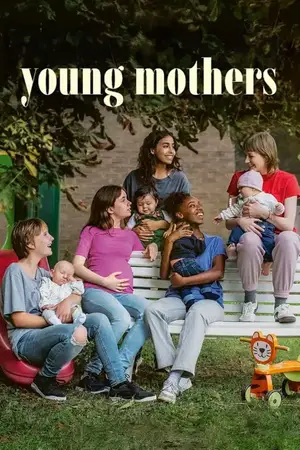
Finishing on a hopeful note from the Dardennes of all people, Young Mothers is a lovely little movie about teenage mothers trying to overcome their various personal problems while leaning on each other for much needed support. Following several narrative strands, the strongest for me was that of Julia, an addict looking to carve out a life for herself and her daughter along with the baby's father, a surprisingly gentle but believable boy who sticks with her through it all.

After plenty of heartbreak, the film ends on a remarkably joyful note for the pair. Julia has relapsed and recovered, and the couple are visiting Julia's former teacher to ask her to be a witness for their wedding. She happily obliges, and they enjoy a song together at her piano that Julia once admired in class, highlighting the character's intelligence and appreciation of art in a way rarely afforded to this demographic (see: Teen Mom and every variant). It's easy to see how Julia is going to make it, and that was one of my most joyful moments in a cinema seat this year.
See you all in 2026!







Comments 1