The Illusion of the Flame: Why Chinatown Burned Redemption Out of Film Noir
General Reviews
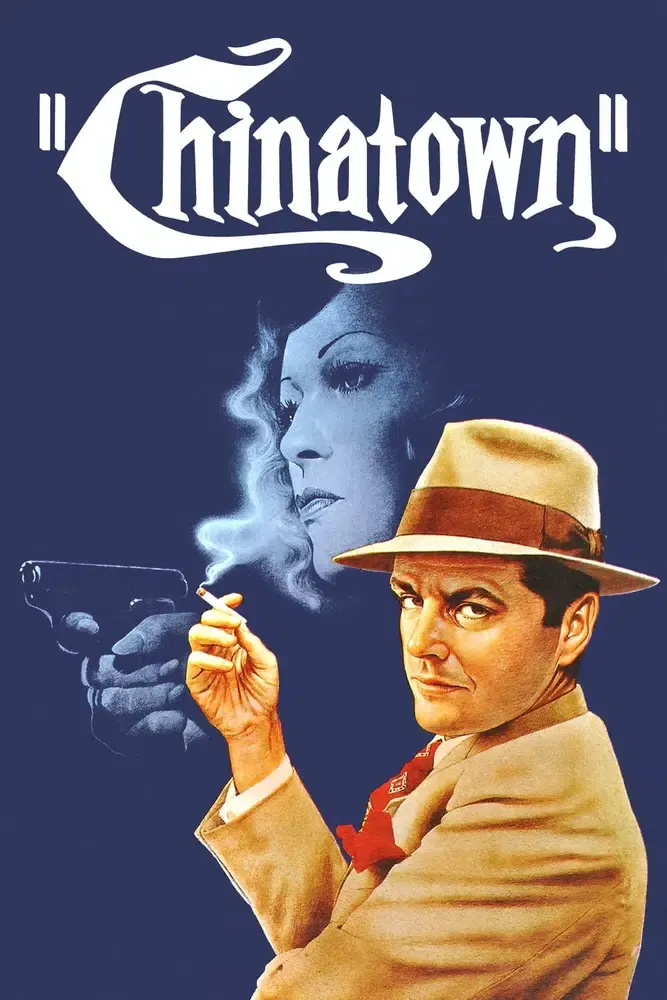
A Disillusioned Detective in the City of Sun ☀️
In 1974, the detective genre—long wrapped in the moral certainties and shadowy glamour of classic film noir—needed someone to put a bullet in its head. Roman Polanski, Robert Towne, and Jack Nicholson didn’t just pull the trigger; they stood over the body and made sure it stayed dead. Chinatown isn’t merely a film. It’s an act of cinematic deicide. It doesn’t homage noir—it executes it in broad daylight to prove, with surgical cruelty, that in the modern world, corruption doesn’t hide. It rules.
The movie takes the old tropes—the fog, the trench coats, the femme fatale—and strips them bare. What’s left isn’t stylized darkness, but moral rot so exposed it glistens under the California sun. In this light, the American Dream doesn’t just crack—it curdles. And the private eye, once the lone knight of urban chaos, becomes a bystander to his own irrelevance. This is not entertainment. It’s an autopsy. And fifty years later, the corpse still hasn’t cooled.

---
Chapter I: The Shattered Mirror of Classicism 🕵️♂️
2.1. Jake Gittes: The Anti-Marlowe
Philip Marlowe walked mean streets but believed in clean hands. Jake Gittes? He gave up on clean hands before the opening credits rolled. He’s not a cynic playing at idealism—he’s a man who learned early that truth doesn’t set you free; it gets you kneecapped. His office reeks of failure. His suits are white only until reality stains them. And his past in Chinatown? That’s where he learned the hard way that doing the right thing can be the worst mistake of all.
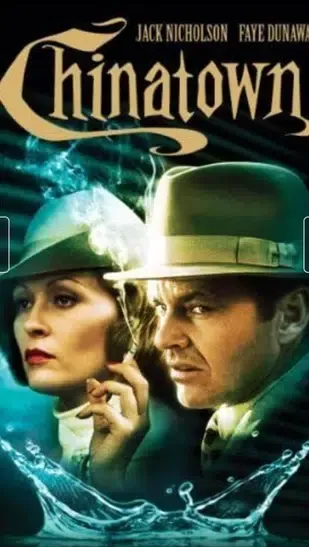
Screenwriting textbooks call him “overconfident,” but that misses the point. Gittes isn’t arrogant—he’s haunted. He clings to procedure because it’s the only thing keeping him from drowning. When Evelyn Mulwray walks in, he thinks it’s just another adultery case. But the deeper he digs, the clearer it becomes: this isn’t a mystery to solve. It’s a trap already sprung.
2.2. The Useless Light of L.A.
Classic noir thrived in shadows. Chinatown murders it with sunlight. Polanski films Los Angeles not as a city of dreams, but as a sun-bleached crime scene. The hills are golden. The palms sway. The aqueducts gleam. And beneath it all? Rot. Institutional rot. The kind that doesn’t need alleys or fedoras—it owns the mayor’s office, the newspapers, the water supply.
This isn’t atmosphere. It’s accusation. Evil here doesn’t lurk—it lunches at Musso & Frank. It wears linen suits and quotes scripture while stealing futures. The light doesn’t reveal truth; it sanitizes lies. And by the time Gittes sees what’s really going on, the sun has already burned away any chance of escape.

2.3. The Rules of a Broken Game
The plot starts small—a wife suspects her husband’s cheating. But like water diverted through secret channels, the story spreads until it floods everything: City Hall, orange groves, family legacies, childhoods. What begins as a private scandal becomes public damnation.
And at its core? Not greed alone, but incest—a violation so intimate it poisons the very idea of kinship. Water, the symbol of life, becomes the currency of control. As Hollis Mulwray knew too well: “You may think you know what you’re dealing with, but believe me, you don’t.” He was talking about the Department of Water and Power. He might as well have been talking about God.
---
Chapter II: Evelyn Mulwray: The Shattered Femme Fatale 💔

3.1. Beyond Deception
Faye Dunaway’s Evelyn isn’t seducing anyone. She’s surviving. Every gesture is guarded, every word measured. This isn’t the femme fatale who lures men to their doom—she’s the one already trapped in it. Her secret isn’t a weapon; it’s a wound she’s been nursing since girlhood.
When she finally breaks down and whispers, “She’s my sister… and my daughter,” it’s not a twist. It’s a collapse. The room doesn’t just go silent—the whole moral universe tilts. Robert McKee calls this the film’s emotional payoff, and he’s right. But it’s more than that. It’s the moment we realize: there are no heroes here. Only victims, monsters, and men too late to matter.
3.2. The Secret in the Water
Water is power. Water is theft. Water is lineage. While farmers watch their crops die, Noah Cross buys desert land cheap, knowing the city’s pipes will soon make it bloom—with other people’s sweat, other people’s children. The drought isn’t natural. It’s engineered. Just like the silence. Just like the complicity.
Gittes follows the water the way a priest follows dogma—only to find the altar empty. Truth exists, but it has no force. No teeth. In this world, facts are just debris floating downstream.

3.3. The Great Evil: Noah Cross
John Huston doesn’t play Noah Cross. He embodies a new American archetype: the smiling predator. He’s not a thug with a gun. He’s a titan who believes the world exists to be devoured. “Most people never have to face the fact that at the right time and the right place, they’re capable of anything,” he tells Gittes. But Cross isn’t confessing guilt—he’s stating a principle.
He doesn’t fear justice because he is justice. The courts, the police, the headlines—they’re all branches of his will. And when he walks off with Katherine at the end, it’s not a kidnapping. It’s a transfer of property. The system didn’t fail. It worked exactly as designed.
---
Chapter III: The Redemption Failure 💥
4.1. Gilles Doesn’t Want to Fail Again. Not Like That.
Somewhere in Chinatown’s past, Gittes tried to help someone. Tried to do good. And all he got for it was blood on his hands and a lesson carved in bone: innocence gets you killed; idealism gets others killed. So now he plays it safe. “Do as little as possible.” It’s not wisdom—it’s trauma dressed as strategy.
But then Evelyn looks at him with those eyes—terrified, desperate, human—and something cracks. Against his better judgment, against every instinct, he steps back into the fire. He asks questions. Follows leads. Pushes doors marked Do Not Enter. Each move feels inevitable, even as it seals his fate.
They break his nose. Kick him in the groin. Leave him in the dirt. But the real violence isn’t physical. It’s the slow realization that he never had a chance. That he was never the hero. Just another pawn who mistook motion for progress.
And when Evelyn dies—shot through the eye, mid-run, hope still in her stride—the world doesn’t stop. It keeps turning. Indifferent. Efficient. Evil doesn’t roar. It files paperwork.
4.2. The Final Scene: “Forget It, Jake. It’s Chinatown.”
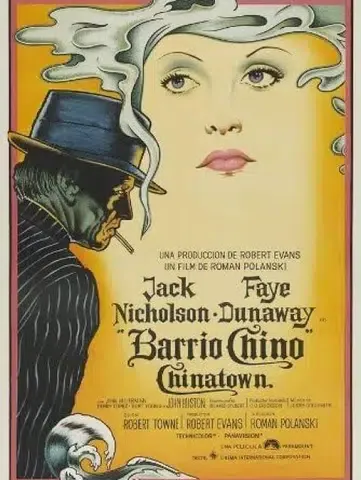
No music swells. No last-minute rescue. Just a cop muttering five words that bury an entire genre: “Forget it, Jake. It’s Chinatown.”
It’s not resignation. It’s recognition. Some wounds don’t heal because they’re not meant to. They’re reminders. And in that moment, the promise of noir—that truth could triumph, that one man could make a difference—evaporates like water in the desert.
McKee ties this despair to post-Watergate America. Polanski’s grief over Sharon Tate feeds it too. But the film’s power lies beyond context. It speaks to a timeless dread: that sometimes, the bad guys don’t just win—they inherit the future.
4.3. The Feeling of Defeat
Chinatown doesn’t end when the credits roll. It settles in your chest like smoke. You leave the theater not entertained, but implicated. Because you know—really know—that this isn’t fiction. It’s diagnosis.
Cross walking away with Katherine isn’t just tragic. It’s ordinary. The powerful take what they want. The rest of us learn to look away. And that final image—silhouettes dissolving into the labyrinth of Chinatown—isn’t poetic. It’s prophetic.
There’s no redemption here. No lesson. Just the echo of a truth we keep forgetting: in a world built on lies, the only sin is believing you can fix it.
---
Conclusion: The Unwashable Shadow of Neo-Noir
5.1. Cinematic Legacy
Chinatown didn’t just influence neo-noir—it redefined what cinema could dare to say. Its DNA pulses through
- Blade Runner’s rain-soaked dystopia,
- L.A. Confidential’s compromised cops,
- even the quiet despair of Zodiac.
These films inherited its central insight: style without moral reckoning is just decoration.
Towne’s script, often called perfect, earns that praise not for its twists, but for its refusal to offer comfort. Every line serves the film’s brutal thesis: truth without power is noise.
5.2. Why It Still Competes Today
We live in a time of manufactured droughts—of water hoarded, elections rigged, children trafficked under polite euphemisms. Cross’s line—“The future, Mr. Gittes”—doesn’t sound like dialogue anymore. It sounds like a quarterly earnings report.
Chinatown endures not because it’s a period piece, but because it’s a mirror. And mirrors don’t age. They just get dirtier—until someone wipes them clean. Or tries to.
---
A Call to Cinephiles
Don’t just watch Chinatown. Wrestle with it. Watch it with someone who’ll stay up arguing about it at 3 a.m. Let it unsettle your faith in heroes, in systems, in happy endings. Because that’s what great cinema does: it doesn’t comfort. It confronts.
Sharing this film today isn’t nostalgia. It’s resistance. A refusal to forget that evil often wears a suit, smiles at charity galas, and calls itself progress.
---
Closing Thought
Jake Gittes loses more than a case. He loses the last shred of belief that decency matters in a rigged game. And though we’d like to think we’ve moved on from 1974, all we’ve done is change the players. The game? The game is still Chinatown.
Only now, we can’t say we didn’t see it coming.
---
Chinatown (1974) - Trailer



Comments 6