Suzy Kendall: The Original Final Girl
General Reviews
I. The Man in the Fog
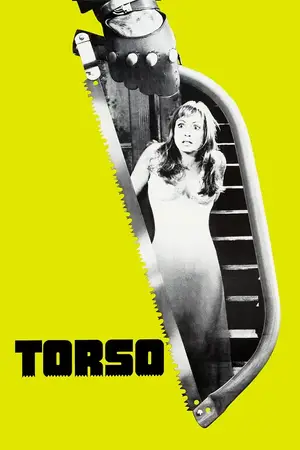
The fog always comes to mind first — that dreamy, hazy opening through the bog where sex and death hold leather-gloved hands under Sergio Martino’s sleazy day-for-night lighting. Torso is one of those films that feels like it’s whispering and screaming at the same time.

The title alone sounds like a dare — blunt, prurient, designed to make censors choke and prudes gulp. But for all its grindhouse marketing and presentation, there’s something weirdly elegant about it too — like a peep show shot by a Romantic painter.

The first time I watched it, I spent way too long staring at the Arrow Blu-ray menu, paralyzed by the choice between Italian or English audio. My Giallo fixation was only budding at the time, so I started with Italian — “subs over dubs," right? The sacred cinephile mantra. But something felt off. The rhythm was wrong, the tension dulled.

I swapped to the hybrid English/Italian track (because some scenes from the extended cut were never actually dubbed in English) and suddenly Torso clicked into place. That slightly-off dubbing, the ghostly delay between lips and sound — that’s not a flaw. It’s texture. It’s part of the dream logic of Giallo. As I would later learn, the poor English dubbing is as much a staple of Giallo cinema as the black glove and the psychosexual murder.

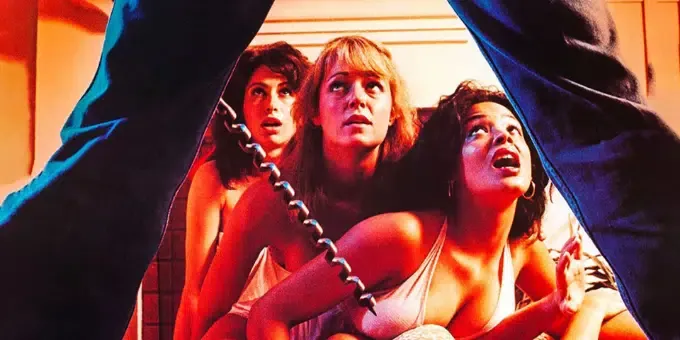
And what a psychosexual murder spree it is. Martino’s camera floats between art lectures and erotic nightmares, between the manicured city of Perugia and the isolated countryside villa where things get real slasher-y. It’s a film constantly changing shape — part mystery, part porno, part proto-slasher — all of it stitched together by Suzy Kendall’s enormous, terrified eyes.

II. Between Two Genres: When Giallo Became Slasher
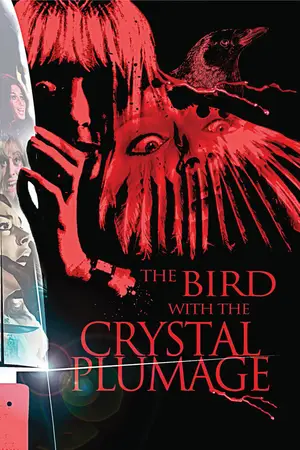
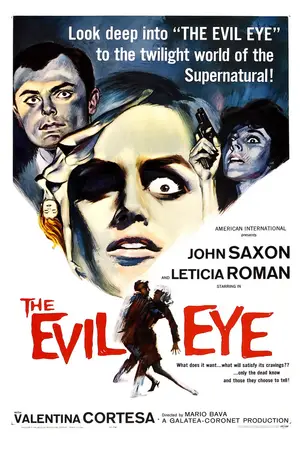
By 1973, Italian Giallo was at its commercial and aesthetic peak — Mario Bava birthed and defined it with The Girl Who Knew Too Much (1963) and Blood and Black Lace (1964) before Dario Argento’s The Bird with the Crystal Plumage (also starring Suzy Kendall) cranked up the cinematic appetite in 1970 and started a full-blown cultural phenomenon.

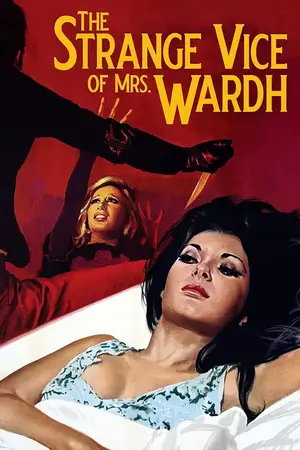
Only thirty-eight Gialli had ever been made pre-Crystal Plumage, but nearly a hundred would be released between 1971–1973. Five seminal entries into the Gialli canon during this time came at the hands of Director Sergio Martino: The Strange Vice of Mrs. Wardh (1971), The Case of the Scorpion’s Tail (1971), Your Vice Is a Locked Room and Only I Have the Key (1972), All the Colours of the Dark (1972), and — of course — Torso (1973).

But of course, just as the Gialli evolved from pulpy detective novels and Hitchcock films, it wouldn’t be long before Gialli started evolving into something else — the American Slasher. Torso exists right at the fault line of this genre fissure, a bridge between Italo-mystery and American slaughterhouse.

You can literally see the transition happen mid-film. The first half plays like a campus Giallo — art students, love triangles, urban architecture, red scarves, and philosophical lectures about St. Sebastian’s erotic martyrdom.

Then, halfway through, we’re transported to a countryside villa. The city’s labyrinthine alleys and bustling streets are replaced by locked doors, window bars, and hushed nature ambiance.

The ensemble cast narrows to a handful of girls. The tone goes from chaotic to surgical.

That shift — from urban whodunit to rural cat-and-mouse — is the moment Torso stops being a Giallo and becomes something new. The villa acts like a cocoon for the future slasher film: isolated, soundtracked by silence and screams.

From here on, we’re not watching mystery but survival. It’s no coincidence that Black Christmas dropped the very next year. Torso walked (and limped) so Halloween could run.

III. Suzy Kendall’s Jane: The Prototype, Not Yet the Hero
Here’s the thing about Suzy Kendall — she doesn’t fit the usual Giallo mold. Most female leads in the genre are amateur detectives or helpless witnesses caught in kaleidoscopic murder plots. Kendall’s Jane is neither. She’s not investigating the killer; she’s enduring him.

Jane is what Carol J. Clover — author of “Men, Women, and Chainsaws” (the slasher bible) — would later call a “final girl,” but a version still in progress — a prototype wrapped in the sticky cocoon of male authorship.

She’s resourceful, but not yet empowered; smart, but still waiting for a man to burst in and save the day. In true 1970s fashion, survival isn’t victory — it’s endurance.

The film restores patriarchal order by having a male hero swoop in, even as Jane proves herself more capable than anyone else in the movie.

But what makes Kendall unforgettable is her presence. Her eyes do all the acting the script won’t let her. She’s got the perfect Giallo face — porcelain, but terrified; fragile, but alert.

Giallo is a genre performed through the eyes, and hers are practically weapons. When the villa sequence locks her in silence, it’s those eyes that keep the tension alive.

Her performance turns fragility into suspense. She’s injured, barefoot, wearing a white nightgown — everything about her screams “vulnerable,” but Kendall weaponizes that helplessness.

She doesn’t scream when she finds her friends’ bodies. She goes silent — calculating.

She strips her bed, cleans up evidence of her presence, flashes SOS signals with a mirror. It’s a survival instinct so primal it bypasses dialogue entirely — making for a nearly wordless final act.

This is what makes her the prototype: she isn’t the empowered scream queen yet, but she’s the model the genre will copy for decades — Laurie Strode’s purity, Alice Hardy’s quiet terror, Sidney Prescott’s composure under siege. Jane did it first, in a dubbed American voice and a linen nightgown.

IV. Sleaze and Sympathy: Martino’s Voyeurism
Time to talk sleaze. Because Torso is sleazy as hell.

The original Italian title literally translates to “The Bodies Bear Traces of Carnal Violence” — which sounds less like a film title and more like something a priest would scream during an exorcism.

Martino’s lens is equal parts lust and disgust, and he never lets you forget it. Every woman is ogled before she’s killed; every act of violence feels like foreplay.

And yet — it’s sleaze with intent. Martino’s voyeurism is deliberate, not arbitrary.

The film opens with an art history lecture about the sexualized suffering of St. Sebastian, setting up the whole movie as a meditation on the intersection of sex, art, and violence.

The killer is literally an art professor turned psychosexual murderer, enacting his twisted aesthetic philosophy on women’s bodies.

Even the camera participates in the crime. Martino frames and cuts women’s bodies like paintings — cropped torsos, bare skin, “cut-up live flesh” as one critic wrote — implicating us in the gaze. It’s exploitation that knows it’s exploitative, and that awareness gives it a strange power.

At the same time, Martino’s film has moments of genuine empathy, particularly toward Jane. The sequence where she hides as her friends are dismembered is horrifying, yes, but it’s also weirdly tender.

The camera stays with her — trembling, silent, trying not to breathe — not with the killer. We feel her fear instead of consuming it. The film turns voyeurism inward, forcing us to identify with the watched rather than the watcher.

V. The Villa Sequence: Pure Suspense, Pure Cinema
This is where Torso becomes Torso — where Giallo becomes Slasher. The last 30 minutes are pure, uninterrupted tension — a wordless ballet of fear. Jane wakes up from her drugged sleep to find her friends butchered.

She hides. The killer (masked, methodical, horrifyingly calm) saws through flesh inches away from her. The sound design is obscene — bone splintering, hacksaw grinding. Martino doesn’t show everything — hardly anything in fact, but you feel it.

Kendall carries this entire sequence on her face. No dialogue, no soundtrack except her heartbeat. You can track every emotion — confusion, horror, resolve — just by the twitch of her eyes.

It’s one of the most precise exercises in cinematic suspense I’ve ever seen — especially the key scene. Hitchcock by way of sleazy drive-in Italy.

What makes it so effective goes beyond craft; it’s recognition. Watching that sequence, you realize how many slashers have replicated it. It’s all there, embryonic, in this villa.

That’s the beauty of Torso: it’s both derivative and original, sleazy and sophisticated, art and pulp. It’s cinema in mutation.

VI. The Legacy: Suzy Kendall, Bookending Giallo
If Torso is the bridge between Giallo and slasher, then Suzy Kendall is the woman holding the ropes steady. She’s there at the genre’s birth and its death — first in Argento’s The Bird with the Crystal Plumage (1970), the film that popularized Giallo, and then here in Torso (1973), where the genre begins to morph into something meaner, bloodier, and more American.

If she were remembered only for Torso, it would be a solid legacy — “the prototypical final girl,” the scream that started a thousand screams. But her career in these two films gives her something richer: she’s both alpha and omega, muse and survivor. She marks the point where the mystery-thriller’s elegance collapses into slasher brutality.

What’s remarkable is how little credit she gets for it. People name-drop Jamie Lee Curtis, Adrienne King, Heather Langenkamp — but Kendall was there first, crafting the blueprint with nothing but a limp, a mirror, and those panic-wide eyes.

She wasn’t a fighter yet, but she was awake. You can see the entire genre’s future in her silhouette.

VII. Closing: The Prototype That Bled
There’s a moment near the end where Jane signals for help with a mirror, desperate and ingenious, flashing light out the window like a lighthouse made of panic.

The killer’s still in the room, the bodies are cooling downstairs, and she’s clinging to life through pure cunning. That image won’t leave me — not because it’s gory, but because it’s hopeful.

That’s Suzy Kendall’s gift to the genre: the idea that fear doesn’t paralyze, it clarifies. That survival isn’t about moral purity or brute strength, but the quiet intelligence of someone who refuses to die quietly.

When I think about Torso, the first thing that comes to mind isn't the sleaze or the blood or the killer’s backstory. It's her — limping, sweating, thinking, surviving. The woman who wasn’t supposed to win, who did anyway, if only by accident.

And maybe that’s why the film still feels alive fifty years later. Beneath the layers of dubbed dialogue and drive-in grime, there’s something raw and human pulsing under the surface.

Suzy Kendall shaped the final-girl archetype one trembling eye flicker at a time. And every scream queen since owes her a mirror flash of gratitude.


Mentioned in this piece
 Torso1973
 The Bird with the Crystal Plumage1970
 The Strange Vice of Mrs. Wardh1971
 The Case of the Scorpion's Tail1971
 Your Vice Is a Locked Room and Only I Have the Key1972
 All the Colours of the Dark1972
 The Girl Who Knew Too Much1963
 Blood and Black Lace1964
 Suspiria1977
 A Bay of Blood1971
 Black Christmas1974
 Halloween1978
 Friday the 13th1980
 A Nightmare on Elm Street1984
 The Texas Chain Saw Massacre1974
 Suzy Kendall
 Sergio Martino
 Dario Argento
 Jamie Lee Curtis
 Adrienne King
 Heather Langenkamp
 Marilyn Burns
 Tobe Hooper
 Sean S. Cunningham
 Wes Craven
 Edwige Fenech
 Anita Strindberg
 Tina Aumont
 Luc Merenda
 Roberto Bisacco
Comments 2