"THE EXORCIST: BEYOND FAITH AND PANIC"
General Reviews
Horror is undoubtedly my favorite genre. I've seen many disappointments, but also many films that have left their mark, like The Ring, The Conjuring universe, The Skeleton Key, etc. But no matter how many years pass and how many better films are made, for me, my favorite will always be The Exorcist.
If a horror film is to be judged by its capacity to break the audience's boundaries and leave a scar on the social fabric, none comes close to "The Exorcist" (1973) by William Friedkin. It didn't just terrify a generation with disturbing images; it unleashed a collective hysteria that transcended the screen, forcing theaters to install first-aid rooms and the press to debate the morality of the art.
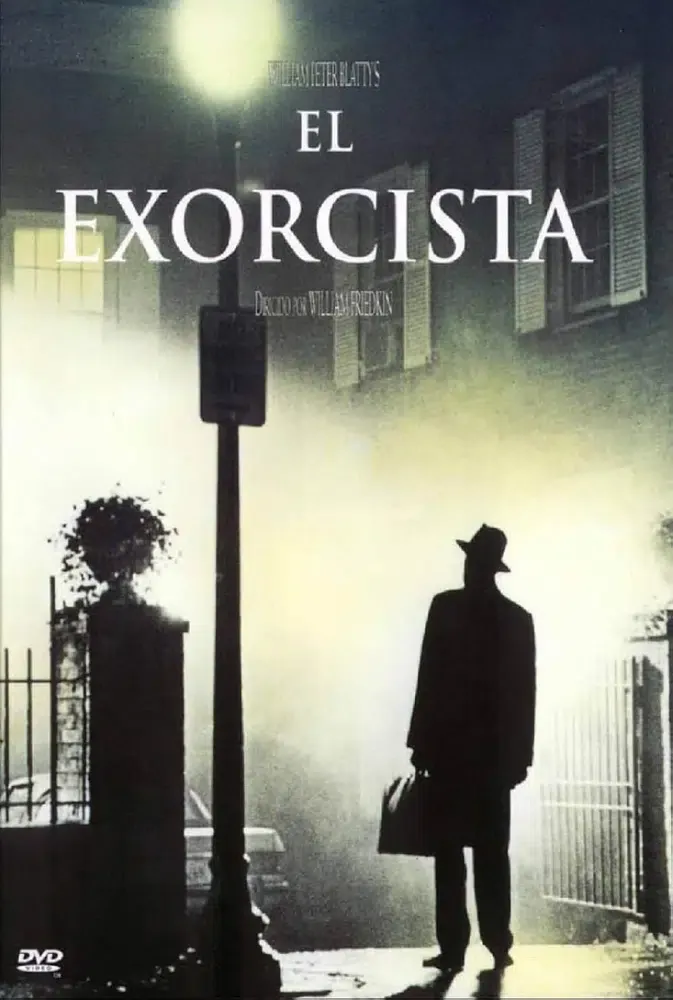
The Exorcist doesn't just belong in the Horror Hall of Fame; it is the gold standard by which terror is measured.
The Context of Panic: A Society in Crisis
The film arrived at a time of deep social unrest and distrust in the West—the Vietnam War, the Watergate scandal, and the loss of faith in institutions. This climate of vulnerability made the terror proposed by Friedkin particularly potent.

The attack and demon possession strike Regan MacNeil, a child, the supreme symbol of innocence. This was an act of filmic blasphemy that touched a raw nerve. Regan's physical and verbal degradation was viewed by many not as fiction, but as a manifestation of real evil that could affect even the purest souls.

We also find the battle of Faith vs. Science; the film presents the central conflict of the era: science (represented by doctors and psychiatrists) is powerless against Regan's evil. Only faith (Father Merrin and Father Karras) can offer a solution. This message resonated profoundly in a society that was beginning to question the absolute power of reason and medicine.
Raw Psychological and Physical Horror
The greatness of The Exorcist lies in its brutal, unvarnished realism. Friedkin avoided cheap tricks and used an almost documentary technique to construct the horror.

The Immersive Technique of Fear and the Absence of Music (or Minimal Use) throughout much of the film avoids background music, forcing the viewer to listen only to the raw sounds of the sickness, the tense breathing of the priests, and the guttural voice of the demon Pazuzu. This creates an atmosphere of documentary-style horror.
The Use of Lighting in the key possession scenes is shot in a dark, glacial room, often illuminated only by dim light. This claustrophobic and intimate feeling intensifies the horror and isolates the viewer with the victim.

Dick Smith's makeup work on Linda Blair's face isn't just makeup; it's visual sound design. The physical repulsion is so convincing that the audience cannot distance themselves from the suffering.
An Unrivaled Legacy: The Power of Myth
Beyond the technique, The Exorcist is important because of the myth it created around its production.
The Social Phenomenon: Stories of fainting, vomiting, panic attacks in theaters, and people lining up for confession after seeing the film became part of the movie's marketing and, more importantly, an urban legend that cemented its status. People weren't going to see a movie; they were going to endure a test.
The Question of Guilt: The film mocks the idea of moral protection. Regan is not guilty, yet she is punished. Her mother, Chris MacNeil, is a secular Hollywood figure, and some critics saw the possession as a punishment for the secular, modern morality of the 1970s.
In conclusion, for this and other reasons, "The Exorcist" is my favorite horror film because it is more than a movie: it is a dark mirror of faith, morality, and human fragility. Its impact on society, by forcing a public debate about good and evil and the reality of the supernatural, secures its throne in the Horror Hall of Fame.




Comments 0
No comments yet.