You Can Like 'The Conjuring' Films, but They Absolutely Promote Religious Conformity
General Reviews
Before we dive into this heavy of a topic, I should preface that I haven't seen The Conjuring: Last Rites, and it's not likely I'll be watching it in theaters. Therefore, this piece is going to dig into the previous films and won't be spoiling the recent and potentially last film in The Conjuring series. Alright, now that we've gotten that out of the way, let's jump right into it, shall we? For those who aren't in the know regarding The Conjuring Universe, it's a widely successful horror franchise that began in 2013.

In terms of just The Conjuring films, rather than the spin-off films, they focus on Ed (Patrick Wilson) and Lorraine Warren (Vera Farmiga) who are based off a real-life couple of the same name who investigated paranormal happenings from the 1950s-1980s. One of their most infamous cases being Amityville (a horror film was adapted from a novel that was written about the case) and from there they were more publicly noticed. Naturally, many years later, James Wan directed The Conjuring that incorporates the real-life investigations done by Ed and Lorraine Warren.
The first film follows Ed and Lorraine who assist the Perron Family in the haunting that's occurring in their home and later the possession of Carolyn Perron (Lilli Taylor), the matriarch of the family. It's a film that doesn't break new ground as far as possession or supernatural horror films go. In fact, it's relatively in line with what many 2010s supernatural and religious horror films were doing at the time. It just so happens that people really appreciate Wan's style and highly praise the film for that and the chemistry between Patrick Wilson and Vera Farmiga. But what about the messaging of these films and the real-life Warrens' thoughts on those who don't subscribe to religion?

It's been said a million times and people might be tired of being reminded, but horror is and always has been a political genre. You can find something in nearly every horror film, whether the politics are problematic or harmful in a film, horror is typically saying something. Therefore, The Conjuring films aren't exempt from this fact and with the way they position Catholicism as the way to prevent being possessed is part of its brand of promoting religious conformity.
Before anyone says anything, it's fine to be religious and this isn't saying that you can't be. However, the concept of conformity is consistently forced upon marginalized people, especially. But in general, any family that might not fully conform to what plenty of Christian based religions view as acceptable is usually advised to be corrected.
The Perrons are positioned as people who were vulnerable to possession because they aren't deep in faith like the Warrens. The Conjuring universe doesn't present the idea that anyone can be targeted or possessed, it instead indicates that people who aren't devoutly Christian are suffering because they're the opposite of that. Religious horror films ride the line of that often, but they don't always push a narrative that's as aggressive throughout the film itself.

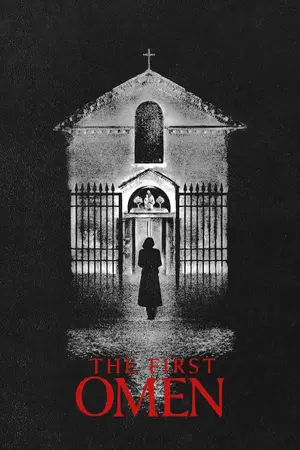
An example of recent religious horror films where suffering happens to the characters, whether they're religious or not, is The First Omen (2024). Just like The Conjuring, Margaret (Nell Tiger Free) is a religious person, and she relocates to Rome during the ‘70s to pursue what she believes is her calling in life. Yet she still suffers greatly because of events that are out of her control, and it doesn’t matter what she does. But the same can't be said in terms of what The Conjuring films are saying.
In The Conjuring 2 it's another case of the family not being religious and the eldest child of the family ends up being possessed. Meanwhile, the Warrens serve as the conformity that fixes their problem and while they are paranormal investigators, it's all about reenforcing their own faith. In real-life, the Warrens both believed that non-believers were the most vulnerable to paranormal incidents, and that their lack of belief made it so they couldn't protect themselves.
The idea that people are only suffering because they don't subscribe to a Christian religion is problematic. It pushes the idea that if you become the form of religious, that you'll automatically be a good person and will no longer be vulnerable to such incidents. But if you remain someone who doesn't, you'll likely never know peace again. During the next film, it's even more heavy-handed than in the previous films.

During The Conjuring: The Devil Made Me Do It, there are implied lesbian characters and one of them dies at the hands of the other for a witch's ritual (yes, witches are painted out to be strictly lecherous in this universe). While queer (coded or otherwise) characters dying does happen throughout horror history, this particular scene only lends itself further to the idea that those who don't conform are bound to suffer. After all, conservative ideologies and Christianity being the true force of good is extremely enforced throughout these films.
It's not to say that The Conjuring films don't entertain some people because they do. They make quite a bit at the box office, have a fair number of fans, and they are mainstream enough that even people who aren't big horror fans will go see them. Though putting aside the entertainment value, the chemistry between Wilson and Farmiga, and any good points to make about them, they still aren't innocent of promoting the ideologies they do.
There's never allowed to be any questioning of religion, that doesn't end in someone being proven wrong. The Warrens are always right in what they believe and are constantly triumphant by way of their religious beliefs. The films have become less based on the real-life Warrens, who were proven to not be trustworthy and had been labeled as fraudulent on more than one occasion. If you look into them, they weren't anything like Wilson and Farmiga's characters. Yet, their stories are further legitimized through a Hollywood-washed version of certain cases (some in which they were barely involved in).
If you love the films as a fan of supernatural horror as a subgenre or just enjoy the chemistry between the two leads, that's fine. Nobody is saying you're a bad person for consuming these, whether you consider yourself religious or not. But the fact of the matter is, there are levels to the ways in which someone's Christianity is weaponized as a means to oppress marginalized people in particular. And in a lot of cases, make anyone who doesn't subscribe to religion feel like they're inherently a bad or filthy person as a result.
At the end of the day, these films have bothered me because of the points that were made throughout. If you happen to feel the same way then you're not alone in dissecting what you're watching.
(image credit: Warner Bros. Pictures)





Comments 3