‘The Balconettes’ Review: A Fever Dream of Feminist Fury
General Reviews

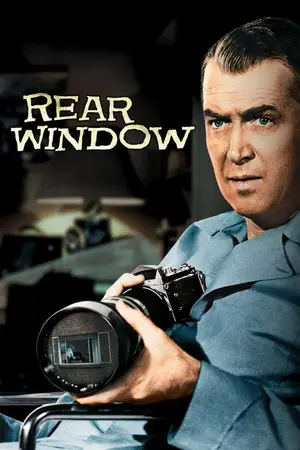
In the blistering, delirium-inducing heat of a 46-degree Marseille summer, The Balconettes opens with the seductive promise of something tight, stylish, and playfully sinister: a French, female-led Rear Window filtered through jazzy voyeurism, half-naked bodies, and balcony-bound gazes. As the camera glides past open windows and languorous limbs draped over sun-scorched railings – children below spraying water guns, an anonymous beauty stretching like a prelude to dance – one can’t help but settle in for what seems like it might be a sun-bleached Hitchcockian thriller with a feminist edge. But Noémie Merlant’s film quickly unbuttons its blouse and lets everything pour out: rage, trauma, comedy, solidarity, hallucination, blood, and sex. What starts with stylistic confidence ends in swirling chaos. Whether that chaos is meaningful or just messy is what The Balconettes lets its viewers decide.

Denise (Nadège Beausson-Diagne) is our introduction to this world. Lying motionless on her balcony – her bruised face suggesting death, or perhaps just defeat – she’s suddenly kicked by her husband. Dinner needs making. Denise is only playing dead. Moments later, in one of the film’s sharpest tonal pivots, she grabs a hand shovel and slams it into her husband’s skull, splattering blood across the living room wall and a crucifix in equal measure. That is the film's first kill – and the first whisper that this sun-baked story will have many surprises up its sleeve. Because when a heatwave like this feels like murder, why not have a real one…or two?
Following Denise’s escape from oppression by blunt force trauma, we shift focus to the core trio: Nicole (Sanda Codreanu), a struggling writer; Ruby (Souheila Yacoub), a cam girl; and Élise (played by Merlant herself), an actress in full Marilyn Monroe cosplay, trying to catch her breath from either the suffocation of heat or the suffocation of life – or maybe a combination of the two. The titular Balconettes have a rapport that is giddy and genuine, with a joie de vivre that feels irreproducible in the presence of men. Watching them lounge, flirt, and fantasize from their shared balcony is the film’s most effortless pleasure. They’re candid, sexy, absurd, and self-aware. They also feel like women barely keeping it together, each running from something: a creative block, a dead marriage, a trauma unspoken.
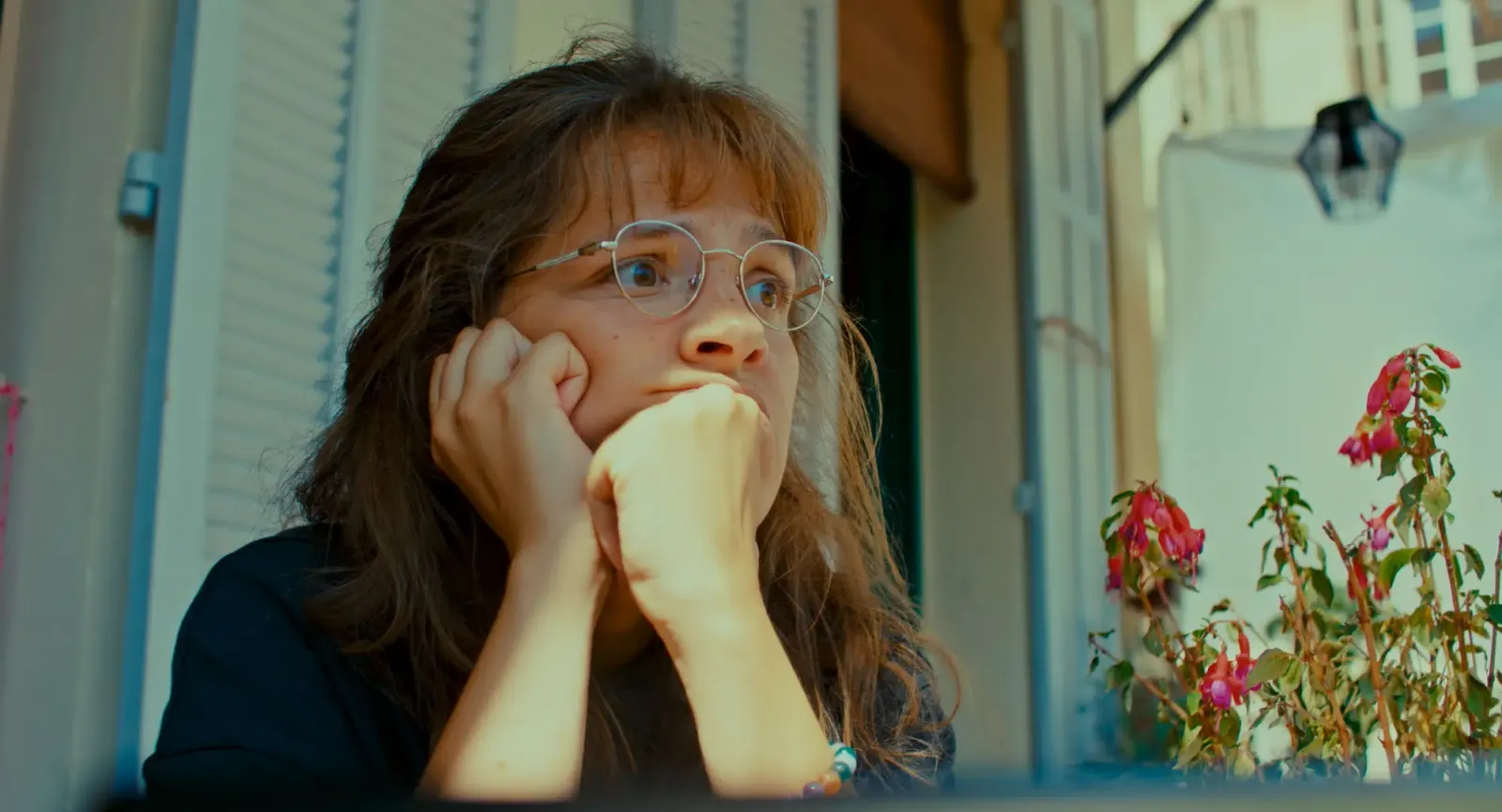
The film hits a fever pitch once they meet their neighbour, the photographer Magnani (Lucas Bravo), who becomes the object of Nicole’s fantasy and the site of Ruby’s horror. After a drunken, chaotic night, Ruby returns bloodied and silent. From there, The Balconettes spins wildly into a horror-comedy-thriller that mixes revenge fantasy, supernatural hauntings, and grim humour in increasingly dissonant proportions. Nicole starts seeing the ghosts of abusive men, their bloodied faces haunting her every move. Ruby, unresponsive, shuffles through scenes in a trauma-induced daze. Élise collapses in the street from heatstroke and stress-induced farts (yes, that’s a recurring bit). And somehow through it all, the trio still argues, gossips, and bickers like they’re in a sunlit sitcom – until they’re dismembering a corpse and stuffing it into a freezer.
Let it be said: Merlant is doing a lot. And often, too much. What’s admirable is how unflinchingly she commits to the bit. The Balconettes feels like the work of a filmmaker who is in control of every decision, and in many ways, that’s a breath of fresh, if suffocating, air. The film swings hard into feminist rage and gendered trauma, using comedy like a shiv and surrealism like war paint. But its insistence on doing everything from ghost story to assault trauma narrative to female camaraderie blunts its sharpest edges. There are powerful ideas here, moments of staggering truth and visual inventiveness. There’s also a feeling that some of these ideas might have resonated more if given a little space to breathe. Instead, they pile up, stumble over one another, and risk drowning in the storm clouds that eventually swallow the scorching sun.

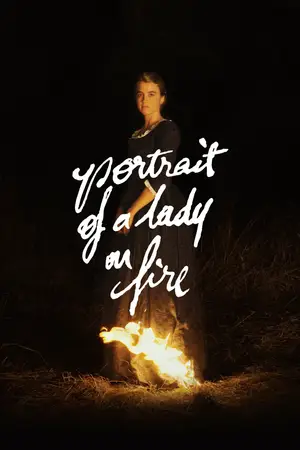
What’s interesting is the presence of Céline Sciamma (Portrait of a Lady on Fire) as co-writer alongside Merlant. You can feel her influence in the film’s thematic undercurrent, particularly in its interest in the quiet, aching nuances of female experience. Portrait was a story about women trapped in the shape society has drawn for them; about how even love had to fit into frames of male permission. There, Adèle Haenel’s character Héloïse, who falls in love with Merlant’s Marianne, was destined to be married off to a man instead of being with the woman she loves, her fate sealed by patriarchy even as her heart rebelled. Here in The Balconettes, Élise has a similar choice, but unlike in Portrait, she walks away. She’s suffocated by a man who controls and assaults her, and she ultimately chooses autonomy over entrapment. There’s no tragic final glance or subtle cue to a moment in time, just a suitcase of dismembered body parts and a decision to live. It’s ugly, chaotic, and oddly empowering.

There is much to admire here. The camera work is fluid and thoughtful, especially in its movement around space – balconies, hallways, apartments – all reinforcing the theme of visibility and surveillance. Ruby’s transformation is compelling, with Yacoub delivering the film’s most emotionally grounded performance, especially in a late moment where she addresses her cam audience (really, us), finally recounting her trauma on her own terms. Nicole’s ghostly visions offer a blunt but effective metaphor for how past abuses haunt women, and how society too often asks victims to justify their pain while exonerating the dead. Élise’s unravelling, harassed by her husband and ultimately assaulted, is a darker subplot that underscores how running away can’t make reality disappear.
And yet, it’s hard not to wish The Balconettes had stayed closer to its opening act: a stylized feminist riff on Rear Window, rooted in a single space and more focused in tone. The film’s strongest scenes are confined to the balconies, where we watch women watching men, watch themselves, and watch each other, all through the haze of heat and longing. That’s the version that felt sly and fresh and cinematic. The further it strays from that tight setup into supernatural horror, procedural crime cleanup, and tonal whiplash, the more the impact gets diluted. There are serious themes here, but they often get suffocated by the noise.
The Balconettes is a beautiful mess, though. It doesn’t always work, but it rarely bores. It wants to burn it all down, and sometimes it does with a blowtorch instead of a match. If Merlant can find a way to channel that incandescent rage with a little more restraint in future projects, we may be looking at the rise of a bold new auteur. For now, this one’s hot, loud, wild, and flawed.

However, the final moments offer a cathartic release. As the storm breaks and rain falls, fear dissolves. Nicole banishes the ghosts. Élise leaves her abuser. Ruby speaks. And the trio walks through a city alive with bare-breasted women, exorcising their pain in public, taking up space, refusing shame. It’s a moment so natural and so bold that it circles back around to being kind of brilliant – a nod to the universal female experience that hits you like a heatwave.
The Balconettes is a film that leaves you exhausted, confused, and a little scorched. But just like when the next summer comes around, you’ll wonder if you’ll experience anything like it again.








Comments 3