Gonzo Girl? More Like When Is This Movie Done-zo, Girl?
General Reviews
Somewhere between a bad shrooms trip and a Tumblr moodboard, Gonzo Girl loses the plot
Gonzo Girl adapts the semi-autobiographical novel of the same name, following Alley Russo (Camila Morrone), a bright-eyed aspiring writer who lands a gig as an assistant-slash-babysitter to infamous burnout and literary dinosaur Walker Reade (Willem Dafoe). Reade is a barely-disguised stand-in for counterculture apostle and gonzo journalism godfather Hunter S. Thompson, with all the usual baggage included: guns, drugs, and a pathological need to remind everyone he was once brilliant.
It’s 1992. He’s washed. She’s fresh out of college and too green to realize she’s wandered into a chaotic ego trip masquerading as a creative retreat in the Colorado wilderness. Her job? Help him finish a novel. What actually happens? She gets sucked into his delusions, like so many before her.
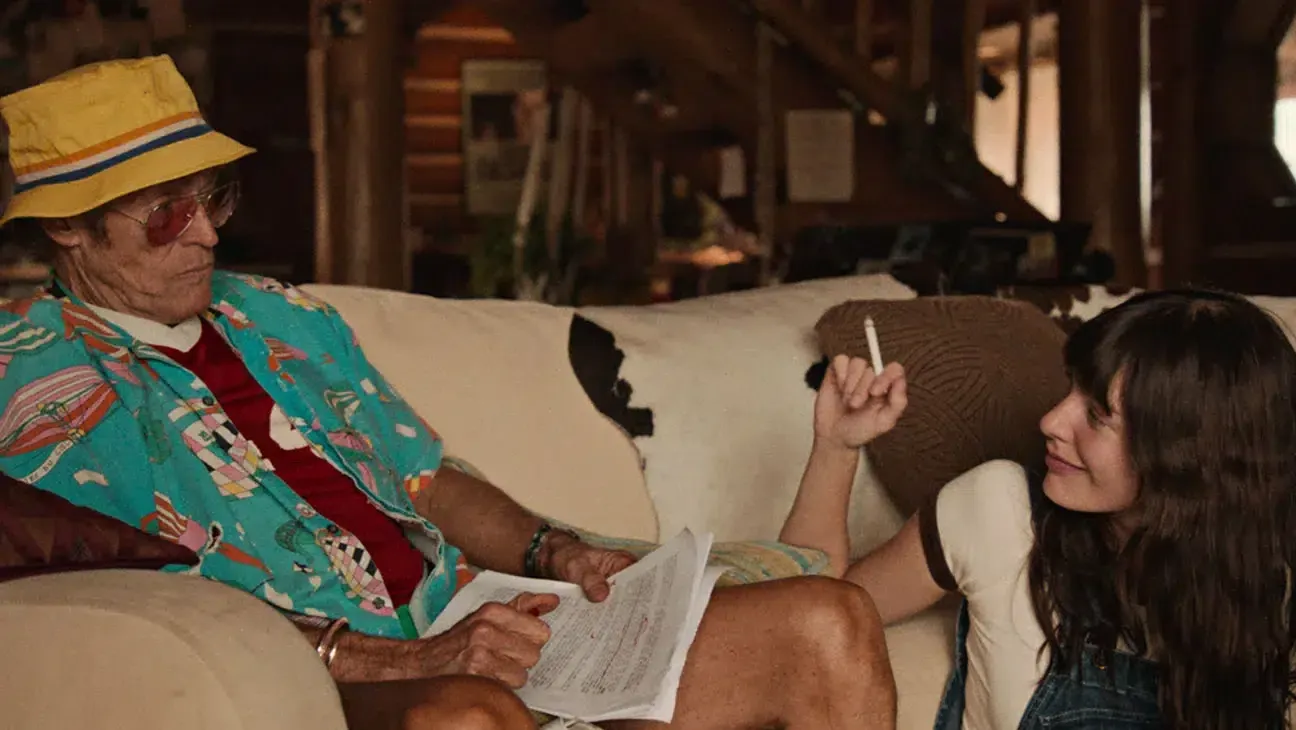
Gonzo Girl marks Patricia Arquette's first time in the director’s chair, and while she’s clearly absorbed a lot from her decades in front of the camera, this film plays like a passion project that forgot to bring the passion. Arquette delivers the basics: a plot, a cast, and some nice shots of the mountains—but the whole thing reeks of a freshman effort. For a story that’s supposed to drip with danger, rebellion, and literary depravity, it feels oddly toothless, like a script that was rejected at the Sundance screenwriter's lab thirty years ago.
But don't get me wrong, I would never blindly drag a first-time-female-director without backing myself up:
Right from the jump, the world-building feels half-baked. The film claims to be set in the 90s, but the visuals emulate the 1970s, all while feeling intrinsically modern. Maybe it has something to do with Morrone’s distractingly symmetrical face and her pouty Juvederm®-filled lips, or the H&M ‘vintage’ wardrobe. Either way, the vibes are completely off.
As things spiral forward, the movie becomes less a story and more a grab bag of tonal experiments. We get acid trips with colourful animations, mushroom trips with Sean Penn climbing up a wall, and a romantic subplot with a discount Johnny Depp stand-in (Ray Nicholson) that goes absolutely nowhere. One minute we're waxing poetic about the power of literature, the next, we're brushing past the #MeToo-adjacent commentary about the power imbalance between domineering men and credulous women.
Just like the main character, the entire film is having an identity crisis.

To Arquette's credit, her best trick behind the camera is her ability to bring out stunning performances from the cast. Dafoe is reliably excellent, but he hits a new gear with his portrayal of Walker as equal parts deranged genius and sad old myth. It’s one of his best performances in years, and he shows up to every scene like it’s opening night. The biggest surprise was seeing Morrone hold her own up against a powerhouse like Dafoe. She turned a paper-thin role into something emotionally raw and surprisingly grounded. She's not afraid to get weird, ugly, or vulnerable. Morrone is joining the Margot Robbie club for being criminally hot and actually talented.
Gonzo Girl is worth a watch (if it ever gets a wide release) just to see these two actors go toe-to-toe. It’s occasionally funny and entertaining enough to warrant a good time. But if you’re looking for a deep and succinct exploration of a young woman's experience with a titan of American culture, lower your expectations.
The wobbly tone and shallow script keep the film from landing any real punches. There was potential here—the rich source material for something electric—but what we get instead is yet another entry in the “almost great” canon: not bad, just forgettable.





Comments 4