'Girls' is My Past, Present, and Future
Characters
In my personal echo chamber of group chats and social media algorithms, Girls never really goes away. Someone is always rewatching it, a screen-cap of dialogue is always circulating Twitter, or the clip of Marnie’s stripped down cover of “Stronger” resurfaces like it’s a brand new cultural event.
For a show that ended nearly a decade ago, Girls has a strange habit of staying alive in the background of the internet. Every time it trends again, a new generation of viewers realize that Lena Dunham might have actually been on the pulse. But for me, Girls hasn’t really had a comeback, it’s just always been there. It's followed me through different stages of my life. Me and Girls are forever.
During Girls’ original run on HBO in the early to mid-2010s, the show was considered polarizing by the media and weekly viewers. A commonly used word to describe the show was problematic—the cast is too white, the characters are insufferable narcissists, the content is lewd but not sexy. Back in 2012, I guess no one posed the idea that maybe that’s the point?
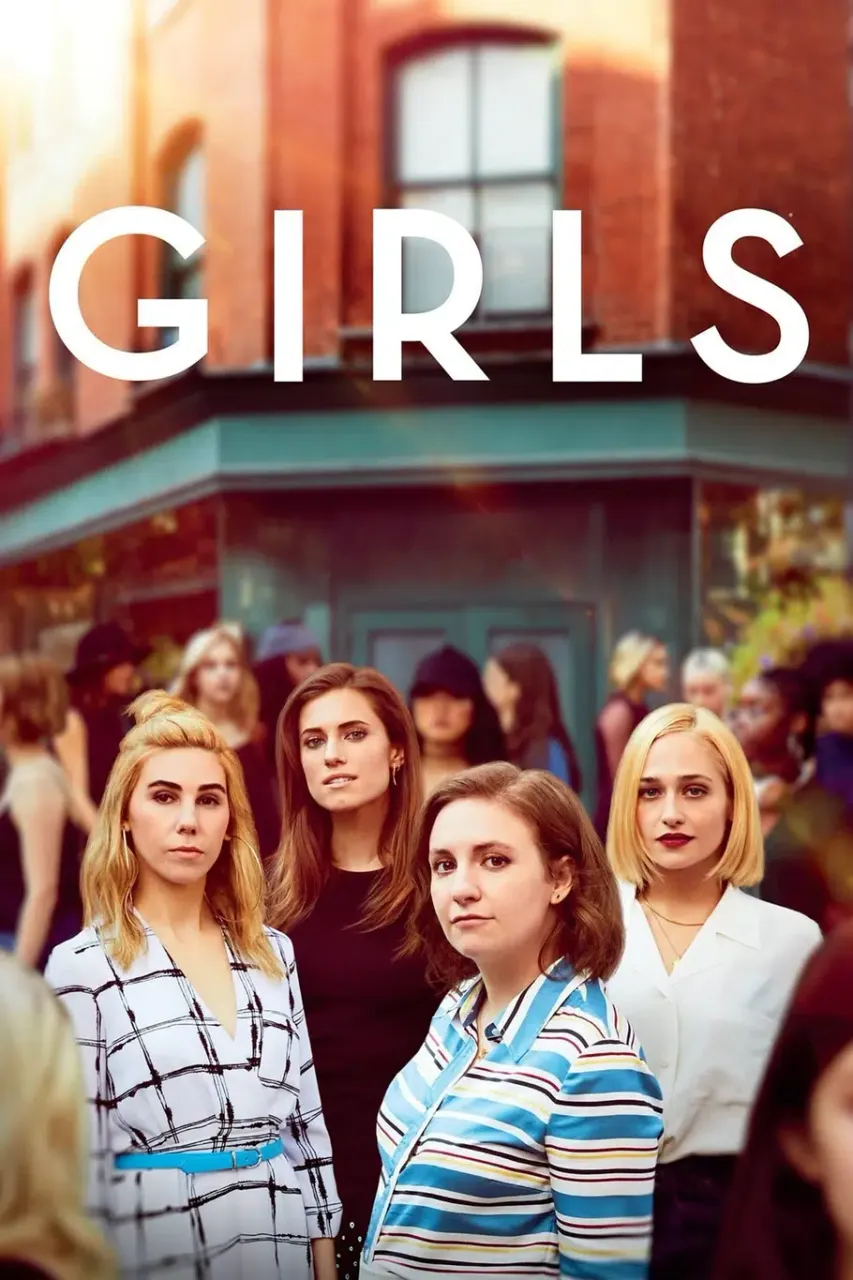
The titular girls are not supposed to be role models; they are devoid of self-awareness, act only for their own gains, and pick boys over their friends ten out of ten times. And?? That describes all of the twenty-somethings in history. They are the butt of their own jokes, satirizing the very thing they’re depicting. Girls portrays women who are still growing, many of which are still developing their frontal lobes. Thanks to newer shows like Fleabag, Russian Doll, and Insecure, it’s less crazy to see a real-life human woman making mistakes on TV.

So why did Girls have such a tough time resonating with it’s target audience back then, but is now regarded as a seminal coming-of-age show? My hypothesis is based on my own experience of a girl who watched Girls as it aired and found little to connect with at the time.
I was 21 when the show ended, and though I adored it, I definitely laughed at it more than with it. I viewed the girls as exaggerated caricatures. During my first rewatch a couple years later, I recognized a few more moments as something close to home. I saw myself in Shoshanna’s line, "My littlest baggage would probably be my IBS. And my medium baggage would be that I truly don’t love my grandmother.” I deeply related to Hannah telling her doctor she’s scared of getting AIDS, “It’s more a Forrest Gump based fear.” By the time I was 25/26, I realized why I only enjoyed it from a distance before: because I was (am) as entitled and unbearable as them, just not living in Bushwick. Once I could radically accept that, the show became biblical.
Identifying with these characters can be a tough pill to swallow, but for anyone born before 9/11, we either know or are a little bit of each girl.
For the Marnies: you’re the poster child of a garden-variety millennial, you’re everyone I’ve ever been friends with on Facebook. You deeply believe you’re destined for something bigger (unclear what). Maybe you’re uptight and a bit delusional, but you’re also unintentionally the funniest person in the room.

For the Shoshannas: you’re a pusher of toxic positivity and pop-culture references, speaking almost exclusively in rapid-fire tangents that somehow always circle back to yourself. You were once the overlooked, naive, and last-to-call friend, with very little understanding of the real world. But you matured faster than everyone in the group, suddenly becoming the only self-aware one and the first to outgrow their ways.

For the Jessas: you’re free-spirited enough to act on your most taboo impulses and look effervescent doing it. You say devastatingly accurate things about other people while avoiding any real introspection yourself, but you always have incredible hair while doing it. Everyone either wants to be you or to never see you again, and that's exactly how you like it.
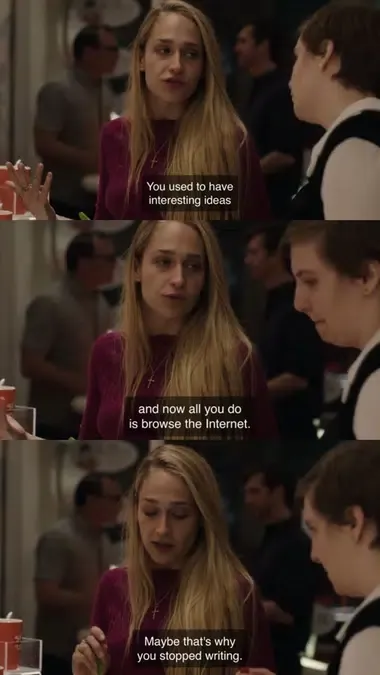
And then there’s Hannah Horvath, the most hated character on the show. Which, conveniently, had a lot to do with Lena Dunham herself becoming a kind of cultural punching bag. It was easy to write Hannah off as annoying and self-important rather than engage with what she actually represented. After the pilot episode, she was forever associated with her line, “I think I may be the voice of my generation,” a statement so brazen it became shorthand for everything people found unbearable about her. And to be fair, Hannah is unbearable. She’s oblivious, impulsive, selfish, and constantly saying the wrong thing at the worst possible time. She over-identifies with her own experiences and treats every minor setback like a defining trauma.

And she's the character I see myself the most in. The part of myself that I don't like to admit exists—dramatic, insecure, lazy, and convinced that my feelings are uniquely important. But she is (and I am) growing!!! Slowly, unevenly, and sometimes regressing entirely, but always moving.
That’s what makes Hannah the heart of Girls. She holds up a mirror to the ugliest, most embarrassing parts of yourself.
Girls is timeless to me because it doesn’t focus on specific situations, it focuses on specific personalities. Anyone discovering the show for the first time can grow along with the characters, everyone embarking on a rewatch with me can look back on the show with newfound wisdom that only comes with surviving their twenties. The show was designed for its audience to outgrow it. Hannah, Marnie, Jessa, and Shoshanna will remain young and naïve, stuck in an HBO vault forever. You, me, us, we will eventually find ourselves becoming more like Ray Ploshansky, a jaded cynic who loathes Gen Z and is allergic to sincerity.





Comments 6