The Evolution of Zombie Cinema: Hollywood vs. the Rest of the World
Industry
There’s one particular scene in Dune: Part Two that really made me reconsider how we talk about “zombies.” By definition, we’re simply talking about a person coming back to life in a different form. But in film discourse, we almost always associate this compelling word with rabid people (or incredibly slow ones, just to drag out the plot—yes, I’m looking at you, The Walking Dead) who roam around seeking blood, death, or simply trying to infect others.
But who holds the truth about what it means to come back from the dead?
In this moment of Denis Villeneuve’s epic, we see Chani trying to save Paul Atreides from death after he drinks worm blood (also known as the "Water of Life"), a liquid capable of altering one's genetics and granting extrasensory powers. According to the Fremen prophecy, in order for the savior of their land—the Lisan Al Gaib—to avoid staying stuck in a poisonous limbo, he must feel the tears of the “Desert Spring” diluted with the Water of Life on his lips. Villeneuve builds a sense of prophetic proselytism, blending it with the duality that permeates the story, where the famous saying “seeing is believing” becomes a concrete reality—an affirmation that convinces.
Clearly, the second part of the Dune saga isn’t explicitly about zombies—but maybe it could be. And if it isn’t, then why do we assign so few traits to the undead? Who warped the term “zombie” in cinema until it became synonymous with large-scale chaos and little else? Where did the intimate, the reflective side of these stories go?
Over the decades, we’ve encountered stories that avoid diving into ideas that could actually enrich the mythology—or the lore, if you will. It’s as if the mere existence of people returning from the dead can only represent social fears or anxieties that have nothing to do with the presence of these “entities.” Zombies became the perfect vehicle to address social or political issues—or just to sneak in a critique under the radar.

One standout example of this is World War Z, a cult cliché released in 2013 starring Brad Pitt. In the end, the hero cracks open a Pepsi while dozens of zombies rush around him after he discovers a cure for the virus that nearly wiped out humanity. A film bursting with cheap patriotism, full of senseless choices, and one that tried to launch a (failed) cinematic universe—something Hollywood kept trying throughout the last decade during the superhero movie boom. In this case, Brad played the Captain America of the apocalypse, and the Bruce Banner of the lab. But that’s where it ended.
Far from the West, and thanks to the growing influence of Korean cinema over the past twenty years, Train to Busan premiered in 2016—the first zombie film that made my girlfriend cry. It delivered a powerful mix of entertainment, suspense, and heart. A wake-up call for North American producers, but also a morale boost that helped bring Eastern cinema into Western consciousness. Four years later, in the middle of a pandemic, Netflix released a forgettable sequel that left us with just one message: Hollywoodlandia destroys almost everything, 99% of the time.

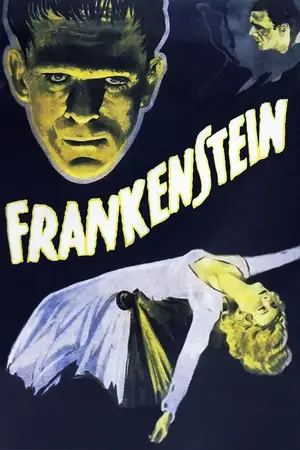
From the early days of cinema and for many decades, zombie-like stories flew under the radar. Maybe the image of Victor Frankenstein’s creation was the only recognizable face (ironically, still “alive”) of the concept in the public imagination. Yes, Mary Shelley’s monster isn’t a zombie—but once again, collective imagination matters. That’s why I describe it this way. It wasn’t until 1968 that a young George A. Romero introduced zombies in his semi-experimental debut Night of the Living Dead. The film became one of the first successful examples of independent cinema, catapulting Romero to fame and launching a series of sequels and remakes that—one way or another—always worked. It opened the door for filmmakers like Zack Snyder, Edgar Wright, and Peter Jackson to make their mark. But once again, we always link it back to chaos.
In Asia—specifically South Korea and Japan—the rebirth of the subgenre bloomed into a wave of series and films following the success of Train to Busan. Yet many were quickly forgotten. Among these were films like #Alive, a tense comedy about a gamer trapped in his apartment surrounded by zombies, or Netflix’s Kingdom—the “zombie Shōgun”—which brilliantly mixes period drama with undead plagues. The possibilities seem endless.

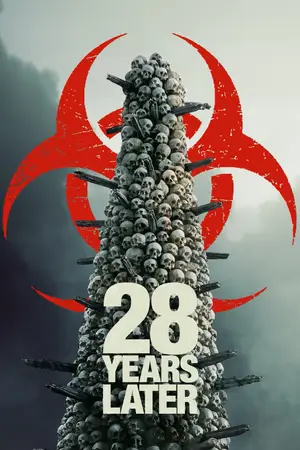
Meanwhile, in Hollywood, the recent trend has been to explore the aftermath—what it means to live in a devastated world full of these entities. The adaptation of The Last of Us used two seasons to explore a return to primal survival, with some interesting moral dilemmas that weakened in season two. Danny Boyle’s return to his zombie saga pushes the loss of humanity to the extreme. Rage—a word brilliantly chosen by Boyle, especially considering today’s climate—spreads rapidly in England and dares to take things further: it’s not just regression; it’s a return to the caveman self.
So here’s the final question:
Are we becoming cavemen as viewers too—or are we just zombies ourselves, scrolling through our phones to decide what to watch and what to skip?
Let me know your thoughts below.
Published on JUNE 25, 2025, 14:06 AM | UTC-GMT -3
If you liked this piece of writing expression remember to give it a 👉 LIKE, put it in your FAVORITES, COMMENT 🗣️ , and FOLLOW ME for more articles like this📽






Comments 2