Civil Warfare: The Beautiful Bleakness of Alex Garland's Anti-War Duology
General Reviews
Let’s get this out of the way: Civil War was not the film people thought it was going to be. And Warfare? Maybe even less so. Yet together, these two cinematic gut punches from writer/director Alex Garland form one of the most powerful anti-war statements of the decade — and I say that without even a hint of hyperbole (okay, maybe just a hint).

These films don’t rally behind flags. They don’t serve you a platitude on a bayonet. They don’t ask you to pick a side. They quietly drag you through the dust, leave you reeling in an alley somewhere, and whisper: “You still think this is about good and evil?”
Yeah, me neither.
Not the Civil War You Ordered

I actually really liked Civil War. Which, from the sounds of it, puts me in the minority here — a rare place to be, considering how often I tend to side with the mob when A24 is involved. But this one… this one deserves better than it got.
A24 marketed the hell out of it, painting it as a modern war thriller with all the trimmings: burning cities, boots-on-the-ground tension, American flags fluttering in slow-mo. It was A24’s biggest box office haul to date. But in doing so, they kinda sold everyone a lie.
Because Civil War isn’t really about the war. It’s about the photographers.
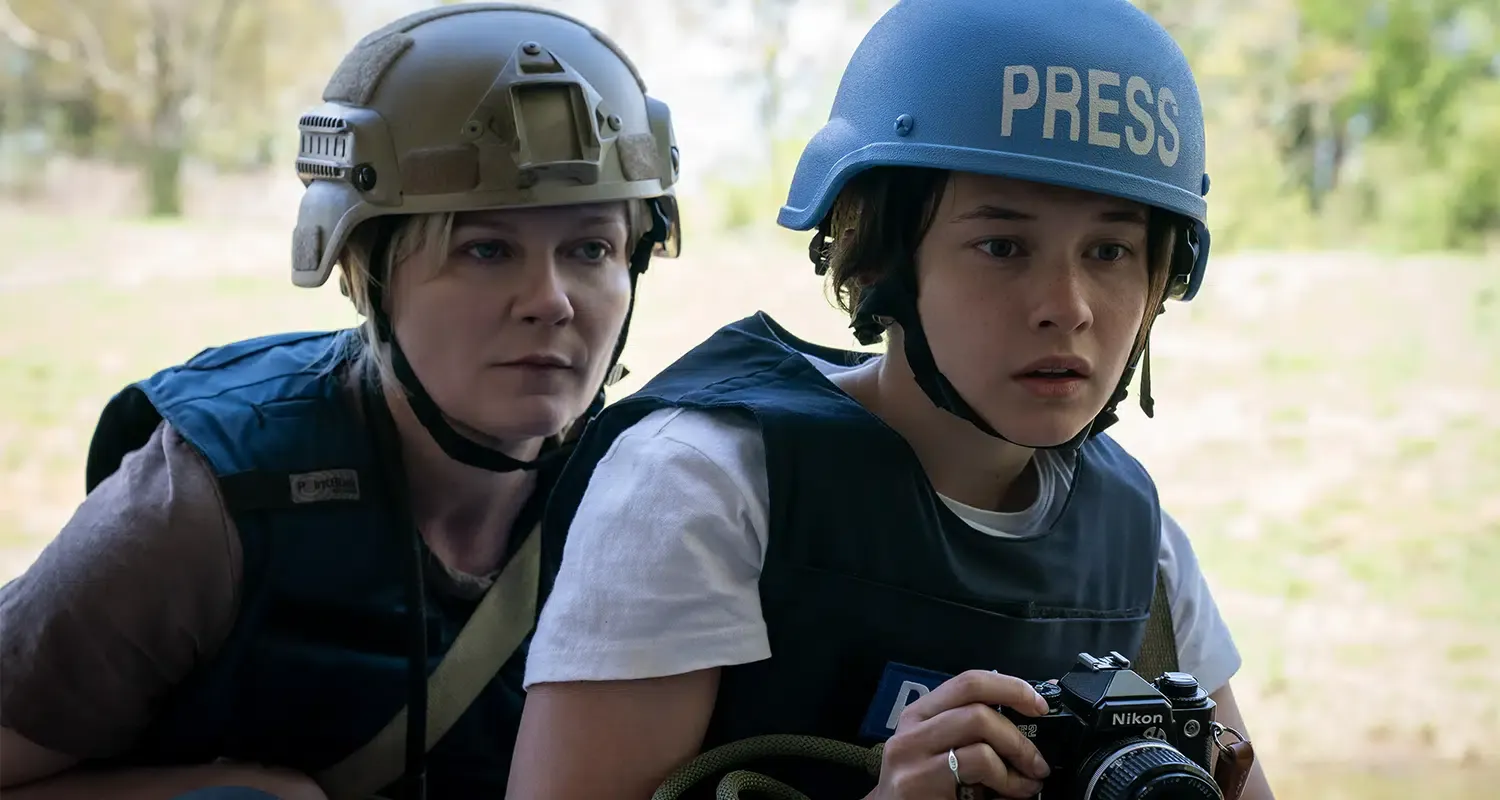
You’re not watching a movie about ideology or victory. You’re watching people document the death of a nation while trying not to die themselves. And the journalists at the center of it — the camera-clutching protagonists — are, by necessity, neutral. That’s kind of the whole point. Picking a side would undermine the profession, and the film.

This neutrality made people mad — and Garland knew it would — because this film doesn’t hand you a politics-flavored Happy Meal with your preferred mascot on the box. Right-wing viewers hoping to see libs get owned didn’t get it. Left-wing viewers hoping to see MAGA militarism dismantled didn’t get it either. And that's what makes Civil War so goddamn smart. It strips away the partisanship and shows what would actually happen if democracy crumbles: no team wins. No ideology is vindicated. We all lose.

Even the much-memed California–Texas Alliance serves a purpose. It’s not about realism — it’s a thought experiment. These are the states most famous for their independence, their economic heft, their cultural sway. In a real civil war, power aligns with power, not political identity. Garland reframes the conversation by refusing to play into red vs. blue cosplay. The enemy isn’t your neighbor. It’s the collapse of the system itself, and those pulling the strings from behind the iron curtain.

Unfortunately, the marketing didn’t get the memo. Trailers made it look like Call of Duty: Civilian Edition. It was sold as the exact thing it was trying not to be. And when people didn’t get the propaganda they wanted, they called it hollow, disappointing, even apolitical. I think they missed the point, but it’s not entirely their fault.

A24 has a tendency to misrepresent their films through marketing. Their marketing department is extremely good at getting butts in seats, but can often sell a different version of the film than what audiences actually experience in the theatre.
Midsommar was a vastly different movie that what the trailers suggested. I walked out of the theatre thoroughly underwhelmed, though I have since come around — particularly upon viewing of the vastly superior directors cut. The Green Knight has a spectacular trailer but I found the film itself to be supremely underwhelming. Spring Breakers was also terribly marketed as a fun Spring Break romp — which it is definitively not — but at least in its case, the false advertising actually lines up with the themes of the movie, so I can give that one a pass.

Warfare: No Heroes. No Glory. No Exit.

Warfare is a different beast — but very much of the same blood. And it’s easy to see why they’re spiritually linked. Both are Alex Garland joints, both are about America’s relationship to conflict, and both throw conventional war movie tropes into an unmarked mass grave and set them on fire.
Where Civil War paints in broad, national strokes, Warfare zooms all the way in. The scope is microscopic. There’s no context. No clear mission. No triumphant score. You don’t even see the people shooting at them. You’re as blind and scared and confused as the soldiers are — and that’s the point.

Going in, I was skeptical. When it comes to war movies, I'm more of a The Thin Red Line, Come and See, Paths of Glory kind of guy. The trailers hinted at that classic military chest-thumping — the kind of hoo-rah, brotherhood-is-everything, semper-fi cinema that tends to glorify trauma while pretending to condemn it. But Garland, once again, delivers a bait-and-switch in the best possible way.
There is no glory here. There is only survival.

The first act — just watching these guys go about their day, vibing on base to Eric Prydz's "Call on Me" and shooting the shit during the stakeout — lulls you into a false sense of comfort. But things go from chill, to bad, to nightmare in an instant. Out of nowhere, a grenade is thrown through the window and sends the soldiers into a panic. They’re crying, shaking, throwing up. Then the IED hits, and holy shit. That entire sequence? Cinema. My jaw stayed on the floor so long I had to sweep around it.

The sound design? Perfect. Muffled screams, prolonged tinnitus, disoriented movement — it’s one of the most viscerally effective war scenes I’ve ever seen. Not because it’s cool. But because it’s terrifying.
And Garland doesn’t shy away from the grotesque details. Limbs torn, guts spilled, pants cut open, dignity discarded. There’s no careful cropping here. No safety curtain. When war mutilates you, it doesn’t ask if you’re ready. It just does it.

Even when the reinforcements arrive — those familiar gung-ho archetypes we’ve seen in a hundred movies — they’re immediately shown to be naive. Their swagger collides with the messy reality of combat, and they get snapped back to earth. No triumphant hero shot. No slow-motion rescue. Just a foot accidentally bumping a soldier’s mutilated leg, a medic accidentally applying a morphine injection upside down, a wounded soldier's shriveled dick and balls exposed to the world as their squad-mates apply a tourniquet. That’s Garland’s war movie.

No Catharsis Allowed
What Warfare does, perhaps better than Civil War, is annihilate the traditional structure of war movies. There’s no tidy climax. No rallying speech. No explosion that saves the day. There’s just… more waiting. More shooting. More fear.
It ends not with a bang, but a fizzle. Like Lynne Ramsay's You Were Never Really Here, it withholds catharsis entirely. Which is fitting — because war doesn’t resolve. It just hangs. Lingers. Festers.

And that’s the thread that ties both Warfare and Civil War together. They’re not interested in telling you what to think. They’re interested in showing you what happens when everything breaks. They’re both exercises in restraint — formally, politically, emotionally. And they both force you to sit in the discomfort.
Ceasefire Now
These films may be set in battlefields, but they aren’t really about war. They’re about aftermath. They’re about ambiguity. They’re about the unbearable weight of what we do to each other — and what’s left when the noise fades.
Garland didn’t make these movies to win awards or start Twitter debates. He made them to hold a mirror up to the war machine and ask, “Are we really prepared to see this through?”
Because if Civil War is a warning, Warfare is the consequence. And together, they whisper something far more chilling than any political soundbite:
There are no winners.
Only survivors.
And even that’s pushing it.
Mentioned in this piece
 Civil War2024
 Warfare2025
 The Thin Red Line1998
 Come and See1985
 Paths of Glory1957
 Midsommar2019
 Spring Breakers2012
 The Green Knight2021
 You Were Never Really Here2017
 Ex Machina2014
 Annihilation2018
 Men2022
 28 Days Later2002
 Dredd2012
 28 Years Later2025
 Alex Garland
 Kirsten Dunst
 Wagner Moura
 Cailee Spaeny
 Stephen McKinley Henderson
 Jesse Plemons
 Nick Offerman
 Ray Mendoza
 Will Poulter
 Joseph Quinn
 Michael Gandolfini
 Kit Connor
 Charles Melton
 Cosmo Jarvis
 D'Pharaoh Woon-A-Tai
Comments 11