Mickey 17 and the Emptiness of "Eat the Rich" Cinema
Industry

This is how I imagine the Mickey 17 pitch meeting went down:
Producer: It's a sci-fi movie about cloning—when the main character dies, he's regenerated with his memories intact. But then, he accidentally gets cloned while he's still alive, and now there are two of him.
Studio: So, The Sixth Day? And also-
Producer: No, no, it's different! It tackles all the themes Hollywood pretends to care about—climate change, colonization, corrupt corporations, the "orange man," and the working class being exploited. Plus, we got the guy who made Parasite.
Studio: But our audience might not get the message.
Producer: Don’t worry. We’ll make it so obvious even a five-year-old will understand. Oh, and Mark Ruffalo will play the villain like he's in a middle school pantomime.
Studio: Are we sure this isn’t just another lazy, surface-level take on capitalism? Wouldn’t it be better to make a smart sci-fi movie that genuinely challenges the audience?
Producer: Nope. That’s too hard. Besides, anti-capitalism is trending, so let's capitalize on that.
Wealth in cinema is nothing new. It has been examined in films from Citizen Kane to The Purge, but lately, the trend has shifted from nuanced portrayals to one-dimensional satire. The rich are now caricatures—cartoonishly evil, utterly incompetent, and comically out of touch. Recent films like The Menu, Triangle of Sadness, and Glass Onion follow this formula: expose the wealthy, humiliate them, and give audiences a cathartic sense of justice without any real critique. Mickey 17 is just the latest example of this empty trend—entertaining, sure, but ultimately hollow.

At first, the influx of "Eat the Rich" films felt like a response to real-world economic struggles. Post-pandemic, wealth disparity skyrocketed—billionaires made trillions while the working class suffered. The anger was justified. But Hollywood’s response wasn’t a revolution; it was repackaged capitalism. These movies exist to placate, not provoke. Instead of addressing systemic inequality, they provide an easy villain—absurdly wealthy idiots—so audiences can laugh, nod along, and feel politically engaged without having to do anything.
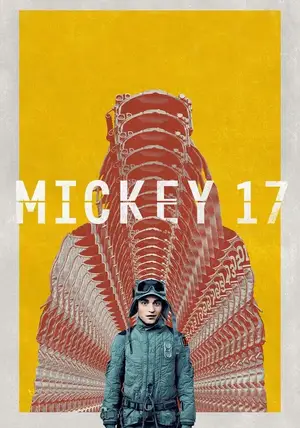
Mickey 17 epitomizes this problem. Its setup is intriguing—cloning, corporate greed, and the ethics of disposable labour—but it has no idea what it’s trying to say. It juggles too many ideas and executes none of them well. Its satire is so blunt that it forgets to be clever. Mark Ruffalo’s villain, a not-so-subtle parody of Trump, is laughably bad. Scenes meant to be biting social commentary feel disconnected from the film’s central premise. The story is about a man repeatedly dying on a planet of giant bugs while fighting his own clone—how does that justify an over-the-top political caricature? Instead of making a meaningful statement, Mickey 17 alienates half its audience while failing to challenge the other.

The film also contradicts its own messaging. One of the most interesting aspects of the premise, the concept of a "disposable worker," is barely explored beyond the surface. Mickey exists as a research clone whose purpose is to die for the betterment of the colony, an obvious metaphor for expendable labour under capitalism. However, instead of diving into the ethical implications of cloning and self-worth, the film glosses over these ideas in favour of exaggerated corporate greed. Ruffalo’s character embodies the worst aspects of lazy satire—a villain so overtly evil that he feels more like a cartoon than a serious critique of power structures. Instead of exposing the insidious ways capitalism exploits workers, Mickey 17 turns its villain into a scapegoat, reinforcing the same simplistic "bad guy" narrative seen in countless other "Eat the Rich" films.
Compare this to Parasite. Bong Joon-ho’s previous film explored class and the inescapability of social hierarchy. There was formidable nuance in its depiction of the wealthy—corrupt humans who profited off the lower class but weren’t mustache-twirling villains. The lower class, in turn, were morally complex and did hypocritical things to survive the cruel system they were fighting against. It was tragic because it was real. Mickey 17, by contrast, is a commentary without depth. It lacks the sophistication of Parasite, the sharp wit of The Menu, or the absurdity of Triangle of Sadness. It’s a film that wants to be smart but ends up regurgitating the same tired anti-capitalist slogans without adding anything new.
There are moments where Mickey 17 could have made a statement. For example, the scenes showing Mickey’s previous iterations dying horrific deaths could have been used to explore the psychological effects of knowing you are disposable. Instead, these moments are played for shock value and laughs, then quickly forgotten. The concept of a man living through endless deaths should provoke deep existential horror, yet the film rushes past these moments without fully exploring their implications.

Another wasted opportunity is the portrayal of the colony itself. The settlers are depicted as generic, faceless victims of corporate exploitation, yet we never see any real struggle beyond what the plot requires. If the film wanted to critique the exploitative nature of capitalism, it could have shown how the workers are forced into compliance, how they internalize their roles, or how they might even justify the system that keeps them oppressed. Instead, they exist only to serve the protagonist's journey, reducing them to background noise rather than fully realized individuals.
The problem isn’t just Mickey 17—it’s Hollywood’s entire approach to "Eat the Rich" cinema. These movies let the audience feel righteous but never uncomfortable. They reduce capitalism’s problems to individual greed rather than systemic failure. The rich aren’t bad because they exist within an exploitative system—they’re bad because they’re stupid, ignorant, or out of touch. It’s an easy sell. The middle class gets to watch and laugh, secure in the belief that they’re not like those rich people. Even actual rich people can enjoy these films because they, too, can tell themselves they aren’t the "bad kind" of wealthy.
It all made me think, who is this movie really for? It's definitely not for people like me, I don't have the resources or power to change things in an impactful way, and yes I do agree that fascism is bad and the 1% shouldn't control all the world's wealth! Still, you've done nothing to challenge my opinion and I've never felt different about this topic before. Is this film for the rich? Or maybe people who want to enslave animals? (who are they? and will they agree that tyranny over other species is bad?) It's tough to say, all I know is, this film felt like when you asked a 5-year-old kid what they dreamt about and they ramble on about how they were eating cereal but ended up fighting the dinosaurs and then had spaghetti for lunch before getting stomped on by Godzilla. Nonsensical and unfocused.

This performative anti-capitalism mirrors the broader trend of corporate virtue signalling. Just as brands slap rainbows on their logos for Pride Month while donating to anti-LGBTQ+ politicians, Hollywood embraces anti-capitalist themes while continuing to profit off the very system it pretends to critique. Studios know audiences are angry, so they package that anger into safe, digestible entertainment. Instead of inspiring real change, these films provide a temporary emotional release—the aesthetic of revolution without substance.
If "Eat the Rich" cinema had real bite, I don't think studios would make them anymore. The industry itself relies on wealth and exploitation to function. Disney, Warner Bros., and other major corporations are not in the business of making truly revolutionary films. They’re in the business of making money. The fact that Mickey 17 exists at all proves its own point—Hollywood isn’t interested in fighting capitalism; it’s interested in profiting from its aesthetics.

At the end of the day, Mickey 17 is not a movie that challenges the audience. It’s not even a particularly good satire. It’s what happens when a studio sees that "Eat the Rich" is trending and decides to churn out another factory-made product. The irony, of course, is that these films don’t eat the rich—they feed them. They thrive in the same capitalist machine they claim to criticize. And as long as people keep buying tickets, Hollywood will keep serving up the same empty dish.
The real question is: When will audiences stop eating it?





Comments 13