WFF 2025 |Stability is a Lie at the Cost of Heaven
General Reviews
Money is everything, and the world revolves around it. We were told this at a very young age, right alongside the comforting lie that money does not buy happiness. Adults repeated it like a moral equation. You can chase love, passion, selflessness, or you can chase financial comfort. So which one is it? When I watched the French Canadian drama directed by Mathieu Dennis, The Cost of Heaven, or Gagne ton ciel, I kept thinking about that contradiction. The film takes that confusion and shapes it into a slow, uncomfortable character study. It is pitched as a family drama with a psychological edge, and it tries to make you question your own relationship with ambition. The question for me was whether it actually succeeds.

The plot follows Nacer Belkacem with this steady, almost unreadable quietness. At first, he just looks like a stable middle-aged man with the usual respectable life markers: a solid job, a family he clearly loves, a routine that feels familiar. Early on, I thought the film was building toward a typical moral-crisis structure, the kind where a man hides a few mistakes until they pop like a balloon. That is basically what happens, but in a more incremental way. Nacer’s hidden debts start surfacing. The pressure cooker builds. He hides things from his family because admitting failure is harder than managing the lie. Watching him slip felt uncomfortable because the film makes every step look reasonable. I kept thinking that this is how addicts actually ruin themselves, not in big cinematic moments but through daily compromises.
As his moral line weakens, the film becomes less about debt and more about pride. Nacer’s choices are not framed as shocking crimes. They grow from his desire to be seen as someone who has it together. While I was watching, I found it interesting that the film focuses so much on dignity. Nacer wants the financial version of respect. He wants to look secure even when he is unravelling. By the final act, he has crossed enough lines that the idea of being a “good man” is something he clings to out of habit rather than truth. The consequences feel muted, but that muted quality works. No one exposes him in a dramatic flourish. The world just stops letting him pretend.

Thematically, the film is rich even when it feels familiar. It talks about ambition, pride, masculinity, and the ways money becomes a measurement of worth. I kept thinking about how many adults live with that weight. Debt becomes both literal and symbolic here. Nacer is trapped by financial pressure, but also by the image of what he wants to be. The film argues that people often make desperate choices to avoid looking desperate, like when Nacer keeps taking out small loans instead of admitting to his wife that their finances are collapsing. He’d rather stack risky decisions than confront the humiliation of saying, “I fucked up.” It touches on work culture and generational insecurity, though not as deeply as I hoped. Sometimes the film has ideas but lacks emotional force.
This is also where the weaknesses become obvious, because without that emotional punch, the movie starts to unravel a little. The ideas are there, but the delivery doesn’t fully sustain the weight of what it’s trying to say. While watching, I found myself comparing it to older films that have explored the same arc with more precision. A Most Violent Year is one example, though more intense in how it treats moral decline; every choice in that film feels like life or death. The tension is sharper, the stakes land harder, and the collapse feels genuinely dangerous in a way Gagne ton ciel doesn’t always reach.

Even something like Two Days, One Night examines economic pressure and dignity with more urgency. Gagne ton ciel does not copy these films, but its structure and beats feel familiar. You can almost predict the order in which Nacer’s life will crumble. The execution sits on top of thoughtful themes, but it does not push them into new territory. The film wants to be a psychological drama, but it often settles into being a solid cautionary tale instead. We've all seen it 100 times.
The visual style tries to lift the material. Denis uses slow camera rotations, slight shifts in balance, and a few stylistic flourishes that are meant to mirror Nacer’s inner conflict. When I noticed these moments, I understood the intention. They are supposed to mark the points where Nacer’s stability is slipping. But often they felt like visual compensation for scenes that were not emotionally charged enough on their own. The camera tries to do the work the dialogue is not doing. The cinematography is clean, the framing is careful, but it does not fully deepen the character study. Instead, it signals emotions that the script has not fully earned.

The dialogue is where I struggled most. Conversations often feel a bit too neat and too shaped by how people online talk about money struggles. At times, I felt like I was listening to rehearsed versions of arguments instead of actual arguments. Real conversations about debt involve guilt, panic, denial and lots of interruptions. Here, some scenes feel like the writers were imagining what financially stressed families should sound like, instead of what they actually sound like. It does not ruin the film, but it does flatten moments that could have been meaningful.
The parts of the film I did like diverged from this run-of-the-mill image of a broken person. Nacer’s gradual willingness to cross lines is the strongest thread. When I watched him make smaller compromises or be restrained. Guesmi plays the shift with restraint while never becoming theatrical or villainous. He simply acts like someone who has lost perspective. When he harms people, he does it out of tunnel vision, not malice. That felt real to me because a lot of movies treat moral decline as a transformation; here, however, it feels like erosion, which is more uncomfortable and more believable.
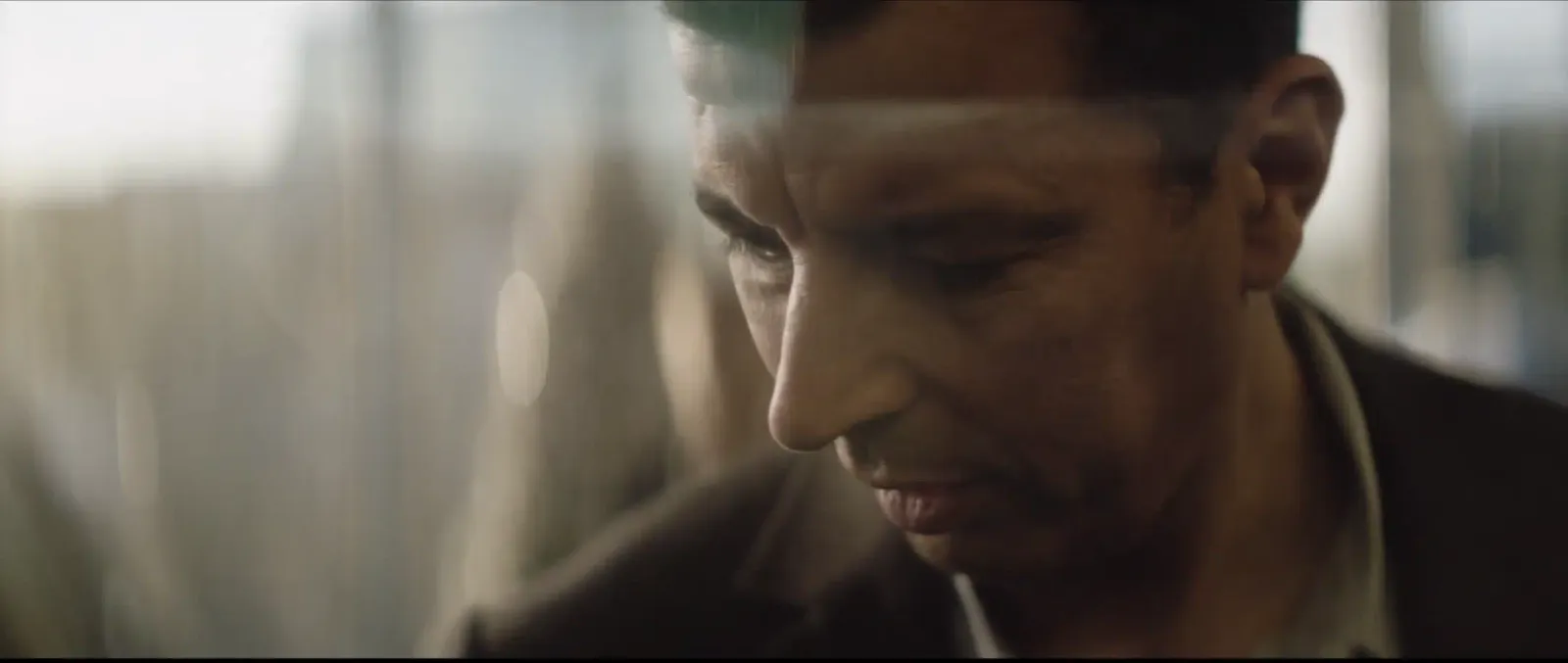
As a whole, The Cost of Heaven presents a thoughtful and interesting line of discourse that gets stuck halfway between its intentions and its execution. It wants to examine how money shapes identity, how pride becomes a trap, and how financial pressure can warp morality. It succeeds in pieces, especially in how it shows the slow decay of a man who cannot admit he is failing, but it struggles to make that decay emotionally sharp. I walked away feeling that the film had something important to say, but never found the most compelling way to say it.
Even so, the Cost of heaven stayed in my mind afterward. Part of that was frustration and part of it was recognition. The story reflects something very real about adulthood today. The fear of slipping. The pressure to maintain a version of yourself that has to be stable or else you're doing it wrong. The quiet belief that if everyone else is surviving, you should survive, too.




Comments 2