Hua Mulan, a timeless icon of women empowerment
General Reviews
A standard movie script runs between 90 and 120 pages. A completed screenplay typically contains about 5,000 lines of dialogue, totaling anywhere from 18,000 to 30,000 words - amounting to over 600,000 characters, depending on the scope of the work.
So, is it possible to tell a powerful, enduring story with just 31 lines?
Even with these staggering numbers, some films attempt to say too much yet ultimately communicate nothing at all. They become consumed by their own perceived brilliance, spiraling into a vortex of narrative and literary redundancy - incapable of delivering a message that is concise, impactful, or memorable.
It’s easy to recall lengthy films that leave you with little to think about, or worse, nothing at all. That’s why storytelling has long been regarded as an art form in its own right - intertwined with literature, theater, and cinema. And if there’s any civilization that has mastered this art, it’s the East.
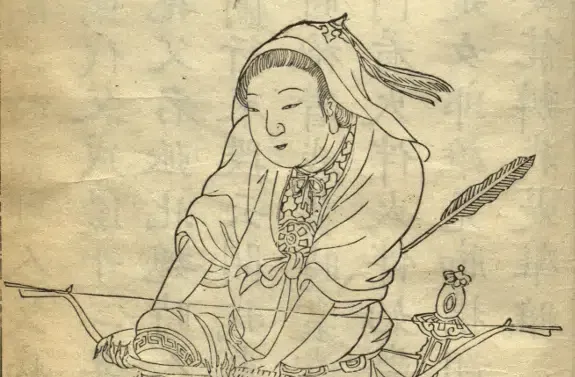
Western storytelling has produced its share of enduring short tales, but few have left an imprint on popular culture as deep and lasting as the story of Hua Mulan. Her legacy, cultural significance, and sheer narrative power stand above countless ancient and contemporary stories alike.
Sigh after sigh,
Mulan weaves before her door.No sound of the loom can be heard,
Only her sorrowful sighs.
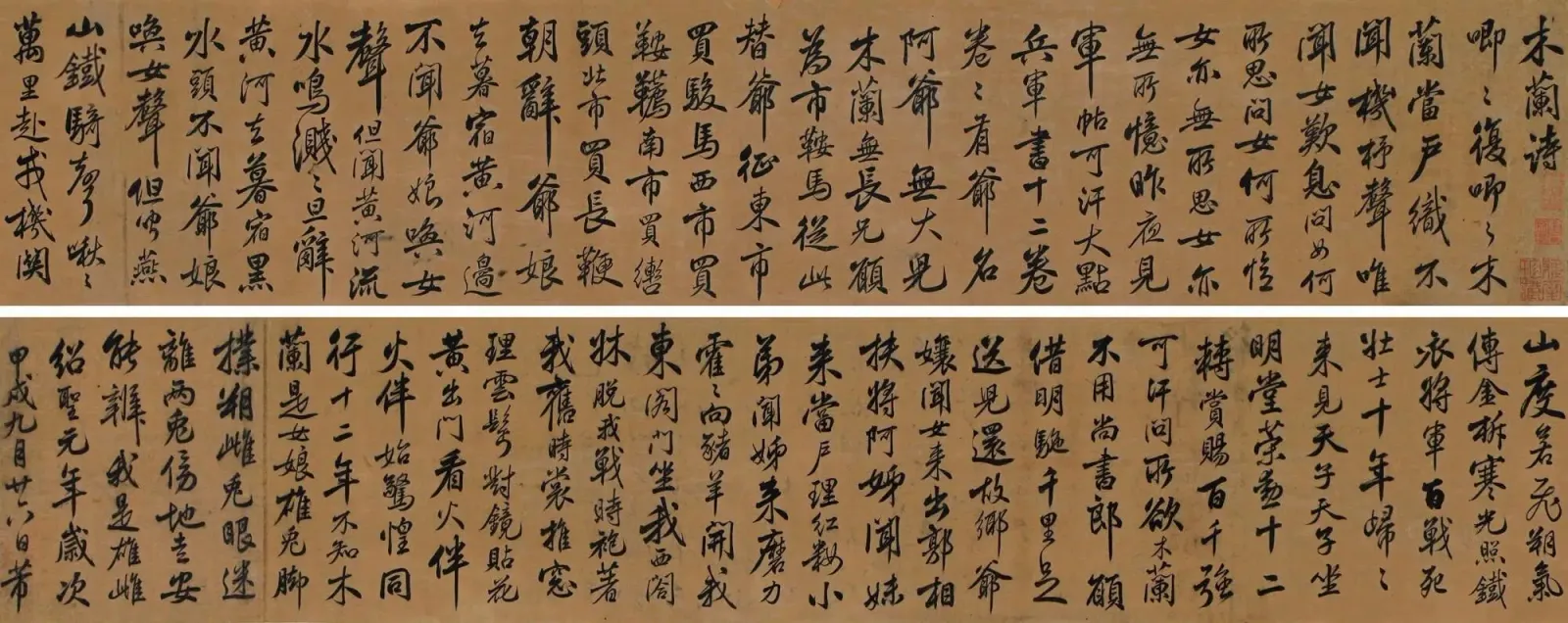
What’s fascinating is that Mulan’s origin remains shrouded in mystery - her emergence is almost as poetic as the verses that tell her story. We know the tale dates back to the 6th century, but it wasn’t until the 11th century that it began to be compiled and formally recorded.
Even now, historians continue to debate the true nature of Mulan’s existence, or if she even existed. Her legacy - defined by contradictions that might seem irreconcilable - is precisely what elevates her as a unique feminist icon and an enduring symbol of empowerment that has lasted for centuries, with no signs of fading anytime soon.

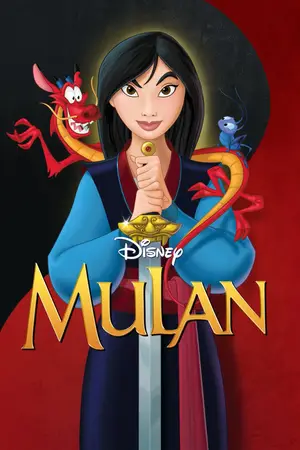
And let’s not pretend otherwise - a significant part of Mulan's popularity stems from the numerous interpretations and adaptations her story has seen over the years. The most influential, of course, is Disney’s 1998 animated film, which introduced Mulan to Western audiences and secured her place in global popular culture.
Ask her who is in her heart,
Or who is on her mind.No one in her heart,
No one on her mind.
However, the earliest adaptations of Mulan’s story originated in the theater as early as the 14th century, staged by some of China’s greatest playwrights. The first film adaptation emerged between 1927 and 1928, even earning a quasi-official rendition by the Peking Opera.
Despite varying runtimes, unique directorial visions, and small creative differences, every version draws from the same ballad of fewer than 300 words. Through its simplicity, the story of Mulan remains a powerful testament to what women can be and achieve in society.

A ballad of autonomy and self-determination
The Khan is recruiting many soldiers.
A dozen conscription lists,
All bearing her father’s name.Her father has no grown son.
The most compelling aspect of Mulan’s story is undoubtedly her decision to abandon her role as a “household girl” and step into the battlefield - not only out of patriotic duty but also from the deeply personal need to protect her father’s life and ensure her family’s survival.
Mulan, delicate and burdened with sorrow, possessing no skills beyond weaving, chooses to shoulder the weight of war willingly. She defies every social expectation imposed upon her as a woman, embracing a role that society had long deemed beyond her reach.
Mulan has no older brother.
She decided to get a horse and saddle,
And enlist in place of her father.

Ultimately, the ability to determine one’s own fate becomes a fundamental value for women - not only in feudal Chinese society but also in the modern world. Self-determination is directly tied to the exercise of individual freedom and the power of personal choice.
The capacity to define one’s identity and path without being constrained by social expectations or patriarchal structures is crucial to achieving true equality, both materially and socially. These values empower women to be active agents in their own lives and in society - not merely passive recipients of imposed norms and decisions. Mulan’s choice to enter the battlefield rather than stay home weaving symbolizes the rejection of passivity and the assertion of agency in the face of rigid social order.
A powerful defiance of gender conventions
She could not hear her parents calling for their daughter,
Only the neighing of wild horses from Mount Yan.She traveled ten thousand miles into battle,
Crossing mountains and fields as if she had wings.
One of the most striking aspects of Mulan’s ballad is that, as a soldier, she endures the same brutal conditions of war as the other fighters. Yet, not once - not in a single verse - is her ability to face adversity questioned.
She is never portrayed as the weakest soldier or the most emotionally fragile.
Mulan stands with the same composure and strength as any other warrior. In fact, the ballad exaggerates her resilience - claiming she traveled ten thousand miles, even though the distance from one end of China to the other is only about five thousand miles. Through poetic exaggeration, the ballad conveys that Mulan’s strength and endurance transcended human limitations - on horseback, no less.

But this would be meaningless if not for the fact that Mulan emerges victorious. She stands above countless ranks of soldiers and acclaimed generals of the Empire, surviving battles that claimed the lives of hundreds.
What’s curious is that, when the ballad refers to "the strongest soldiers," there’s no additional clarification to single her out. It’s simply accepted - by inertia - that she belongs among the elite ranks of warriors who defended their nation and lived to tell the tale.
Generals died in hundreds of battles,
The strongest soldiers returned after ten years.They returned to meet the Emperor,
The Son of Heaven seated in the imperial palace.He recorded their merits in twelve scrolls,
And granted them hundreds of thousands of rewards.
But the true defiance of gender conventions lies in what Mulan chooses upon completing her mission. She asks only for a horse - to return to her family and celebrate the fact that the nightmare is over.
She does not ask for wealth, as the other men do, nor for a larger spear to continue fighting to the death. The only reward she seeks is a means to return to those she loves. It is precisely this that makes her such a remarkable character and elevates her story to the level of a narrative milestone.
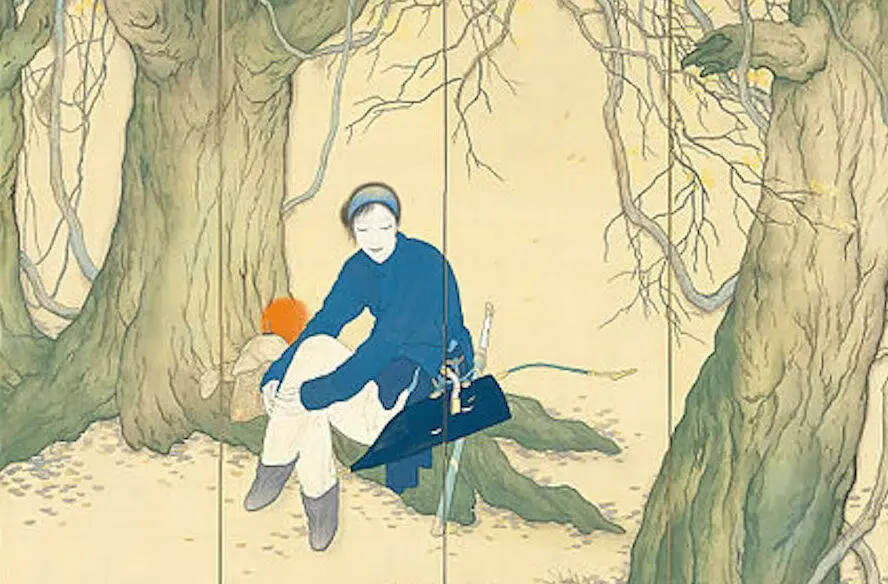
The fact that Mulan acted “like a man” - figuratively speaking - does not make her one. The development of qualities traditionally associated with masculinity - like self-determination, physical strength, and mental fortitude - does not strip her of the feminine traits she possessed from the beginning, such as sensitivity and grace.
One of the most beautiful verses appears near the end of the ballad, drawing a subtle analogy between the behavior of men and women. It invites reflection on the roles society assigns to each, leaving behind a question that remains unanswered to this day: What is a man, and what is a woman, but what society has imposed upon them?
The male hare likes to kick and stomp,
The female hare has glazed, tearful eyes.(…) But if the hares run side by side,
Who can tell which one is male and which is female?
Mulan's richness in film
Mulan’s story is a breathtaking narrative, brimming with both explicit and implicit meaning. These qualities have been translated onto the big screen, but they have also evolved, leading to profound reflections on the female identity and societal roles. Here are three key moments where cinematic adaptations of Mulan, beyond their already inherent strengths, have introduced fascinating new dimensions to her story.
Homoeroticism, gender restrictions, and ‘duty’
(Mulan, Disney, 1998)
One of the best versions of Mulan is, ironically, an adaptation by what might be considered the largest cinematic powerhouse in the West: Walt Disney. While it’s often criticized in China for including elements perceived as disrespectful - like Mushu, which some see as a mockery of the spirits and gods of Chinese culture - it remains a powerful and compelling interpretation of the ballad.

On a personal note, it's one of Disney's finest animated films. Its artistic achievement may not stand out as groundbreaking, but the strength of the film lies in its content. It doesn't shy away from the core themes of Mulan’s adventure. While it employs Disney’s signature comedic relief, it faithfully preserves the essence of the original ballad and the core values it represents.
However, what makes this adaptation particularly intriguing is how it explores gender restrictions through the animated medium. Mulan, disguised as a soldier, is confronted with the social and physical constraints imposed upon her by the gendered structure of the army. The film also includes a version of the story where Mulan is discovered, bringing shame and dishonor to her family - a consequence that adds a significant layer of emotional tension.

But the most fascinating subtext involves Li Shang, the commanding officer who develops feelings for Mulan while she’s disguised as a man. While the film - being a Disney production - never explicitly addresses this dynamic, there’s an underlying homoerotic tension. It raises subtle but provocative questions about identity, attraction, and the blurred lines between gender and love.
The tension between Shang and Mulan expands into the broader context of military duty. Both Mulan and Shang are bound by societal expectations - not just through the binary of man and woman, but through their roles as soldiers in wartime. In such a brutal context, there seems to be no place for love, nor for personal authenticity.

War, psyche, and femininity
(Hua Mulan, Shanghai Film Group, 2009)
This is perhaps the most widely accepted live-action version of Mulan in the Eastern world. It’s a gritty, hyper-realistic take on the story - steeped in violence, nationalism, and a healthy dose of Chinese patriotism.
Yet, that doesn't make it a bad film. In fact, it’s a fascinating portrayal of Mulan, presenting her not merely as a heroine but as a societal outcast. She steps into the role of a soldier to protect her family, but the film doesn’t shy away from the catastrophic emotional and physical consequences of that choice.

The narrative focuses heavily on the psychological toll that war exacts on Mulan. Her mind deteriorates under the relentless pressures of combat, not only because she’s forced to disguise herself as a man, but because she faces the unrelenting horrors of war - violence, hunger, death, and the constant specter of defeat.
Her romantic relationship with the general introduces further complexity. As Mulan’s mental state declines, her sense of femininity and personal identity erodes, complicating her interactions with those around her. The film shows her grappling with the devastating loss of self, exposing a darker, more painful side of her story.
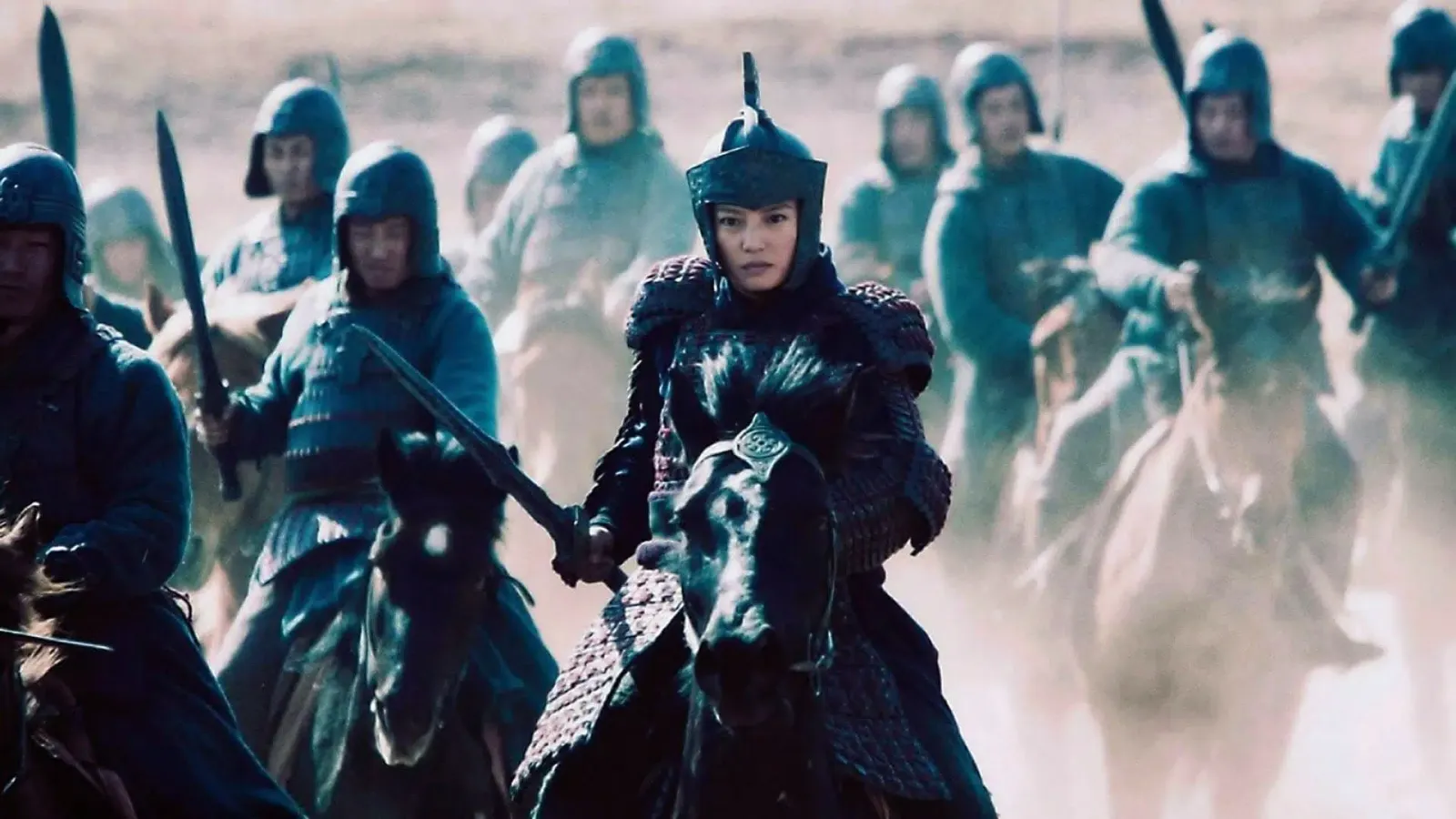
This interpretation of Mulan stands in sharp contrast to Disney’s cheerful, triumphant narrative. It presents Mulan not as a fairy-tale heroine but as a woman irrevocably shaped and scarred by the brutal realities of war. Yet, both portrayals are valid in their own right; the existence of one does not diminish the significance of the other.
Cross-dressing, gender identity, and social pressure
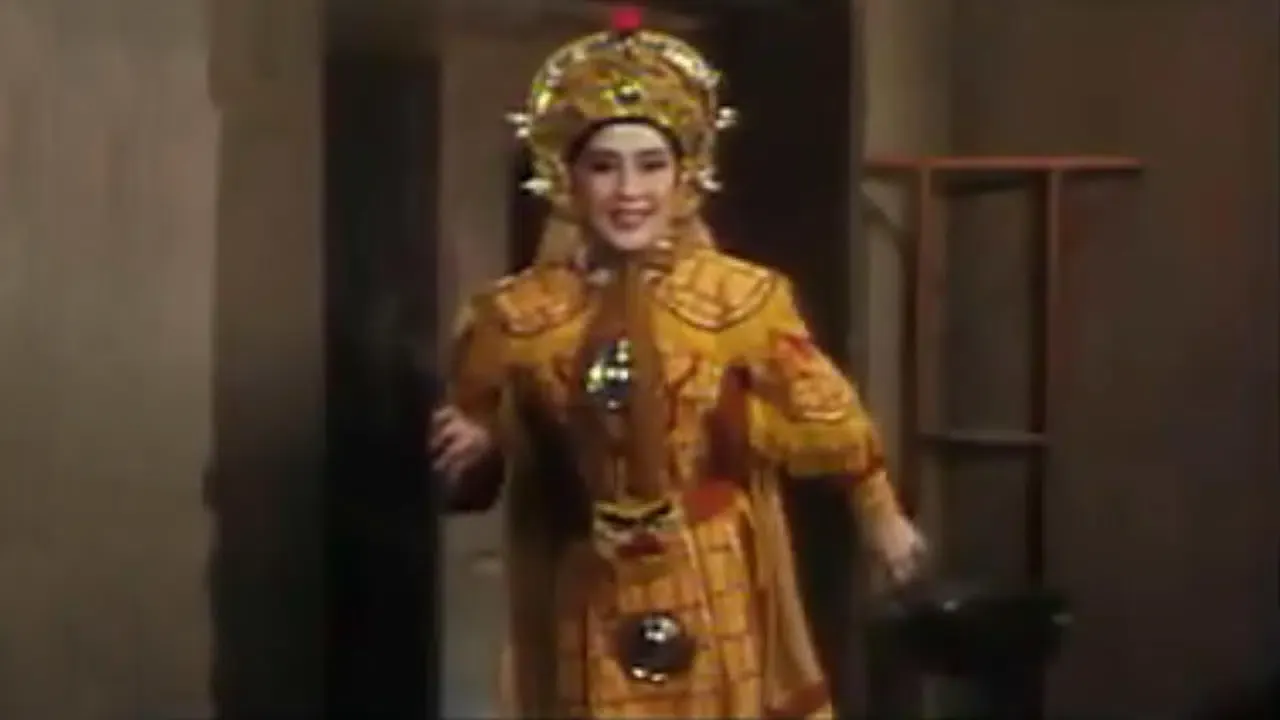
(Saga of Mulan, Beijing Opera, 1994)
The most unusual - and perhaps the most thought-provoking - adaptation of Mulan comes from the Beijing Opera. Beijing Opera is a unique art form, combining dance, singing, martial arts, mime, and elaborate traditional Chinese makeup.
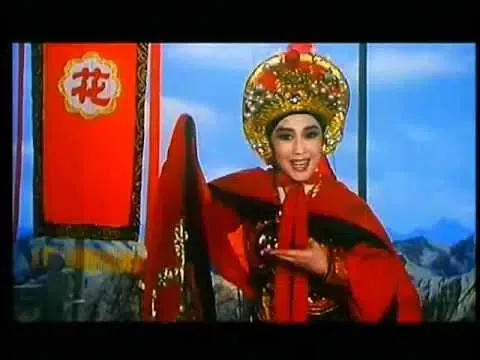
This version delves deeply into the exploration of gender identity. The core of the narrative isn’t Mulan’s military prowess or the threat of being discovered - it’s the psychological and emotional journey of presenting herself as a man.
The opera confronts the internal dissonance that arises when Mulan, raised according to rigid social standards, subverts them overnight. The story explores the tension between her emerging masculine identity and her innate sense of femininity.
At times, Mulan believes that her soldier persona is her true self - what she was meant to be all along. In other moments, she longs to reclaim her femininity and questions whether it’s possible for both identities to coexist. The opera poses profound questions:
Can I present myself as a man while feeling like a woman?
And vice versa?
Mulan’s gender identity becomes the site of her most intense battle - a psychological war that no army or enemy can resolve. It’s a lonely conflict, fought in the depths of her own mind.
By the end, Mulan realizes that womanhood is not simply a biological fact - it’s an identity that can be shaped and chosen. Likewise, masculinity can be worn, performed, and discarded. But no matter how convincing the illusion, the one person Mulan cannot deceive is herself.
Mulan’s journey - through war, love, identity, and survival - reflects the broader struggle of women to define themselves beyond social constructs. Her story, whether filtered through Disney’s bright lens, a war-torn live action, or a psychological opera, remains a powerful testament to the fluidity of identity and the enduring strength of self-determination.
A symbol that transcends borders
For centuries, China was governed by Confucianism, a philosophical and political doctrine that, among other things, asserted that women must obey three powers: their father, their husband, and their son. Yes - Chinese culture, like much of the rest of the world, has not been kind to women.
Throughout history, China has enacted oppressive policies that systematically degraded the social status of women - one of the most infamous being foot binding, a brutal practice that wasn’t fully abolished until the mid-20th century.

That’s why it’s so striking that such a powerful, minimalist story - one that speaks so profoundly about female empowerment - originated in a country as patriarchal as any other. Even more surprising is the fact that this story has not only survived for millennia but remains culturally and socially relevant to this day.
We don’t even know who wrote it. There’s no solid evidence of where it first emerged. The identity of the first person to compile it is barely a footnote in history - but perhaps that’s enough. Mulan’s figure has transcended time and any physical or imaginary border that humanity has ever devised.
It’s entirely possible that the story was written by a woman. We may never have the answer. But that ambiguity only enhances its significance. That aura of mystery, where the who, when, and where fade into irrelevance, leaves only the story itself - a timeless masterpiece that will continue to shape history for generations to come. Mulan is, in the end, more than just a story: it is an immortal echo of what women can be, even when the world dictates otherwise.


Comments 1