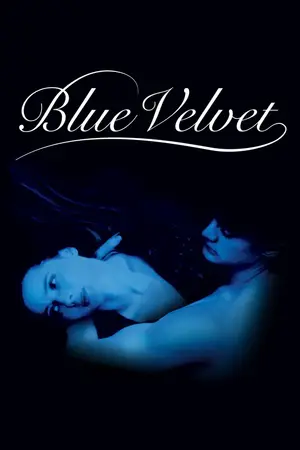
BLUE VELVET: A Tribute to David Lynch – A Journey Into the Darkness Beneath the Surface
General Reviews

As you sit down to watch Blue Velvet, it’s impossible not to think about the man who crafted this unsettling masterpiece—David Lynch.

With his passing, we’re left with the legacy of a filmmaker who was never interested in entertainment for entertainment’s sake. Lynch’s films weren’t designed to make you feel comfortable or entertained in the traditional sense; they were meant to make you think, feel, and, at times, question your very understanding of the human experience. Blue Velvet is one of the finest examples of his unique artistry.
The Collision of Normalcy and the Grotesque

From the very beginning, Blue Velvet challenges you. You’re introduced to Jeffrey Beaumont, played by Kyle MacLachlan , a seemingly ordinary young man who, after visiting his father in the hospital, discovers a severed ear in a field. This moment, strange and disorienting, propels him into a world far darker than anything he—or anyone—could have anticipated. It’s this collision of the normal and the grotesque that lies at the heart of Lynch’s work. Jeffrey’s simple, almost innocent encounter with the ear leads him into the underbelly of suburban life, a world governed by expectations of safety, order, and decency. These norms are subverted as the ear serves as a gateway to the darker, hidden complexities of human behavior, challenging the perceived tranquility and exposing the grotesque undercurrents that can exist in seemingly serene environments.

As you follow Jeffrey deeper into this strange world, you’ll meet Dorothy Vallens, played by Isabella Rossellini, a woman who at first seems to be nothing more than a crazy, broken character. But as you spend more time with her, you begin to see that, like everyone, she’s searching for something. She’s not just lost in her own madness; she’s a reflection of the human condition—vulnerable, desperate, and looking for love, safety, and connection in all the wrong places. Lynch doesn’t just create characters who are eccentric or "otherworldly"; he crafts individuals who feel disturbingly human, their desires and actions making them relatable, despite their flaws.
Sandy Williams: The Symbol of Pureness Challenged

In stark contrast to Dorothy, Sandy Williams, played by Laura Dern, represents purity and innocence. Sandy is Jeffrey’s connection to the normal world, the bright and hopeful counterpart to the darkness he encounters with Dorothy. She’s the one who introduces Jeffrey to the mystery of the ear, setting him on his journey. However, as Jeffrey becomes more entangled in Dorothy’s world, Sandy’s purity is challenged. She is confronted with the harsh realities that Jeffrey brings back from the darkness.
Sandy’s character is not just a passive observer; she suffers deeply as she witnesses Jeffrey’s descent. Her tears and heartbreak reflect the emotional toll of being exposed to a world she never imagined. Sandy embodies the ideal of what should be—a safe, predictable life—and her confrontation with the darker aspects of human nature forces her to grapple with a reality that shatters her innocence. Through Sandy, Lynch illustrates the fragility of purity in the face of pervasive darkness, making her journey just as compelling as Jeffrey’s.
Frank Booth: The Embodiment of Chaos

One of the most unforgettable characters in Blue Velvet is Frank Booth, portrayed with terrifying intensity by Dennis Hopper. Frank’s erratic behavior, his sudden outbursts of violence, and his bizarre rituals make him seem like a force of nature rather than a mere human being. He stands in stark contrast to the suburban calm of Lumberton, representing the dark, primal urges that lurk beneath the surface of society. Through Frank Booth, Lynch explores themes of power, control, and the terrifying unpredictability of human nature. He is a character who is both repulsive and fascinating, embodying the film’s central tension between the ordinary and the grotesque.
Cinematography: Contrasting the Ordinary and the Surreal

Lynch’s mastery of cinematography in Blue Velvet further amplifies the film’s psychological depth. You’ll notice how the “normal” world is often depicted in broad daylight, with open spaces and soft, natural colors. The scenes in Lumberton, for instance, showcase suburban life with its neat houses, green lawns, and clear skies. This brightness, however, only serves to contrast sharply with the darker, more surreal elements of the story.
When the film shifts to the darker world that Jeffrey uncovers, Lynch’s use of color and composition becomes much more constrained and claustrophobic. The "dark" world isn’t traditionally dark; instead, it’s filled with deep, rich colors—reds, blues, and blacks—that create a sense of being trapped in a dreamlike, almost surreal atmosphere. You feel the walls closing in, the air thick with tension, as if you’ve entered a parallel universe that exists just beneath the surface of everyday life. This visual contrast between the two worlds heightens the psychological impact of Jeffrey’s journey, making the transition from the mundane to the bizarre even more jarring.

Therefore, what makes Blue Velvet extraordinary is not just the story but the emotional and sensory experience it offers. Lynch’s cinematography and use of color aren’t there merely to please the eye; they are integral to how you experience the film’s themes and emotions. The bright, open spaces of Lumberton lull you into a false sense of security, while the richly colored, confined interiors of Dorothy’s apartment or Frank Booth’s hideouts make you feel as though you’re sinking into a nightmare. It’s a deliberate manipulation of your senses, drawing you deeper into the film’s unsettling world.
The Role of Music: A Bridge Between Worlds

Music also plays a crucial role in Blue Velvet, serving as a bridge between the normal and the grotesque. Dorothy’s performances at the nightclub are not meant to showcase extraordinary talent; instead, they convey a sense of melancholic normalcy. Even Frank, with all his chaos, seems momentarily subdued during these performances, adding a layer of complexity to his character. The music doesn’t overwhelm you with its brilliance; it grounds the surreal events in a strange kind of reality, making them all the more disconcerting. It’s through these moments that Lynch subtly reminds you of the thin line between the ordinary and the extraordinary, using music as a tool to navigate the emotional landscape of the film.
A Reflection on Art and Entertainment

As you experience the unsettling atmosphere, the characters, and the psychological tension of Blue Velvet, remember that this isn’t just a film; it’s an invitation to dive into the human psyche. Lynch’s films will never simply entertain you—they’ll make you feel, they’ll make you think, and they’ll leave you with something to contemplate long after the credits roll.
Art is inherently subjective, and Lynch’s work reminds us that film, as the seventh art, serves purposes beyond mere entertainment. It’s a medium that can challenge, provoke, and evoke deep emotions. Through Blue Velvet, Lynch shows us that the boundaries of cinema can extend far beyond the confines of traditional storytelling, making us question the nature of reality and our place within it. In honoring Lynch’s memory, we celebrate a filmmaker who dared to explore these depths, leaving us with a body of work that continues to resonate on multiple levels.









Comments 4