Past Lives makes Me Feel Icky
General Reviews
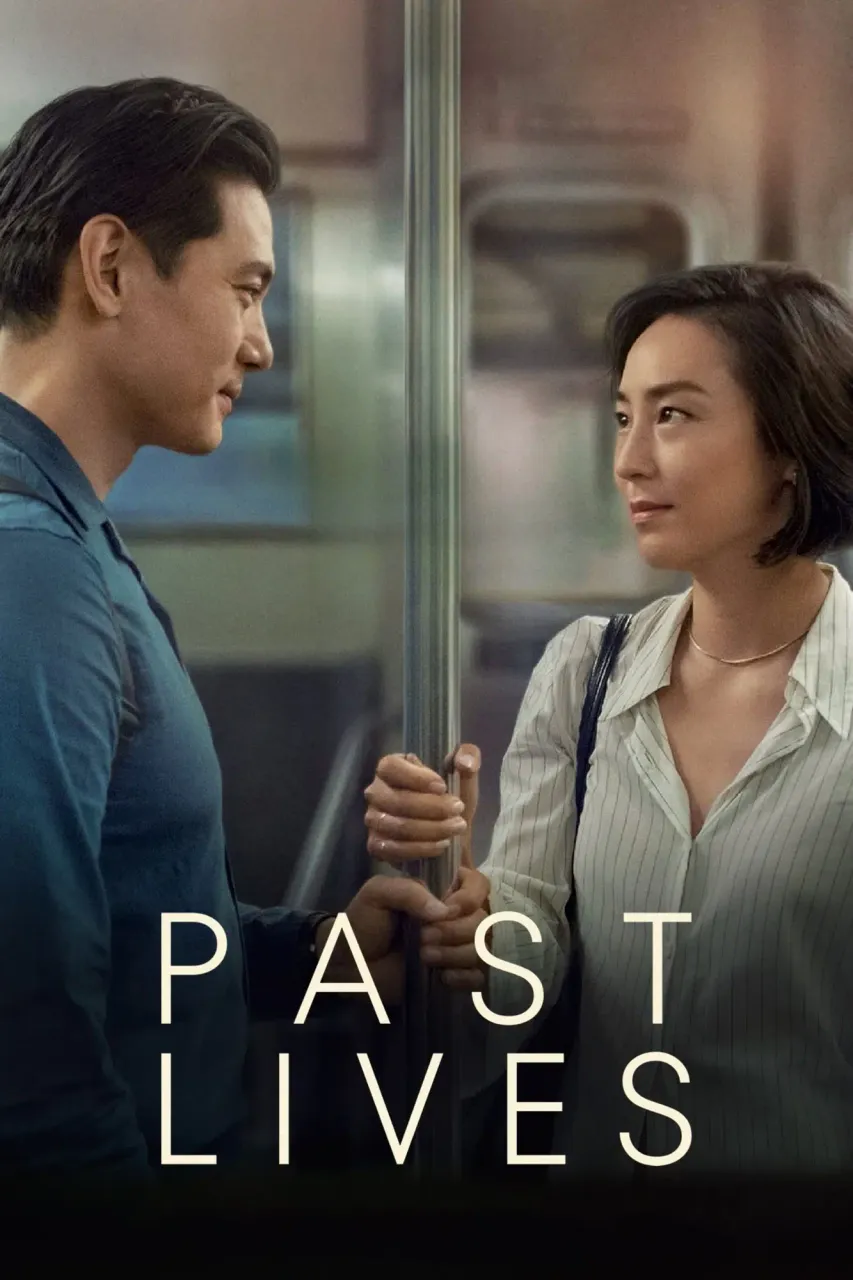
When I first heard about Past Lives, directed by Celine Song, I was immediately drawn to the neon a24 logo that came before it. A Korean-American romance film exploring themes of love, fate, and cultural identity seemed like a breath of fresh air in a cinematic landscape where stories like these often feel overlooked. As an Asian myself, I definitely found myself relating to the internal and external conflicts of moving to a new place and beginning a fresh start with old memories still lingering, over and over again. I moved quite a few times and every time was hard. The film focuses on Nora, a Korean immigrant who reconnects with her childhood love, Haesung, after years apart. As someone who’s always been fascinated by relationships and identity, I was really excited to see how Past Lives would explore these themes. But as I watched it, I ended up feeling emotionally distant, like the film didn’t quite reach its full potential.

One thing that caught my attention was the idea of ‘Inyan,’ a Korean belief about the interconnectedness of past lives. Nora and Heung’s relationship is based on the idea that fate plays a big role in who we connect with and why some relationships feel destined. This concept seemed like it could add a deeper layer to the film, giving the story a more philosophical foundation and raising the emotional stakes. But as the plot unfolded, I felt like Past Lives didn’t dive into this concept enough for me to truly connect with it. Instead, it felt more like a vague background idea, and the film didn’t truly explore what this sense of interconnectedness meant for Nora and Haesung.
In the beginning, we see a flashback to 12-year-old Nora in Korea, where her family is preparing to immigrate to Canada. The film briefly shows her friendship with her crush, Haesung, including a date arranged by their mothers. These childhood scenes take up about 10 minutes of screen time and occur during a transitional period in Nora's life. Because of this, the film doesn't fully establish her deep connection to Haesung, her Korean heritage, or the emotional weight of her past. The narrative only hints at her link to her origins through her complicated relationship with Heung, but it’s unclear if she’s honestly trying to close that gap.
As a child, Nora seemed excited about the move, and while she may echo her parents’ sentiments, she also had clear ambitions from a young age. After settling in Toronto, Nora feels like an outsider in an unfamiliar place, but instead of exploring this feeling of isolation, the film jumps 12 years ahead to show Haesung in the military and Nora studying in New York. There's little indication that Nora longs for her past, and she only reconnects with Heung casually, through a series of Skype calls sparked by curiosity rather than a deep yearning for her roots.

The contrast between Nora and Heung’s families and their values is there, but it’s so subtle that it feels like you have to fill in the blanks with your own experiences. Personally, I didn’t get the sense that Nora was really missing her old home. Her Skype calls with Haesung felt more like casual distractions than deep, meaningful connections.
They chat and reminisce, but their conversations don’t seem to go beyond surface-level stuff. After some back-and-forth over a long-distance relationship, Nora ends things to focus on her career.
When they finally meet again 12 years later, she’s faced with a past she’s almost forgotten. Her interest in her Korean roots seems more like curiosity than real longing. The line “I feel so not Korean when I’m with him, but also in some way more Korean” sums up the feeling of being torn between two worlds. The final scene, which I do like overall, doesn’t just feel like saying goodbye to an old friend, but more like saying goodbye to who she used to be—her past in Korea, the person she could’ve been, and the person she’s become. It’s a moment of grief for everything she’s left behind, and in a way, it’s her last goodbye to that part of herself.

I also couldn’t help but notice that Nora’s relationship with her American husband, Arthur, is given much more weight than her emotional entanglement with Heung. The focus on her career aspirations, as well as her commitment to a life she has built in the United States, seemed to overshadow the more romantic or nostalgic elements of her past. In some ways, this made sense, Nora is a woman who has made choices, and the film reflects the complexity of balancing those choices with the unresolved aspects of her past.
But I couldn’t shake the feeling that her personal struggles were downplayed in favour of a quieter, more intellectual exploration of identity and relationships. It almost felt like the film was more interested in the idea of Nora’s journey rather than her actual emotional experience. This left me feeling like I couldn’t fully invest in her as a character. Her emotional growth, especially regarding Haesung, felt underdeveloped and disconnected from the emotional core of the film.

This brings me to an opposing opinion I have about Nora's dynamics with the men in her life. We, as well as Arthur, are meant to accept the idea that Nora and Haesung are bound by fate, love, and destiny. Nora's life choices, a previous failed attempt, the reconciliation of her relationship with Haesung, and timing issues are the reasons their fate never intertwined in the future. However, the unspoken care and love they hold for each other remain eternal, understood to be more important than any future relationships Nora builds later in her life.
This point is reiterated by Arthur when he says he must be the villain of the story for separating them. Nora assures him that this isn’t true, but as a viewer who saw a young Nora build a relationship with a younger Haesung- even if only briefly, I’m meant to agree that Arthur’s assumption is correct. This leaves an uncomfortable feeling in my heart, where I can’t accept or agree with the notion that inyun, or fate, is more important spiritually and metaphorically than the relationship you build with someone through work and compassion.

There are even countless videos and commentaries praising the film for convincing us that Arthur isn’t a bad guy within the context of the story. The film diverges from typical romance tropes where the couple fated to be together doesn’t end up together. But when I watch these discussions, my thought process immediately goes to: why would I think that in the first place? Nora’s relationship with Arthur seems healthy, stable, and full of love and compassion, so I never once believed that Arthur’s role in the relationship was in any way obsolete. Yet, the film subtly makes me entertain these ideas.
While I wholeheartedly appreciate the exploration of complex romantic dynamics in a non-conventional way—like in the 2024 Norwegian film The Worst Person in the World—the difference is that Julie, the protagonist of that film, is not meant to be entirely a good person or always make good choices. In contrast, Nora, throughout the entire runtime of Past Lives, never shows any hint of flaws, moral dilemmas, or ethical shortcomings. This makes me believe that the internal conflict she experiences in reuniting with her past lover, while her current partner sits in eternal doubt, is meant to be seen as acceptable. But for me, it just isn’t.

One thing I did appreciate about Past Lives was its visual style and the understated performances. The cinematography is gorgeous, with quiet, intimate moments that let the characters’ emotions come through in small gestures and subtle expressions. The tone is calm and reflective, which really suits the themes of longing and missed opportunities.
I hope this review doesn't come across as a dig at films that pursue melodrama in this type of way, or a critique of subtle nuanced romance that diverges from common tropes and doesn't stick to specific archetypes because I don't think this film indulges in those kinds of cliches. However I find there to be a difference between subtle commentary, and giving us practically nothing to fill in the blanks, interpreted as a deep introspection.
Past Lives might appeal to people who enjoy quiet, intellectual storytelling and are okay with drawing their own conclusions about love and identity. But for someone like me, who was hoping for a more raw, emotional experience, the film didn’t deliver. The underdeveloped emotional arcs, particularly with Nora’s internal struggles and connection to Heung, kept me at arm’s length from the film’s deeper themes. While Past Lives is undeniably beautiful in its own way, the emotional resonance ultimately fell flat for me, leaving me with a longing not for the characters’ relationship but for the emotional depth the film never fully realized it had.





Comments 10