You're Not Crazy, It Really DID Just Get Darker
General Reviews
Number 6 on calm.com's list of biggest red flags in a relationship is gaslighting. This psychological categorization has become a household term, as it has become a major touchpoint in 21st-century relationships. The term's origin goes back to World War II when an MGM movie based on a British play was released. The film received seven Oscar nominations and won Ingrid Bergman her first Oscar for best actress. Yes, Gaslight was a success for the studio, but not even Louis B. Mayer could have predicted the influence that this movie would have on relationship psychology over 60 years later.
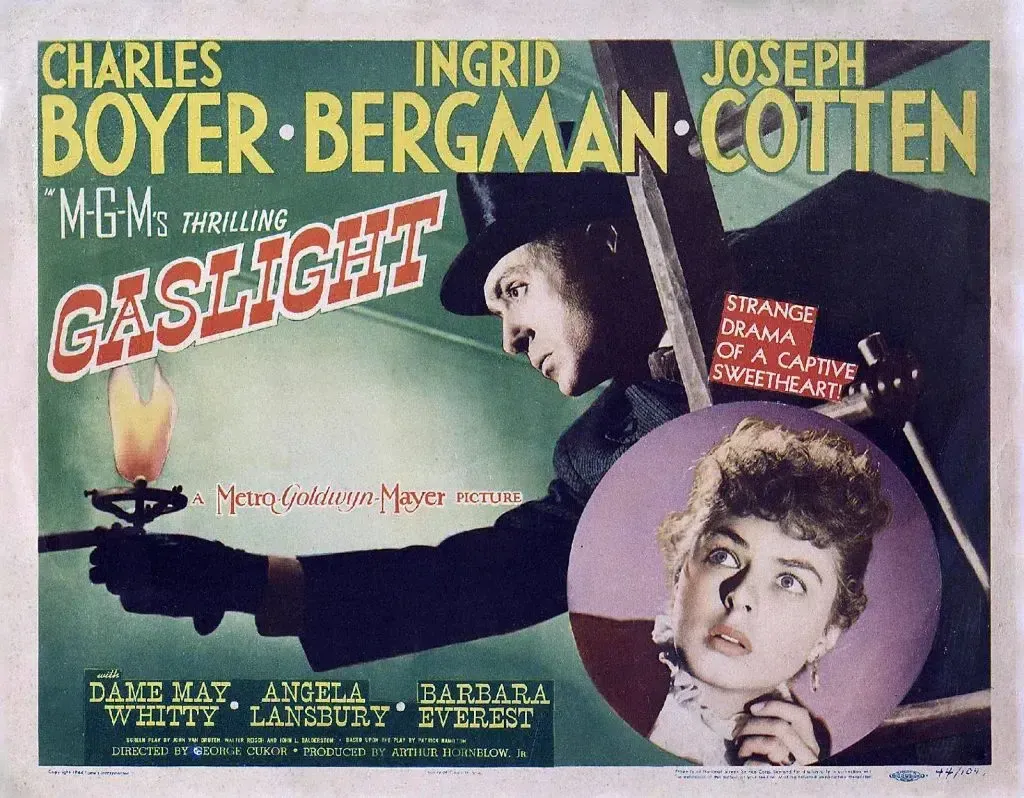
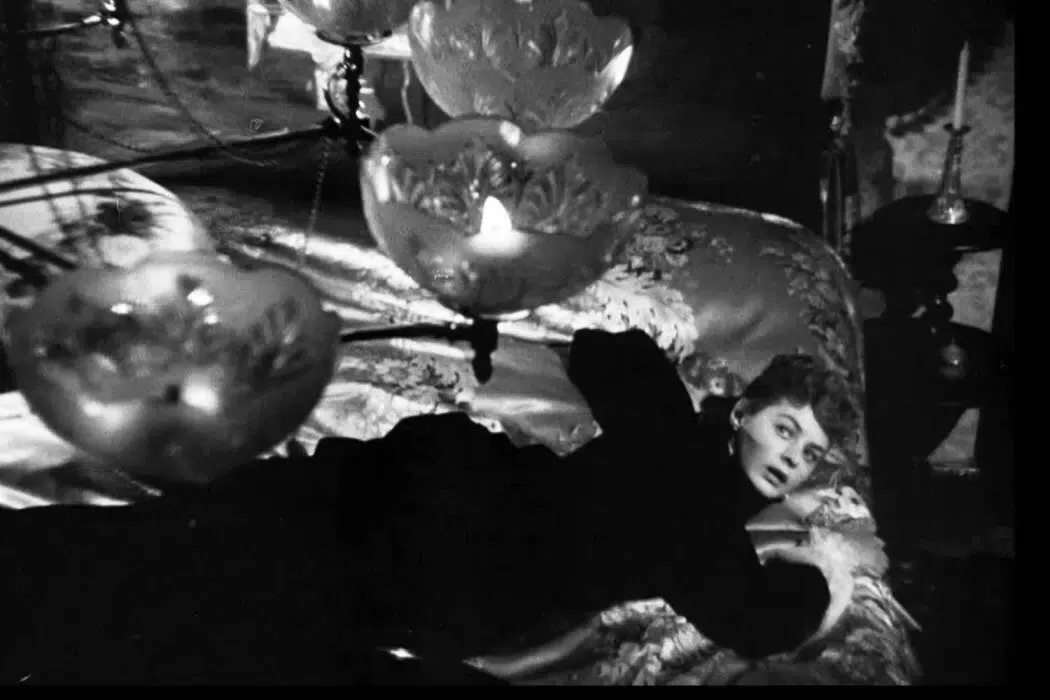
Everything that we think of as gaslighting, in the modern sense, is on full display in Gaslight. Charles Boyer plays Gregory, the manipulative husband of Bergman's Paula. Throughout the movie, Gregory manipulates Paula until she believes that she's going crazy. He doesn't allow her to leave the house. He tells inquiring minds that poor Paula is sick and that's why she's never seen in public. While stuck at home alone, Paula can't understand why the gaslights suddenly dim. As a helpful reminder, gaslights were powered by gas, not electricity, and would maintain a steady flow of fuel. They would never dim, unless the gas line broke or someone turned the switch. Along with the mysteriously dimming light, Paula doesn't know what kind of spirit is making the noises she hears that seem to come from the ceiling. She never considers that, maybe, an animal or rodent got up into the third floor of the townhouse, which is boarded up and contains all of her dead aunt's belongings. This seems like a gross plot hole in the movie but, once the psychology of gaslighting is studied, it becomes an accurate non-action for somebody that is being gaslighted.

Gaslighting did not become a common term immediately after the movie was released. The term as we know it, being used as a noun, first pops up in a 1995 New York Times opinion column by Maureen Dowd titled “Liberties; The Gaslight Strategy.” In this article, Dowd somewhat playfully analyzes how Newt Gingrich, the Republican speaker of the house at the time, was being gaslit by the Democrats. Largely, her argument is that the Democrats were finding great success in provoking Gingrich into acting hysterical.
Its use in ‘95 made for a fun, witty read, but it was still just the pontifications of an op-ed writer in New York. The term didn't go mainstream until 2007 when Robin Stern, a psychoanalyst at Yale, wrote a book titled The Gaslight Effect: How to spot and survive the hidden manipulation others use to control your life. This book would cause the popularization of the term gaslighting, and its republication in 2017, which included additional text about gaslighting and its relationship to politics, further increased the term's popularity.
Stern defines what gaslighting is, in regard to relationships. She notes that it takes two to make gaslighting work. There is the gaslighter, Gregory in the movie, who manipulates another person's thoughts in order to retain power over that person. Then, there is the gaslightee, Paula, who idealizes and seeks the approval of the gaslighter. It is because of the gaslightee's need to idealize the gaslighter that, Stern says, “the gaslightee holds the key to her own prison.” This insightful analysis clears up the glaring plot hole in Gaslight. Paula has the capability to prove that Gregory is manipulating her. All she has to do is go and investigate the curious noise that is above her in the boarded up third floor of the townhome. However, her need to have Gregory's approval, her need to be this idealized wife, prevents her from acting on her own. To investigate, to do something that did not have Gregory's approval, would require her to receive Gregory's disapproval – the one thing she cannot have.
Stern notes that a gaslighter comes in three forms: the glamour gaslighter, the good-guy gaslighter and the intimidator gaslighter. In my opinion, Gregory fits best into the galmourous-gaslighter category. He likes to charm before giving criticism. He likes to make jokes that lead to the gaslightee feeling confused. Gregory charms Paula, sweeping her off her feet in Italy. He tells her his dream of having a home of one's own, knowing full well that she has access to such a home. Thus, he allows Paula to come up with the solution herself. It is once Paula is in the London townhouse that Gregory can increase his manipulation. Time and again, he sets Paula up for failure. He gives her a brooch, which somehow goes missing. He notices a missing painting and is shocked that Paula knows where the painting is hiding. His watch goes missing and he finds it in Paula's handbag. His cruel jokes lead Paula to further confusion. He flirts with the housemaid, Nancy, played by a teenage Angela Lansbury, right in front of Paula. This makes Paula feel confused about where she stands in Gregory's heart. Although Gregory also acts as the good-guy gaslighter, for he always maintains his airs of sophistication and class-stature, it is through his creation of a superiority complex over Paula that he maintains his control over her.

Meanwhile, Paula goes through all three stages of the gaslight effect, as described by Stern. The three stages for a gaslightee are disbelief, defence and depression. At first, Paula does not believe that she is losing her mind. As the story continues, she goes on the defensive – demanding that Gregory let her leave the house in defence of her sanity! However, whenever these streaks of independence flare up, Gregory is sure to show her some made-up mental mistake that proves she is unfit for the real world. Finally, Paula's bags under her eyes grow; her look becomes more feral; she is afraid to even meet with Joseph Cotten's Brian (a childhood acquaintance and now an inspector at Scotland Yard). Thus, she has become depressed because she believes she really has lost her mind.
Rarely do movies get to have such a life of their own as Gaslight. Did George Cukor, the director of the film, have any sense that his movie would be studied by psychologists in the 21st century? I doubt it. Yet, that's the power of cinema – it can create dialogues that might be relevant when they're released or they might be relevant 80 years after the fact. Either way, so long as the movie deals with a human truth, it will find its audience.
Gaslight is essential cinema. If you are in a relationship with someone who exhibits any of Gregory's behaviours, you can be assured that it is a red flag. Although Gregory is an arch villain in this movie and his motives are melodramatic fluff, it does not mean that his actions don't have real-world counterparts. If you feel like you are being manipulated, that your partner is distorting your perception of reality, it is best to reach out to a confidant – a friend or a third party that will give it to you straight. In short, if you're a Paula in a relationship with a Gregory, reach out to a Brian who will confirm what's real and what isn't. Stay safe out there, friends.
Gaslight is available to watch for free on The Internet Archive.







Comments 18