Is Lady Gaga the Real-World Harley Quinn?
General Reviews
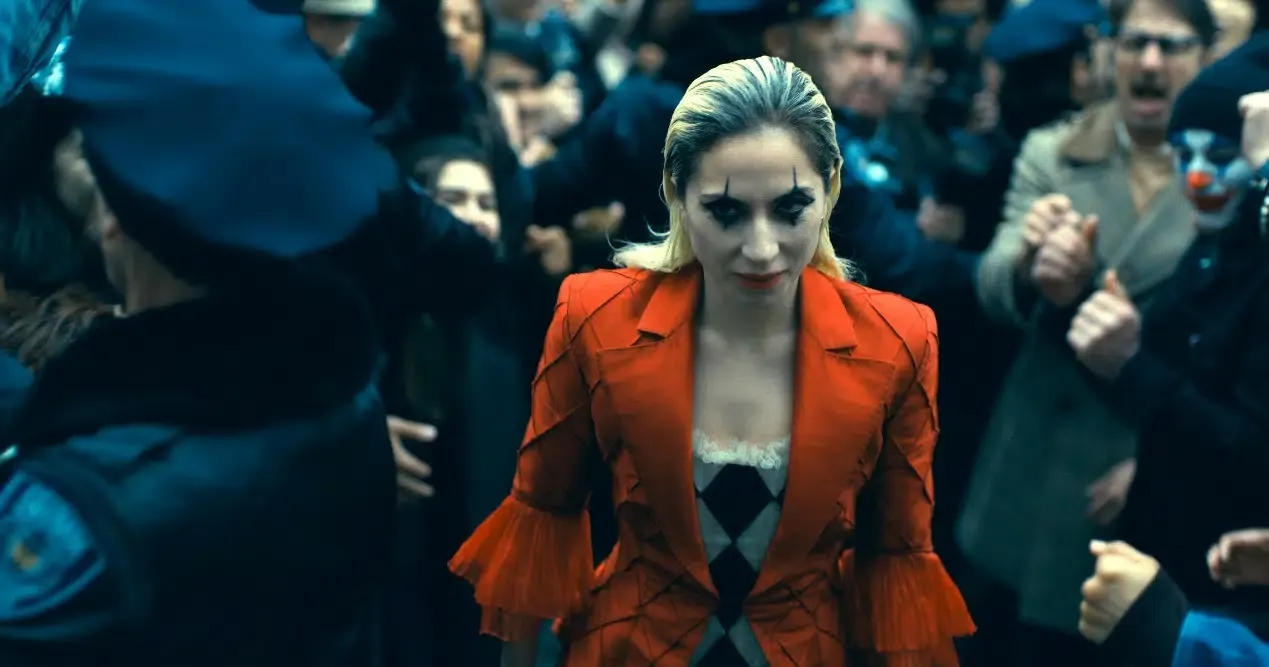
In Joker: Folie à Deux, Lady Gaga shines vocally, and her performance as Harley Quinn meets the standard, but I truly can't pretend to like the film's overall story. To be clear, I'm referring to Gaga's strong performance in the movie—not her portrayal of Harley.

As someone who's been closely following her career, I don't question Gaga's acting chops. Her role in A Star is Born, where she masterfully depicts the transformation of an ordinary dreamer into a music icon, speaks volumes. This performance even earned her an Academy Award nomination for Best Actress. Beyond this film, Gaga's presence in American Horror Story proved her acting skills weren't a one-time fluke. She takes on an exceedingly charismatic role in the series. Her aloof and seductive portrayal left a lasting impression, showcasing her ability to embody complex, multifaceted characters. These roles have convinced me that Gaga is far more than just a pop singer—she's an actress capable of conveying deep emotional complexity on screen.



However, while watching Joker: Folie à Deux, I found a persistent disconnect between Gaga and Harley. This gap not only kept me from emotionally engaging with Harley but also hindered my overall experience of the movie.
There are certainly merits to Gaga's performance in the movie. Her musical talents animate the otherwise lackluster narrative. Her and Joaquin Phoenix's unconventional approach to the film's songs added a raw and intriguing quality. I was particularly surprised by how well Phoenix's slightly gritty voice complemented Gaga's vocals. The film's musical elements, which serve as a "gateway" between reality and fantasy, stood out to me. Yet, while these scenes worked well, Harley is a character defined by madness, a warped mindset as well as deep internal conflicts—qualities that are difficult to capture through acting alone. I think this challenge was the greatest obstacle for Gaga in portraying the character.
To better understand the disconnect I felt, it'd be useful to reflect on Gaga's background. Her childhood and adolescence were far from easy. Stefani Joanne Angelina Germanotta—before she became Gaga—was often bullied and ostracized in school because she didn't fit conventional standards of beauty. She was called a "freak" and subjected to overtly hostile stares. As she's admitted, her teenage years were marked by insecurity and alienation from the world around her. This sense of exclusion played a big role in her later decision to adopt exaggerated fashion and highly artistic performance styles. These choices were her way of standing up against societal expectations and regaining control of her own image.
This need to rebel and redefine herself helped shape the Gaga we know today—a singular figure in music and fashion. Every costume and performance is a declaration of independence: "I don't care what you think; I am who I am." I admire her immensely for this. She's never shied away from criticism but instead leaned into it, showcasing her most authentic, unconventional self to the world. Her stage outfits often break boundaries, but beneath the eccentricity lies her pursuit of freedom, independence, and self-acknowledgement.

Harley's brand of insanity and rebellion, however, is expressed very differently. To fully capture this contrast, let's revisit her origins. She first appeared in Batman: The Animated Series in 1992, starting as Dr. Harleen Quinzel, a psychiatrist who falls for the Joker while treating him. This unhealthy, toxic relationship is the foundation for her descent into madness.

Harley's journey from a rational doctor to an unhinged accomplice reveals deep contradictions and fragility in her psyche. Dr. Quinzel was once a smart and well-educated woman, but her deep-seated insecurities and desperate yearning for love and validation compel her to give everything up for the Joker. She's willing to endure emotional manipulation and abuse to protect this "sick" love. In many scenes, the Joker exerts extreme control over Harley, treating her with cold indifference, and yet she repeatedly returns to his side despite being abandoned by him umpteen times. This dynamic is a textbook example of Stockholm Syndrome, with Harley's internal confusion and self-doubt keeping her trapped in a malicious cycle she can't break.
Harley's madness didn't emerge overnight; it was the product of a slow, torturous psychological breakdown. Her maniacal laughter, cartoonish attire, and over-the-top hammer and weaponry are all part of the façade she uses to mask the emotional trauma within. Her exaggerated appearance conceals her inner struggles, while her erratic behavior serves as a form of self-defense, a way to guard her damaged soul. Though Harley appears carefree and fearless, deep inside she's consumed by loneliness and insecurity. This tension between her outward bravado and internal chaos forms the essence of her character.
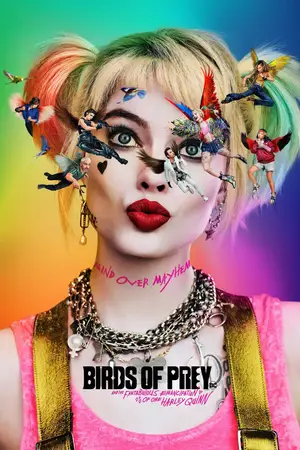
For instance, in Birds of Prey (And the Fantabulous Emancipation of One Harley Quinn) (2020), Harley shows a rare glimpse of her desire for a normal life—a stark contrast to her criminal persona. In this movie, she seeks to rediscover her identity, break free from the Joker's influence, and reclaim her independence. This journey reflects her growth as a more independent woman, though it also highlights her inner turmoil—she's no longer seeking the Joker's approval but trying to affirm her own self-worth.

Harley's unique trait is her "nonchalant" attitude. She often masks the grim reality of her situation with self-mockery, humor, and absurdity. Unlike many other superheroes or villains, Harley uses humor not to relieve tension but as a coping mechanism to hide her vulnerabilities and suffering. This dark humor distinguishes her from other characters and makes her all the more tragic.
Comparing Harley and Gaga, Harley's madness is deeply internal and fueled by a broken psyche. Her eccentricity stems from her own internal confusion and twisted thoughts, while Gaga's exaggerated style and uninhibitedness are more of an outward rebellion—a statement against societal norms and a way to recover self-control. Harley is inwardly an insecure individual, whose self-worth is tied to external validation, particularly from the Joker, while Gaga actively rejects the need for validation from others, asserting control over how she presents herself.

Because of this, while Gaga can capture Harley's flamboyance and chaos, she doesn't fully embody the character's psychological depth and internal struggles. This is why, when watching Joker: Folie à Deux, I couldn't help but feel there was something off about her portrayal. Gaga seemed to have watered down Harley's complexity and twisted psyche, preventing me from fully connecting with the character. Even though the film delivers visually, it falls short in emotional resonance and character development.
Catch you later for more movie musings!







Comments 2