Looking for a Hollywood Star Who Actually Knows & Loves Cinema History? Winona is the One.
Celebs

The successful release of Beetlejuice Beetlejuice has brought back the pop culture of the 1980s. One of the most iconic faces of that era—Winona Ryder—has naturally returned to the spotlight thanks to her role in this movie. However, unlike most stars, the reason for her media presence is not celebrity gossip but her profound love for cinema.
While promoting Beetlejuice Beetlejuice, Winona Ryder visited the offices of The Criterion Collection in New York and stepped into their famed Criterion Closet, where she picked out some of her favorite films. And her taste clearly exceeds that of the average Hollywood star.

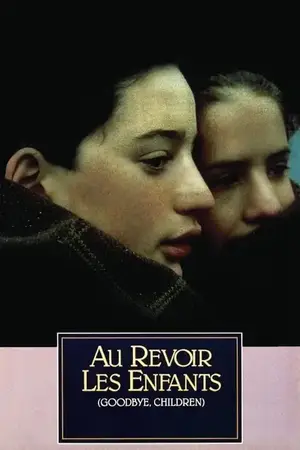
She started by selecting the 1987 French film Au Revoir les Enfants. This late-career masterpiece from director Louis Malle tells the story of an unforgettable friendship between a French boy and a Jewish boy during Nazi-occupied France. The film still influences modern filmmakers today; James Gray’s Armageddon Time, released two years ago, is practically a remake of Au Revoir, telling the story of a friendship between a white boy and a Black boy during a racially conservative time in the U.S. But comparing the two films, you can see the delicate mastery of Louis Malle's script and direction. Rather than relying on loud slogans or dramatic conflicts to shock the audience, Malle gently guides emotions through detailed, nuanced storytelling.
Winona’s choice reflects her refined taste. She didn't opt for more famous New Wave directors like Godard or Truffaut but selected her personal favorite from that generation of filmmakers, indirectly showcasing her extensive viewing experience.
Next, she chose films from two colleagues she’d worked with. John Cassavetes - Five Films, a must-have collection for any independent film lover, includes Faces, A Woman Under the Influence, and Opening Night, all starring Cassavetes' wife, Gena Rowlands. Winona worked with Gena on Night on Earth, but she shared that her connection with Gena goes even further back.

Winona's mother worked as a film projectionist, giving her early access to Cassavetes' films—something not easy for the average American at the time, as most of his movies were independently financed and released, and didn’t appear in mainstream theaters. Even at a young age, Winona was captivated by Gena’s performances. Watching them, she thought, “This is what I want to do. I want to be an actress like her.”

Her connection to Jim Jarmusch was also clear. Night on Earth, where Winona worked with Gena, was directed by Jarmusch, and she openly admits her admiration for him: “He is one of my favorite people. I love every frame of every one of his films.” Interestingly, she didn’t pick Night on Earth, or Dead Man, starring her ex-boyfriend Johnny Depp. Instead, she chose Ghost Dog: The Way of the Samurai and Down by Law, even showing up at the Criterion Closet wearing a Down by Law t-shirt.

Winona’s final selections included Matewan by John Sayles and After Life by Hirokazu Kore-eda—two films that may seem obscure to many Americans. She praised After Life as a masterpiece that reflects on death and the meaning of life and memory. Speaking of this film, she became introspective: “If heaven asked me which memory I’d want to keep, it would be the sound of my father’s typewriter and my mother’s footsteps.”

Her short visit to the Criterion Closet displayed Winona’s deep understanding of cinema. She chose French films, Japanese films, and films about the Black experience (The Learning Tree), as well as works by two masters of American independent cinema, Cassavetes and Jarmusch. And she mentioned wanting to return for the collector's edition of Sam Peckinpah’s Pat Garrett and Billy the Kid—further evidence of her knowledge and love for film history and her refined taste.
Winona’s deep understanding of cinema history can be partly attributed to her family background—not everyone has a journalist father and a projectionist mother. And during her acting career, she has worked with filmmakers like Martin Scorsese, Francis Ford Coppola, Richard Linklater, and Jarmusch, undoubtedly absorbing their cinephile influence.

Even so, it’s rare to find a Hollywood actor as passionate about film history as Winona. After all, many actors treat their craft simply as a profession (especially younger ones), with few embracing cinema as a "religion" like Winona does.
Winona recently shared her thoughts on this phenomenon. Thanks to her role in Stranger Things, she’s had more opportunities to interact with younger actors, and one thing that worries her is their lack of interest in classic films. When she or a more seasoned professional recommends a film to them, their typical response is, “How long is it? Do I really have to sit through the whole thing for two and a half hours?”
While she didn’t mention any name, we can deduce who she might be referring to. It’s unlikely to be Finn Wolfhard who plays Mike, as he has often expressed his admiration for legendary actor Elliott Gould. It’s more likely to be Millie Bobby Brown, who plays Eleven, as she has previously stated in an interview: “Every time someone suggests a movie, I get annoyed because I don’t even have the patience to sit through my own films!”

It’s no secret that many young actors lack reverence for classic films. In the earlier "Marvel vs. Scorsese" debate, Tom Holland even claimed: “Scorsese’s films are no different from ours, except that ours cost more and make more money.”

However, among younger actors, Winona has found a new kindred spirit: Jenna Ortega, who plays her daughter in Beetlejuice Beetlejuice. Their friendship began during an exchange on set. When Winona praised Tim Burton’s crane shot for a particular scene, Ortega responded knowingly, “It’s like that shot from I Am Cuba!” Winona was nearly moved to tears: “My God, I’ve never heard a young actor mention the sacred words I Am Cuba on set.”

Later, during a train scene, Winona immediately thought of the 1945 classic Brief Encounter, but she didn’t say anything, thinking no one on set would possibly understand. But when she looked at Jenna, Ortega exclaimed, “Oh my God, Brief Encounter!” That’s when Winona knew they spoke the same language. From that moment, their bond was cemented.

While actors don’t necessarily need to revere cinema history to be good at their craft, we still hope to see more like Winona and Jenna, who respect the trade they work in. After all, their knowledge of classic films gives them a clearer sense of their place in history, the influences they’ve absorbed, and who they might influence in the future. From the perspective of cultural and industry preservation, this awareness is crucial. It encourages one generation of actors to pass down their cherished craft to the next, ensuring that cinematic heritage continues to thrive and doesn’t fade away in the sands of time.





Comments 0
No comments yet.