Sheltered No More: Eye-Opening Revelation in 'Fallout'
General Reviews

I've always considered myself a hardcore fan of the video game "Fallout," that is, until I watched the TV series, and it got me thinking.
I used to be hooked on "Fallout Shelter" for a long while. So much so that it had become an indispensable part of my life, and I would spend countless weekends and a fair bit of my fortune on microtransactions. I was the shelter manager, and I wanted to make life good for my residents to the best of my abilities. As such, I had them trained to improve their skills and arranged jobs and tasks that matched their expertise for them. I poured a substantial amount of time and money into making my shelter top-notch, even luxurious. Basically, I made life better for my residents by having them work better for me. I'd even play matchmaker for the residents, pairing up the opposite genders to ensure we had a steady supply of babies for the sustainability of the shelter...or should I say, for my personal interests.

But then, something happened. I kept sending residents to explore beyond the shelter, and when they ran into trouble, I chose not to save them. There was always an abundance of backups back at the shelter to replace them, anyway. That was when I realized the reason for my addiction to the game; I had become a dictator in a confined virtual space. Faced with survival threats, my residents seemed to care less about their freedom. After that aha moment, my obsession with "Fallout" started to fade, and I eventually stopped playing the game. Then I heard that Jonathan Nolan was adapting "Fallout" into a live-action series, and I couldn't wait to see how he would retell a story that's essentially a simulation of operations management.
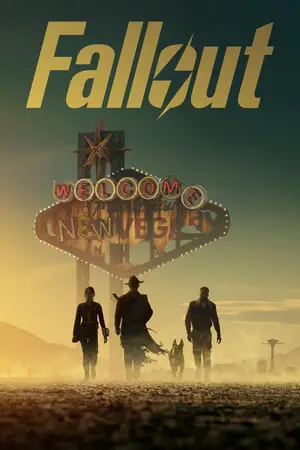
So, I just finished watching the "Fallout" series, and wow, it felt like I was right there with Lucy MacLean (Ella Purnell), stepping out of Vault 33 and into the big, wide world. I mean, who knew the real world wasn't the size of a vault? It's massive and complex, just like the game world of "Fallout." As someone who'd sunk hours into "Fallout Shelter," this was a bit of a revelation for me. I know as little about the game world as shelter residents like Lucy do, and there is more to it than meets the eye. "Fallout Shelter" has apparently preserved the setting of the game universe in "Fallout."
Watching "Fallout" was a wild ride, packed with constantly alternating moments of shock and knowing smiles. On one hand, you've got Lucy's vault life, which is pretty entertaining and inordinately relatable. On the other hand, during her journey of exploration, she runs into a squire of the Brotherhood of Steel, Maximus (Aaron Moten), and the Ghoul cum bounty hunter, Cooper Howard (Walton Goggins), and that's when things really start to get interesting. These encounters don't just unveil the vast world of "Fallout," but they also answer this nagging question I've always had while playing "Fallout Shelter": why does such a cute game that's all fun and games resemble a simulation game about operations management, and have its core set based on a totalitarian society?
The series answers this pretty head-on. The nuclear war in "Fallout" is triggered by a totalitarian group called the Enclave, who also set up the shelters. These shelters turn into places where they can conduct surveillance, flex their control, and run some terrifyingly extreme experiments. In this season, the storylines featuring the Ghoul mainly reveal how the "Fallout" apocalypse came to be. And then there's the storyline with Lucy and Maximus, which, with its depiction of life within and outside the underground vault, paints a pretty clear picture of a world wrecked by totalitarianism. "Fallout" really nails it. I mean, just look at the post-nuclear explosion ruins, the dangerous mutants, and the various kinds of people struggling to survive in a post-apocalyptic world; they're all part of the spectacle.

I'm still a big fan of "Fallout Shelter," so naturally, I love seeing the ins and outs of shelter life in the "Fallout" series. It explains the apathy of folks in the shelter toward freedom through dark humor: they're stuck in a world controlled by some power-crazy authoritarians. It's like a real-life version of "1984" by George Orwell. The people in Vault 33 have learned to roll with constant fear and survival stress. They're basically numb to it. Their biggest worry? It's whether they get to eat jello cakes, and not whether they know some heavy-duty truths or even if their shelter manager is still alive. As long as someone's running the show and they keep getting their jello cakes, they're cool with living life as the dictatorial bigwigs want. This glaring ignorance of the shelter residents in the series forms a pretty chilling parallel with the submissive attitude of the residents controlled by me in "Fallout Shelter." It makes me wonder how I'd handle life in a totalitarian environment like the shelter.
But there's a glimmer of hope in the fight against totalitarianism in "Fallout": Lucy's little brother, Norm MacLean (Moises Arias), gets closer to the truth. It got me thinking that even in an apocalypse, people's hunger for freedom still exists. "Fallout" is not just a kick-ass series, but it's also a reality check, alerting us to the dangers of power abuse. I'm super excited about the second season of "Fallout" and I can't wait to see how it will portray a surreal world that's closely pertinent to reality.






Comments 0
No comments yet.