Travel like Ripley, In Italy
Sociocultural
In the Netflix series "Ripley (2024)" at the end, the murderer at large once again successfully assumes a new identity, breaks the fourth wall and meticulously spells out his former name: Tom Ripley—R for Rome, I for Imola, P for Palermo, L for Livorno, E for Empoli, Y for Ypsilon. Travelling across the Italian peninsula, the clever young man has become familiar with every town and city, whether large or small, with the aforementioned initials, and has mastered the Italian language.

Have you noticed that many renowned English and American directors, along with their actors, seem to relax and slow down once they set foot in Italy, approaching everything through a more leisurely lens? Just like how Michael Corleone in “The Godfather” Part I transitions from the tense atmosphere of a New York restaurant to the leisure of the countryside of central Sicily. Or Robert McCall in a more recent one film The Equalizer 3, who navigates a world of violence in the first two films then goes to the Amalfi Coast with its long sunsets in the third instalment. Here, the protagonist decides to retire and settle down. Then there's George Clooney and Willem Dafoe, who seem to follow in the footsteps of their characters from films set in Italy, moving to settle in Lake Como and Rome. No surprise. How could one resist this country, with everything from its landscapes to its culture?

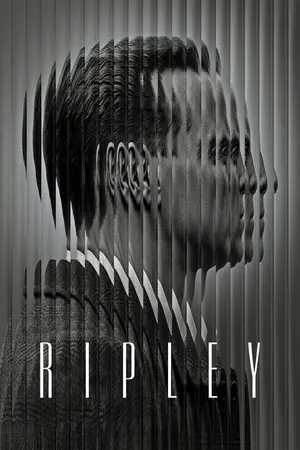
The television adaptation of Ripley, which is crafted with meticulously composed black-and-white imagery and an extremely relaxed pace, exudes the creators' deep love for Italy. As for the choice of black-and-white imagery, according to director Steven Zaillian, "The edition of the Ripley book I had on my desk had an evocative black-and-white photograph on the cover."
Unlike the 1999 film adaptation, which used jazz music to evoke the era of 1960s, the television series cleverly incorporates the historical figure of the painter Caravaggio as a parallel to Ripley: both were convicted of murder and had been on the run for a long time. By portraying Caravaggio as MacGuffin—a crucial object for many characters in the film—the series elevates its visual and psychological portrayal of the protagonist. The result is impressive; many key frames in the black-and-white imagery meticulously mimic the light and shadow contrasts found in Caravaggio's religiously symbolic masterpieces. Appreciating the work in real life that appears in the movie, therefore, becomes another reason for film enthusiasts to become tourists in Italy.

"Are they really that beautiful?" "Are they easy to get to?" "What would be the itinerary to complete a Ripley-themed trip?" After the series aired, many friends asked me about the places featured in the story.
As a seasoned traveller who has explored all 20 regions of Italy and countless towns and cities, this is an area I am naturally familiar with. Checking off all those towns featured in the series via domestic flights and Italy's rail system is not difficult at all. However, living luxuriously in each place like Tom Ripley would be extremely challenging. Unless you have a "friend" like Dickie Greenleaf whom you can "manipulate and control", or perhaps a benefactor like the elder Greenleaf who can fund your expensive travels. Either those or you are yourself a wealthy heir like Dickie. However, even if you're as clever as Ripley and have such friends at your disposal, don't follow the tricks of movies and TV shows. After all, in today's age, solving crimes with technology is as easy as pie, unlike the 1960s when Ripley could escape with much ease.
So, let's start to plan a Ripley-style itinerary in Italy (with no crimes committed, of course).
First stop: Naples, Atrani, Capri, Campania Region
Whether it's from New York or not, your first stop has to be Naples, the largest city in the south. It’s bustling, chaotic, yetl undeniably beautiful. In this age where information is at your fingertips through smartphones, the chances of unreliable taxi drivers taking you from the train station to just about any village are slim, but one thing you have to take note of: the area outside Naples train station today is far dirtier than it was in the 1960s. The fictional Mongibello (based on the real town of Positano) from the original novel is brought to life in the series as the small village of Atrani; it's also located on the Amalfi Coast with a population of 800. To reach Atrani from Naples central station, you gotta take a 40-minute regional train to Salerno and then transfer to the famous coastal bus line 5120, which takes a little over an hour to arrive. This stretch of the road is much the same as it was 60 years ago, winding along the coast cliffs that offers both danger and scenery.
However, Atrani doesn't actually have the sprawling villa like Dickie's in the series. This small village accommodates only Marge's cottage, the post office where there are multiple scenes of letter exchanges, and Piazzetta Umberto where the main characters run into each other and have some talks. The super mansion housing genuine Picasso works is actually the Torricella villa on the island of Capri.

Second stop: San Remo, Liguria
By the third episode, rich guy Dickie Greenleaf invites Ripley to the northern coastal city of San Remo, hoping to have a heart-to-heart conversation on the way and convince Tom Ripley to leave voluntarily and never expects the latter to join them, a group of wealthy people, for Christmas in the skiing resort of Cortina d'Ampezzo.
After checking into a hotel in San Remo, the two men rent a boat and head out to sea from the beach, setting the stage for a gripping and heart-wrenching half-hour scene. I won't spoil it for you here, but this is undoubtedly one of the best scenes in films and televisions that I've seen in the past decade, leaving me breathless and on the edge of my seat.
San Remo is located in the Liguria region, along the Riviera coast, almost bordering France. It's a seaside resort town with a population of about 55,000. In reality, the production team didn't actually film in San Remo but instead in Anzio, a coastal town near Rome where fierce naval battles took place during World War II. Most of the intense boat scenes were shot in a swimming pool and then edited with special effects.

Third stop: Rome, Lazio
In addition to using the ancient "highway" of the Appian Way as the crucial dumping ground for disposing of bodies in the story, the production team also created period-appropriate train stations in various locations when filming in Rome, The Eternal City. The most prestigious Excelsior Hotel in the city didn't seem to allow the filming crew to set up camp, or perhaps they didn't even attempt to. The Hassler Roma Hotel served as the exterior of the Excelsior, while the banquet hall of The Plaza Hotel in New York was transformed into the Excelsior's lobby and concierge. The suite which the unfortunate victim Freddie stayed in was actually the Palazzo Ruspoli within the city of Rome.
As for Ripley's apartment where most of the events take place, it actually hails from the famous Cinecittà Studios in Rome. This dream factory, which has produced numerous Hollywood blockbusters like Ben-Hur (1959), Cleopatra (1963), and Gangs of New York (2002), continues to nurture American film and television with its excellent studio facilities.

Fourth stop: Palermo, Sicily
Ripley, still posing as Dickie, didn't lie to the Roman police chief investigating the case. He truly travelled from Naples to the Sicilian capital of Palermo by ferry. He meticulously replicated Dickie's interests and hobbies, first visiting the Oratory of San Lorenzo to carefully study and admire Caravaggio's painting Nativity with Saints Lawrence and Francis of Assisi. Interestingly, in the 1950s and 1960s when the original story was written, the painting was hanging in the church. However, in 1969, this painting was stolen, most likely by the Sicilian Mafia, Cosa Nostra. The one seen in the series is a high-quality replica created in 2015. The only real Caravaggio painting captured in the series is The Seven Acts of Mercy, housed in the Church of Pio Monte della Misericordia in Naples.
There’s also the Cathedral of Palermo, a blend of different styles from the early Renaissance in 14th century to Neoclassicism in the 19th century. It serves as establishing shot in the series, appearing multiple times in the seventh episode.

Fifth stop: Venice, Veneto
From James Bond to Mission: Impossible, hardly any suspense film featuring multiple countries would miss out on the enchanting city of water. The Netflix series Ripley is no exception. In the series, the investigating police chief concludes that Dickie disappeared after taking a boat from Palermo to Tunisia, while Ripley, who had previously disappeared in San Remo, reappears in Venice.
Ripley rents a palace in Venice, complete with two dedicated caretakers. He casually remarks to old friends visiting him, "The off-season in Venice is very cheap." David Gropman, the production designer for the series, had once worked extensively on a film starring Heath Ledger called Casanova, which gave him a deep familiarity with the various palaces and mansions in Venice. As a result, he chose the Gothic-style Palazzo Contarini Polignac for Ripley, a building dating back to the 15th century located on the northern side of the Dorsoduro islands, adjacent to the Grand Canal.

No one would be willing to leave Italy as long as you can stay in a palace, whether it's along the Amalfi Coast, amidst the Alps, or in the Eternal City. Well, of course, it depends on how fat your wallet is. After all, there are few who can live like Ripley, whether in disguise or not.




Comments 0
No comments yet.