The First Omen:A successful adaption horror from a feminist perspective
General Reviews
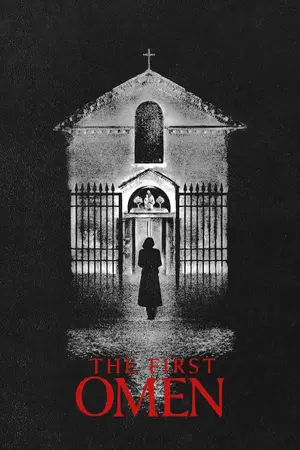
My last week was just so fantastic for a horror movie enthusiast— I went to the cinema to see The First Omen, and the story and visuals were quite good.

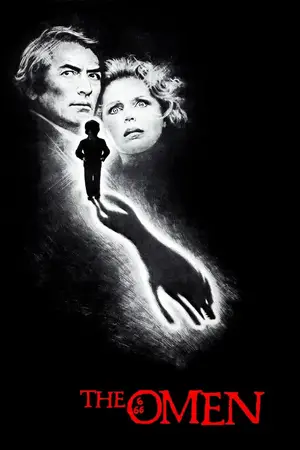
As a prequel to the 1976 horror film The Omen, The First Omen can be considered a remake of the original.

The Omen is a classic horror film that's influenced many thrillers. If you've watched Kubrick's The Shining, you'll get the idea. The original has been adapted quite a few times, like Omen II: Damien (1978), The Omen III: The Final Conflict (1981), the 2006 remake of The Omen, and the 2019 American TV series Good Omens.
With all these adaptations, it's a tough job for The First Omen to bring something new to the table. I was a bit worried it would end up being a clichéd horror film with cheap jump scares.
Yet it turns out a pleasant surprise. The director, a woman, makes a brilliant transformation of this horror film from what had been seen through a male lens for decades into a piece that's aesthetically pleasing from a female point of view.
Stick with me here and you'll see what I mean.
By shaping Damien into the child of the devil, the 1976 film The Omen created a subgenre of horror films featuring the evil child archetype. In this subgenre, horror is arisen mainly through two settings. First, the child of the devil. Second, the corrupted innocence. Children are supposed to be the adorable embodiment of innocence, but in these stories, they become the incarnations of evil forces. Not only will he destroy the world, but he will also heartlessly kill his parents. If the male protagonist who sees the truth wants to kill this child, he will be stopped by all possible obstructions. A seemingly weak and harmless child thus puts his foster parents in a predicament where no one understands them or offers any help.

From the late 1960s, horror movies with serious supernatural themes emerged, including Roman Polanski's "Rosemary's Baby" (1968), William Friedkin's "The Exorcist" (1973), and "The Omen" (1976). These movies all introduced the terrifying "evil child" trope.

A common analysis of the theme leads to ‘fear of the next generation’, which relates to the era’s social conditions. The 1960s and early 1970s were a time filled with significant protests in the United States. Movements for civil rights, women's liberation, and counterculture, largely led by youth and students, deeply impacted societal psychology. Society's conservative mainstream, fearing religious disruption and social disorder, expressed this fear in horror movies out of a dread of the next generation.

Viewed from a female perspective, these films featuring the "demon child" also reveal a layer of male fear of "losing paternal rights".
Given that men can't verify if they are the biological father of the children born to women, they experience inherent uncertainty about fatherhood and anxiety about reproduction. It is a horrific prospect to raise a ‘non-offspring’ for men who prioritize their genetic lineage. To mitigate this fear, patriarchal societies strive to ensure men's paternal rights, often through concepts like fidelity or physical restrictions to artificially limit women's sexual freedom.

No method is entirely effective, though. Men still grapple with anxiety over paternity uncertainty, despite advanced DNA-testing technology.
In the case of The Omen (1978), a child with an unknown father becomes the devil's child, and a virgin who mysteriously conceives is seen as inherently evil —a narrative that shows the male protagonist's (the supposed "father") fear of the demon child and the loss of paternal rights. The only solution is to make the male protagonist a Christ-like figure to kill the "son" without blood ties. This demon-destroying method symbolizes the reassertion of authority of patriarchy.
In this aspect, The Omen represents less of a fear of the conservative mainstream society towards the rebellious younger generation, but more of "conservative white men's" fear of societal changes that threaten their benefits. They fear losing their current social status and, more significantly, the privileges that come with patriarchy.

However, the 2024 version of The First Omen abandons the male perspective. Female director Arkasha Stevenson retells the story of Satan's emergence from the perspective of the nun who births the devil's son. The evil is no longer the new-born baby, but the church's "fathers" who are likened to rapists.
(There are serious spoilers below.)
The First Omen depicts a church using a warped psychology - "to make people believe in God, they must fear the devil" - to breed the son of the devil. They fail repeatedly, as the devil's son must be male, while female infants are deemed odd or merely vessels for the devil's son. This echoes the patriarchal view of women as birth-giving tools.

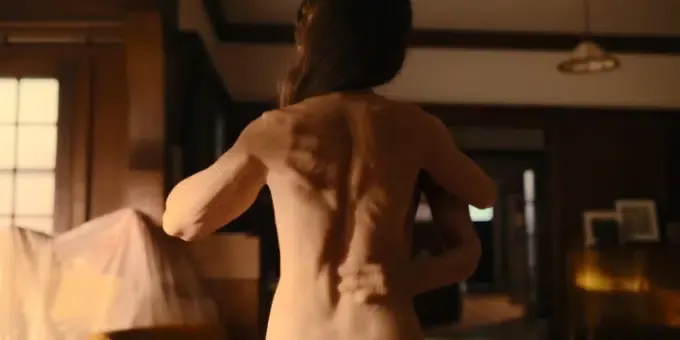
Significantly, the film's portrayal of female pregnancy and childbirth lacks sexual undertones. Amidst the sweat, body fluids, screams, and pain, childbirth becomes a source of fear.
This way, a real terror is instilled in female viewers: the idea of being objectified in a sinister ritual, enduring childbirth pain, losing self and sanity due to anesthesia and indoctrination. Ultimately, they risk losing their child, a symbol of their labor. This is a vivid representation of objectification of women and the usurpation of their reproductive value by paternal authority.
The film delivers a clear message to female viewers: to combat evil, they must rely on themselves and their female comrades. The male priests, depicted as "righteous forces," are ineffective, and the indoctrinated nuns are their accomplices. The protagonist's real power comes from her intelligence, bravery, and the bonds she forms with other women, as evidenced by the relationship between the protagonist, Margaret, and another girl, Carlita. Carlita, once a source of fear, becomes a beacon of redemption when she rescues Margaret and her newborn daughter from a fire. The film ends on a note of female empowerment at this point.

The film's craftsmanship deserves praise. Drawing on elements from Rosemary's Baby (1968) and Possession (1981), and it creates suspense through its cinematography and storyline. Yet it takes on a distinct feminist angle. Nell Tiger Free's performance is commendable too, marking her as a rising talent in horror films.
If you're a fan of horror films, you should not miss this one. Beyond its visual and auditory spectacle, it offers a fresh perspective on well-established themes, which may well bring some inspirations.




Comments 0
No comments yet.