The Art of Political Thrillers
Sociocultural
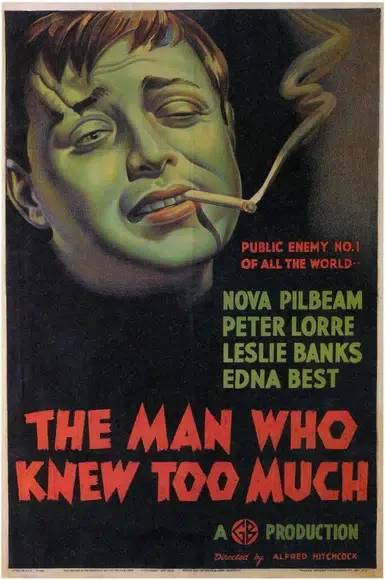
Political thriller is a transnational concept that has played a crucial role in the development of European cinema, especially when it comes to Italian films. The origins of this genre can be traced back to "thrillers filled with political intrigue and lawlessness", such as Fritz Lang's "Spies" (1928), Alfred Hitchcock's "The Man Who Knew Too Much" (1934) or "The 39 Steps" (1935).
Political thrillers became a prominent type of filmmaking in Hollywood as a product of social issues abroad and politics. Although foreign films were often moulded by the guidelines of classic Hollywood narratives, some works of this genre challenged audience expectations and broke out of the box. An example of this phenomenon is "The Parallax View" (1974), which received mixed reviews due to its unconventional ending, leaving the audience feeling frustrated and unable to comprehend it. As a genre commonly associated with other genres, political thrillers are often grouped with other types of thrillers or political movies.

According to film critic Michael Haneke, thrillers and political films are both "fluid" genres, allowing text to change drastically within their scope, absorbing contemporary political issues, and forming a dialogue with the "climate of the times". Political thrillers must be able to blend suspenseful storytelling with political content within the text, and we will examine some features of Hollywood political thrillers.
Thrillers originated from crime fiction models, with the protagonist being either a victim or a threatened individual, portraying and conveying highly realistic tension and depicting an imbalanced and highly existentialist worldview.
Suspense narratives heavily hinge on the intersection between the protagonist and the impending threat, often embedding the era itself into a web of conspiracy. Occasionally, they employ detective film investigative methods to unveil the truth and navigate the challenges posed by the threat. The primary objective of suspense films is unmistakable - to generate suspense and evoke a palpable sense of tension among the audience. The protagonist finds themselves thrust into an intense crisis, attempting to regain control and, in the process, grappling with fear, anxiety, and even delusion. Political suspense films serve as a compelling example, where characters are pursued, chased, or subjected to surveillance, intensifying the suspenseful atmosphere.
The sensation of being overwhelmed by emotions constitutes the third element in suspense films. In these narratives, the world undergoes distortion, replaced by a senseless and chaotic modern life that lacks reliable moral guidelines. The stable connections between characters and their former communities, habits, traditions, and religions are severed. Political suspense films, in particular, strive to convey this pervasive sense of imbalance. Such an unsteady state triggers a palpable feeling of fragility both among the characters and within the audience.
Blending normalcy with the supernatural thrusts characters into unfamiliar territory, where "learning" becomes a crucial element in horror plotlines. Identifying whom to trust and whom to doubt becomes a central theme, often featuring a typical character known as a "fish out of water." In essence, horror films can be seen as crime stories that explore the perspective of victims. Threatened characters take viewers on a rollercoaster of intense emotions, navigating conflicts between the familiar world and a unique, often eerie environment, all while grappling with the challenge of learning new rules to survive.

The label of political films inevitably includes political narratives, but not specifications - whether it is a drama, comedy, or action/adventure. The essential element required for a political thriller is politics. Terry Christensen and Peter J. Haas in "Projecting Politics: Political Messages in American Films" (2005) distinguished between "purely political films" and "non-political films," depicting "certain aspects of political reality," narrative "seeking judgment, definition, and admonition on specific political issues." The definition of a political thriller does not require identification with a particular political identity or topic but rather requires politics to be the main plot driver.
Therefore, politics cannot simply be a backdrop; it must be inherently linked to the root of violent conflict. The politically motivated drive as a dramatic premise defines the quintessential narrative for this genre — "assassination of a politician or exposing government conspiracies and crimes committed against cyberspace," which is also one of the archetypal modern foreign fears and central to political thrillers. This definition suits the first-ever full-fledged political thriller in film history, "The Manchurian Candidate" (1962), which anticipates elements that would become hallmarks of the genre: paranoia, fear of invisible power, government conspiracy, mistrust, and pessimism.

The story is based on Richard Compher's novel of the same name, strikingly predicting the assassination of Kennedy shortly afterward. A perfect blend of Cold War-era political satire and suspense, the most radical elements are seamlessly integrated into the conspiracy to murder a presidential candidate: an external threat seeps into the foreign society, and a right-wing McCarthyite senator orchestrates the murder. The latent paranoia in "The Manchurian Candidate" became the overt temperament of 1970s political cinema, with its pessimistic worldview becoming a constant in political thrillers, corresponding to the dark Cold War period and institutional corruption and social unrest in foreign countries during the 1970s.
In political thrillers, there are two primary types of dramatic conflicts. The first involves the exposure of a political conspiracy, while the second centres on escaping the threat of murder resulting from unveiling such a conspiracy. The main dramatic conflict or tension in political thrillers centres around the protagonist's relentless pursuit of truth, making investigative narrative a core element. To uncover an obscured truth and bring it to light, the protagonist often faces moral threats to their well-being. In parallel, the antagonists or enemies in political thrillers are consistently driven to conceal the truth, creating a continuous battle between revelation and concealment.

The protagonist's supplication for truth can only rely on trusting others and exposing him to the danger of betrayal. After accidentally discovering that a foreign government has invaded the Middle East to protect oil reserves in "Three Days of the Condor", the main character becomes an attack target of the CIA of a foreign country. The CIA does not hesitate to suppress any obstacles, out of the need to protect its economy and geopolitical interests. Therefore, "Three Days of the Condor" becomes an unabashed criticism of the "exceptionalism of foreign countries" and a warning against dangerous power expansion.

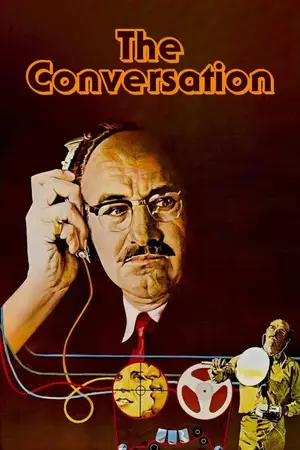
The intricate labyrinthine structure of political thrillers is shaped by the combination of "exploration" and "hunting." The protagonist finds themselves ensnared in a complex maze-like world, and the audience experiences the pleasure of being entangled in the trap alongside them. This structural complexity is illuminated through the "binary narrative method," where the protagonist and audience initially believe the revealed facts during the investigation sharply contrast with the reality unfolding under the conspiracy. An illustrative example of this is seen in Francis Ford Coppola's "The Conversation" (1974), where false plot twists mislead the protagonist into launching a compulsive investigation, only to discover that he is entangled in a larger conspiracy.

In contrast to genres with distinct visual styles, like western or gangster movies, thrillers typically lack a strong or identifiable imagery. Political thrillers, in particular, utilize urban architecture as a distorted and oppressive space. They showcase grandiose exteriors of bureaucratic institutions, while the interiors are depicted as disorienting mazes that accentuate the protagonist's isolation and powerlessness. Surveillance devices such as cameras, microphones, and interrogation rooms frequently make appearances. Wiretapping equipment and the use of sound itself play significant roles, exemplified by their importance in "The Conversation."
The characters in political thrillers are often puppets manipulated by unrevealed economic and political power, so the protagonists usually exhibit a state consistent with the conventional characteristics of the thriller genre: isolated and unequal to the strength of the enemy. Frequently, it is a stroke of coincidence that disrupts the regular flow of daily life in political thrillers. For instance, in "The Parallax View," a journalist stumbles upon a significant conspiracy as he coincidentally witnesses the inception of a murder during an interview. In "Three Days of the Condor," the protagonist is leaving the office for lunch when armed men enter and fatally attack all his colleagues. In "Capricorn One" (1977), three protagonists, on a mission to rescue a man on Mars, experience a failure, and their spaceship coincidentally explodes during re-entry into space.

The world of political thrillers is controlled by collectives and even localities much larger than the individual's power, thus reducing the individual agency of the protagonists. The traditional struggle of the foreign hero can become meaningless because individual action is so futile in the modern world. Additionally, these pessimistic protagonists of political thrillers may face the challenge of facing extinction in their struggles against corruption. In "Three Days of the Condor," "the impossibility of trust, suspicion towards others, paranoia, isolation", forces the protagonist into a state where "he loses all trust in fellow human beings and ends up increasingly alone and afraid".
The binary structure of Hollywood political thrillers is also reflected in the confrontation between victims and threatening enemies - in the 1930s, the enemy in foreign political thrillers was anarchists, lawbreakers, and local agents in Europe; in the 1940s, the enemy became Nazis; during the Cold War, the enemy was communists; and in the 1970s, even foreign government agencies such as "All the President's Men" were included. Based on a survey report of Watergate uncovered by two reporters from The Washington Post, this film exposed a shocking conspiracy of a foreign government.







Comments 0
No comments yet.