"The Birds": Pioneer of Animal Horror, A Timeless Classic
General Reviews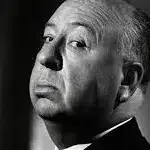
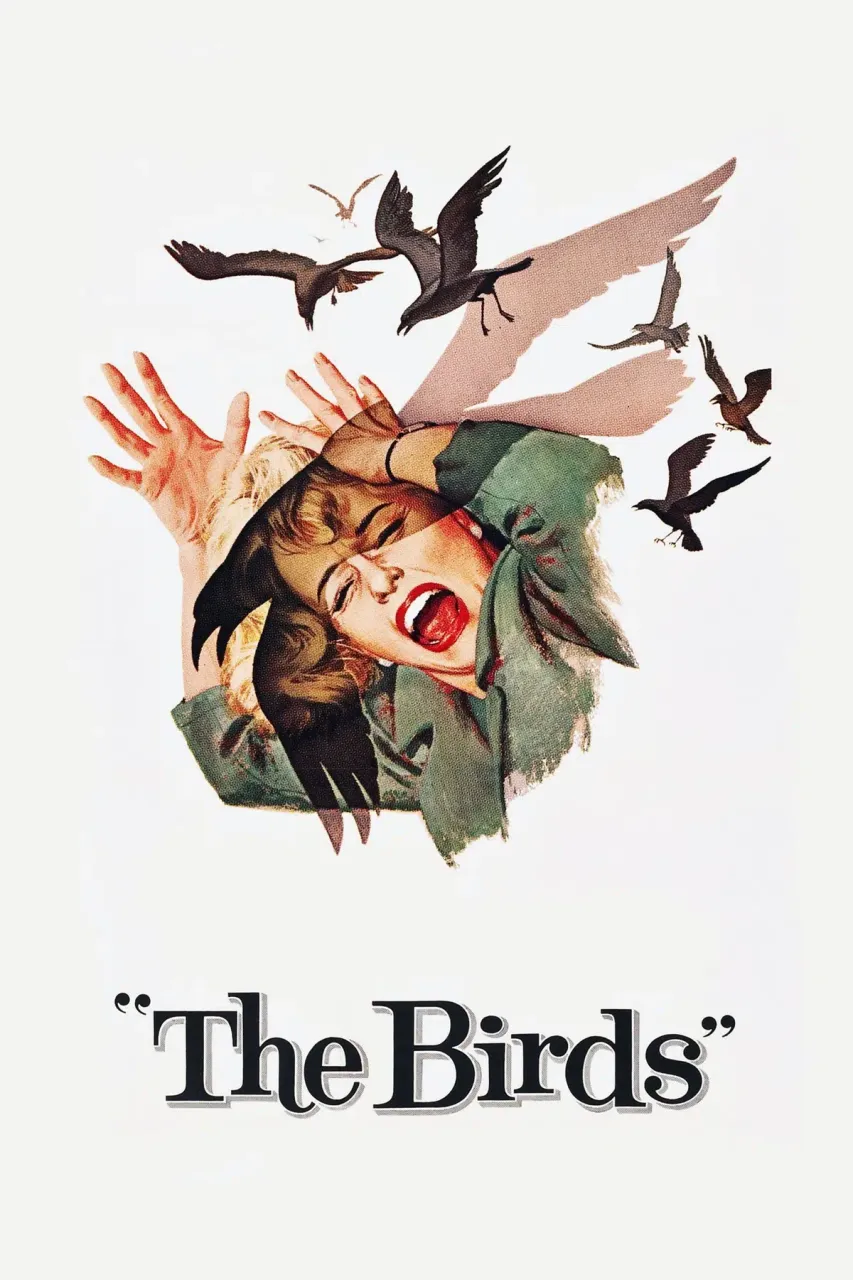
In a pet store, socialite Melanie meets lawyer Mitch by chance. Though their initial encounter ends on a sour note, Melanie, secretly intrigued, decides to travel to Mitch's hometown in pursuit of love. Amid the picturesque seaside scenery, their relationship gradually shifts from adversaries to blossoming lovers. However, their budding romance is soon overshadowed by the unsettling phenomenon of birds mysteriously gathering in the town.
The Pioneer of Animal Horror Films
Alfred Hitchcock, celebrated as the Master of Suspense, directed numerous classic films, with "The Birds" (1963) standing out as a pioneering work in the animal disaster genre. This film not only earned an Oscar nomination for Best Visual Effects due to its groundbreaking techniques but also secured the 7th spot on the American Film Institute's list of the 100 greatest thrillers.
"The Birds" is based on a short story by Daphne du Maurier, published in 1952. This wasn't Hitchcock's first adaptation of du Maurier's work; he had previously adapted "Jamaica Inn" in 1939 and "Rebecca" in 1940. Notably, "Rebecca" won Oscars for Best Picture and Best Black-and-White Cinematography, marking the beginning of Hitchcock's golden era in Hollywood.
While the film retains the central theme of "birds attacking humans," it diverges significantly from the original story in terms of character relationships, plot development, and setting (the novel is set in post-World War II Cornwall, England, whereas the film is set in Bodega Bay, San Francisco, USA). What remains unchanged is the unsettling fear generated by the collapse of ecological norms and the birds' inexplicable aggression.

Emphasizing Atmosphere Creation
The film begins with the protagonists' chance meeting in a bird shop. Amid a chorus of chirping, the birds, at this stage, are harmless creatures, caged for human amusement. However, a dramatic twist occurs in the latter half: the birds, once used for food and sport, suddenly transform into fierce monsters, attacking without warning and reversing the roles of hunter and prey. Although the crew spent $200,000 on mechanical birds, the majority of those seen in the film were real (reportedly around 30,000), with professional bird trainers on set to enhance the realism and sensory impact for the audience.
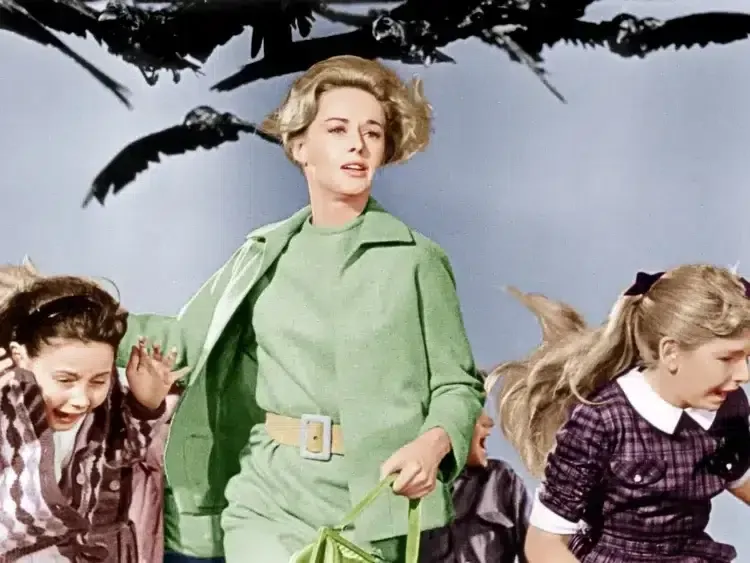
"The Birds" doesn't feature the explosive action scenes typical of Michael Bay films; instead, Hitchcock masterfully builds tension through atmosphere. The film is devoid of background music, relying solely on the sharp cries of birds to create an unsettling mood. In one memorable scene, as Melanie smokes outside a school, a few crows begin to gather. When she turns around, she’s shocked to find a massive flock of crows behind her. Another iconic sequence takes place at a gas station: gasoline spills onto the ground, and a man accidentally drops his cigarette, igniting a huge fire. Melanie takes refuge in a phone booth, helplessly watching from her confined space as a flock of birds viciously attacks. In the film's climax, the relentless sounds of birds surround the house as they peck and claw at doors and windows, contrasting sharply with the panic-stricken characters inside. Melanie later ventures upstairs, only to be violently attacked by a swarm of birds, forced to defend herself with just a flashlight as they relentlessly assault her. These sequences highlight Hitchcock's precise cinematic language, using sound effects and editing to keep the audience on edge.

The film's conclusion deviates from the typical Hollywood "man conquers nature" narrative, offering no clear explanation for the bird attacks. In the final scene, thousands of birds gather outside the house, silently watching as the protagonists drive away, and the film ends there. Hitchcock deliberately omits the traditional "The End" title, leaving the terror unresolved. The protagonists may have narrowly escaped, but what comes next? That’s left for the audience to imagine.

Female Portrayal in "The Birds"
The first half of the film is like the calm before a storm, slowly developing character interactions. The mysterious love triangle, along with the mentally unstable and controlling mother, and the subtle, complex issues of love and family relationships, are equally important drivers in creating this horror film.
The portrayal of women in Hitchcock's films has been the subject of much critical debate. Unlike his earlier works, where glamorous blondes often served as objects of male desire, pursuit, and conquest, "The Birds" places its female characters at the heart of the story. Mitch, played by Rod Taylor, embodies the masculine, gentlemanly, and charismatic traits typical of male leads of that era. Yet, despite his seemingly dominant role, Mitch is actually ensnared by the women around him. His mother, unable to move on from her husband's death, views her son's romantic interests as threats. The portrait of Mitch's father hanging in the living room looms like a ghost, symbolizing the mother's expectations and the constraints she places on Mitch as the "man of the house."

Melanie, who is proactive and free-spirited in matters of the heart, disrupts the original balance. The protagonists meet because of birds and their romance heats up because of birds. When Melanie and Mitch first meet, Mitch mocks her as a pampered princess, like a caged bird. However, Melanie is also the lovebird that makes Mitch fall in love, as only love can make a proud man submit willingly to the golden cage of marriage and relationships. The only birds in the plot that don't attack humans are the lovebirds Melanie gifts to Mitch's sister. Melanie herself, dressed in green with rosy lips, is the embodiment of a lovebird. The romance between the lead characters brings a touch of warmth and redemption to this thriller.
In the restaurant, panicked citizens believe Melanie is the harbinger of disaster. The fear of the bird attacks corresponds to how the residents of Bodega Bay, including Mitch's mother and ex-lover, view Melanie as an "outsider." Melanie is both the lovebird bringing happiness and the strange beast attracting calamity.
However, disaster also serves as a catalyst for character growth and reconciliation. The bird attacks help break the tense family deadlock surrounding Mitch. Melanie, after being attacked by the birds, loses her sharp edges, sheds her seemingly willful exterior, and displays resilience and courage. The bird disaster also helps dissolve Lydia's (Mitch's mother) hostility towards Melanie. The vulnerable mother and the young woman who lacked maternal love from an early age find support in each other. Melanie and Annie form an alternative "female alliance," supporting each other through hardships instead of being jealous rivals for affection (Annie, who is also from San Francisco and faces Mitch's mother's jealousy, is more of an ally to Melanie than an opponent).
The Conflict Between Tippi Hedren and Hitchcock off-screen
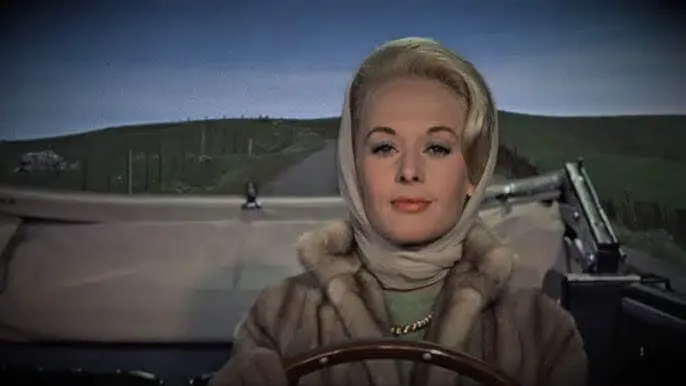
When discussing "The Birds," one cannot overlook its lead actress, Tippi Hedren. Before this, Tippi was an unknown model. Unexpectedly, Hitchcock spotted Tippi, with her elegant demeanor, in a television commercial and boldly cast her, despite her lack of acting experience, as the lead in "The Birds." Although the process was arduous, particularly during the climactic bedroom bird attack scene which took a week to film, leaving Tippi exhausted and battered, necessitating hospital rest. When Tippi asked Hitchcock why they needed to film the scene of the female lead going upstairs to the bedroom, Hitchcock replied:
"Because I tell you to."

Fortunately, Tippi's efforts paid off. Her performance was highly acclaimed, earning her the Golden Globe Award for New Star of the Year. She later collaborated with her mentor Hitchcock again on "Marnie." Just as her career was about to take off, Tippi experienced a three-year hiatus before filming Chaplin's "A Countess from Hong Kong" (1967), albeit with a very minor role. Afterwards, Tippi continued to perform in the entertainment industry, but she was never able to return to the peak of her career during her collaboration with Hitchcock.
Years later, after Hitchcock's death, Tippi finally revealed that during their collaboration, he frequently used his position of authority to sexually harass her and monitor her movements. He even intentionally isolated Tippi from other actors and crew members to create opportunities for them to be alone. The situation worsened during the filming of "Marnie," and Tippi, unable to bear it any longer, refused to work with Hitchcock again. In response, he threatened to blacklist her. With their original seven-year contract unable to be terminated, Tippi could only watch as her acting opportunities were blocked. On screen, Tippi was terrified by the birds, but off-screen, she became a startled bird under the director's control.
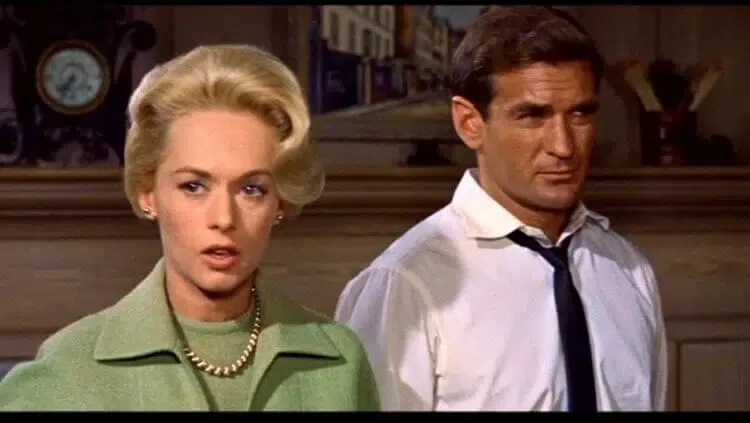
Since Hitchcock has passed away, Tippi's accusations are one-sided, but many actors who worked with them have confirmed her experiences. If true, Tippi could have potentially become a highly sought-after superstar, but her career was cut short, which is regrettable. Regarding Hitchcock, the man who both launched and stifled her career, Tippi said, "He ruined my career, but he didn't ruin my life. Even though the glorious period of my life has ended, I still admire this man."
Tippi's peak in Hollywood lasted only two years during her collaboration with Hitchcock. However, through the success of the films, Tippi has secured an immortal place in film history.
As time passes, works with more prominent visual effects and increased violence and gore continue to emerge. From today's perspective, the level of horror in "The Birds" pales in comparison to recent genre films. However, Hitchcock's unique film aesthetics, outstanding scene direction, and intriguing character portrayals still captivate film enthusiasts.



Comments 0
No comments yet.