Aquaman Battles to Ground the Story in Sequel's Playful Cartoonish Tone
Narrative


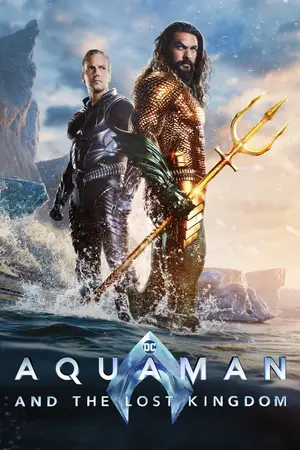
"Aquaman and the Lost Kingdom." Directed by James Wan and penned by David Leslie Johnson-McGoldrick, this superhero sequel sees Jason Momoa reprising his role as the charismatic Arthur Curry, a.k.a. Aquaman. The ensemble cast includes familiar faces like Amber Heard, Patrick Wilson, Yahya Abdul-Mateen II, Randall Park, Nicole Kidman, and Temuera Morrison. The film unfolds against a backdrop of high-stakes conflicts, both personal and global, but its journey takes a rather tumultuous path of narrative and visual execution.
The movie kicks off with Aquaman recounting a daring hostage rescue to his son, Arthur Jr., and then delves into a montage showcasing his life post the events of the first film. Now the king of Atlantis and married to Queen Mera (Heard), Aquaman navigates the complexities of royal duties and family life. Simultaneously, his nemesis, Manta (Mateen II), relentlessly seeks vengeance for his father's demise, collaborating with the Atlantis fanatic Dr. Steven Shin (Park).
The plot thickens as Shin accidentally discovers the mysterious Kingdom of Necris, an ancient realm of Atlantis. Here, Manta obtains the Black Necris Scepter, transforming him into a formidable force with ambitions of locating Oracalcum, a substance capable of wreaking havoc on the climate. As Manta's forces storm Atlantis, injuring Mera, Aquaman must seek the aid of his imprisoned brother, Orm (Wilson), to thwart Manta's plans and protect their world.

A surprising highlight in the film is the dynamic between Wilson and Momoa. Their on-screen interactions, filled with playful banter and camaraderie, create an unexpected romantic chemistry, overshadowing Momoa's scenes with Heard. This unique bond adds a layer of depth to the movie and contributes to its overall charm. Another commendable aspect is the film's attempt to weave a narrative emphasizing unity as the key to salvation. This resonates as a poignant message, reflecting Momoa's real-life environmental advocacy.
However, amidst these positives, the film takes an unexpected turn into cartoonish territory. Unlike the first Aquaman film, which maintained a balance of seriousness and fantasy, "The Lost Kingdom" struggles to find its tonal footing. The audience in my screening couldn't contain their laughter, especially during moments intended to be taken seriously. This tonal shift is exacerbated by noticeable technical flaws, particularly in the CGI department. Momoa's Aquaman suit appears ill-fitted, with his head seemingly unnaturally attached, making these visual inconsistencies distractingly apparent, especially considering the high price of 3D tickets.
In contrast to Zack Snyder's portrayal, this rendition of Aquaman seems to have lost some of his might. The character frequently finds himself overpowered in battles, leaving the audience yearning for the more formidable hero seen in earlier renditions. This inconsistent character portrayal, coupled with subpar CGI and a lack of clear narrative direction, hinders the film's ability to fully engage its audience.

A critical aspect of any franchise's success lies in its ability to make viewers invested in what comes next. Unfortunately, "Aquaman and the Lost Kingdom" falls short in this department. The movie leaves you questioning the future of this cinematic universe, struggling to provide a compelling reason for audiences to care about the next chapter.
"Aquaman and the Lost Kingdom" boasts moments of brilliance, particularly in the chemistry between its lead actors, but it grapples with tonal inconsistencies, technical shortcomings, and a narrative that fails to captivate. As the superhero genre continues to evolve, this film finds itself adrift in the expansive ocean, struggling to navigate the turbulent waters.







Comments 0
No comments yet.