2023 Hollywood Industry Chronicle: The Collapse of the Old Order (Part 1)
Industry

It is evident: the cinema world is standing on a crossroad now.
Perhaps since the transition era between the silent films and the sound films, no other year had made us such a feeling that the film industry has come to a breaking point than 2023. And never before have even those who are most certain about cinema been so confused about it, and trying to make fundamental changes.
It was a year that we witnessed the dysfunction of the film industry in every aspect: the awards system, the labor-management relations, the content-producing mechanism, and the ensuing tremors.
It seems like the storm has already arrived. But will there be a silver lining at the end?
Before we draw conclusion, let’s look back at the landmark industrial events of 2023.

January: The Oscar Nomination Controversy
At the beginning of the year, Everything Everywhere All at Once was the ultimate Oscar winner, gaining major awards including Best Picture, Best Director, Best Original Screenplay, and Best Actress for Michelle Yeoh.
It was the most uneventful Oscars ceremony in recent years, lacking jaw-dropping scenes like the Will Smith Slapping or the Best Picture Mix-up (between Moonlight & La La Land). But in the early nominating stage, there was still a highly controversial incident.
When the presenter read out loud Andrea Riseborough's name at the Jan. 24 Oscar nomination announcement, we could hear voices of gasp from the attending journalists: they knew that Andrea had accomplished the impossible. Those contenders who didn't get nominated, however, started demanding their publicists to make phone calls, protesting that the campaign tactics of Andrea had violated the established rules of the Oscars. And the common public had only one question: who is Andrea Riseborough?
The film that earned the British actress her nomination, To Leslie, grossed less than $30,000 in box office when released in October 2022. Perhaps out of frustration with the studio's failed theatrical release strategy, Andrea and her creative partners took on a different approach to compete in the awards season.

The commonplace Oscar campaigns are very costly and laboring, the image of Ang Lee eating a hamburger during the ceremony still rings a bell in the minds of moviegoers. The road to oscars is like a Squid Game, it takes a lot to get through the ringer, and candidates must collect as much pre-Oscar accolades as possible to even get a nomination.
However, Andrea had only been nominated for a Independent Spirit Award. With no major studio and PR company backing her, the odds of her getting a nomination are basically zero.
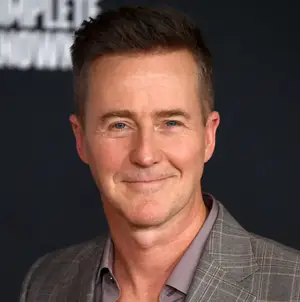
But just days before the Oscar nomination voting began in January, a group of Hollywood A-list stars suddenly went social media to shout out for Andrea. Edward Norton was the first, telling his 2 million Twitter followers that her performance is "the most fully committed, emotionally deep, physically harrowing one I’ve seen in a while." Gwyneth Paltrow declared on Instagram, "Andrea should win every award there is and all the ones that haven't been invented yet."

At least two dozen other celebrities joined Andrea’s cheerleading squad the following week, including Hollywood's top tier stars like Amy Adams, Kate Winslet, Jennifer Aniston, and even Cate Blanchett, who is also contending for the best actress Oscar, endorsed Andrea at an awards show.
All of this is because Andrea, her agent, and the director of To Leslie, maintained good personal relationships with these celebrities and requested them to watch the film and spread good words for Andrea during the nomination stage of the competition.
Aside from those few actresses who had hopes of being nominated but were squeezed out, equally disgruntled were PR firms and traditional media outlets - after all, this campaign strategy is essentially a way of not letting the middleman make a profit in the process. They even said that some of the celebrities who promoted for Andrea was simply copying words in their social media posts. The debate over the nomination grew so heated that there were even rumors that the Academy would withdraw Andrea's nomination.
In a statement later released by the Academy, Andrea's nomination was ultimately retained, but the aftershocks from this nomination controversy will continue. For one thing, is the Oscar voting mechanism still working? As we all know, the number of the Academy's voting members now exceeds 1,000, and their levels of movie-viewing frequency and professionalism differ from person to person, we’ve even heard about tales of some members letting their babysitters vote for them. Under these circumstances, it is highly likely that the campaign strategy and the publicity campaign of a filmmaker makes much more of a difference than the actual quality of the film.
And it is also possible that Andrea's campaign strategy will be more widely deployed in the future. After all, if an Oscar-hungry actor/actress has a glossier social circle than Andrea, why not capitalize on it?

March: Labor Strike Began
The undercurrents of the strike began a week before the Oscars. On March 7, nearly 99 percent of the members of the Writers Guild of America (WGA) voted to demand a better deal facing the encroachment of AI on their jobs. On March 20, the week after the Oscar ceremony, negotiations between the WGA and the Alliance of Motion Picture and Television Producers (AMPTP) officially began.
And with negotiations breaking down on May 1, WGA officially went on strike on May 2, which directly led to several TV shows going off the air. And the in-camera actors who didn't have lines also seemed to support the move of WGA. By June, the Screen Actors Guild (SAG-AFTRA) also announced the need to negotiate for a better deal, with similar demands as the WGA.
Interestingly, on June 25th, the Directors Guild of America (DGA) was the first to reach a new agreement with the AMPTP.
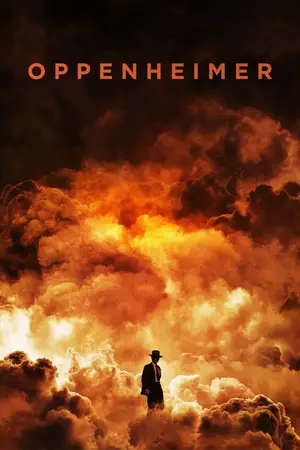
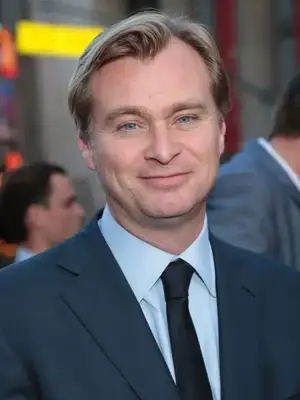
On July 14th, a strike by the SAG began, making 2023 strike the first "double strike by writers and actors" in more than 60 years. The union members were so determined that at the same time in London, Cillian Murphy, Emily Blunt, Matt Damon, Robert Downey Jr. and Florence Pugh simply walked off the red carpet at the premiere of Oppenheimer. Director Christopher Nolan was the only one left to deal with reporters, "They've all gone to write protest signs," he said.
And the big Hollywood studios are tit-for-tat. Bob Iger, the Disney CEO, said in July that the writers' and actors' demands were "unrealistic." The strategy of the studios was to stall the negotiation process, waiting for the strikers to collapse. One studio president told the press, "When those union members can't pay their mortgages and lose their properties, the strike will be over."
However, in the summer, when and how the strike will end, nobody knows.
July: Barbenheimer

If it weren't for the uncertainty caused by the strike and the fact that Hollywood's big producers are on the ropes, they'd be popping champagne in the summer to celebrate the huge commercial success known as #Barbenheimer.
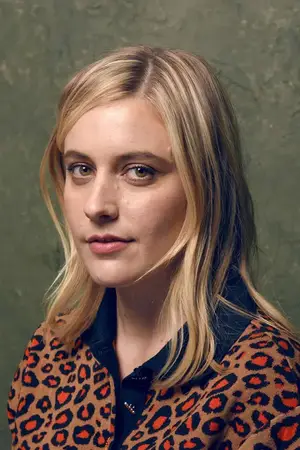
In terms of genres and themes, there was no similarity between the two films, Barbie and Oppenheimer. Greta Gerwig's film was about a doll's journey to become a real woman, and Nolan's film was a biopic of the so-called “father of the atomic bomb”.
But the playful term "Barbenheimer" coined by the internet, combined with viral mash-up videos on Tik-Tok and YouTube, made it a win-win situation for these two otherwise competing summer blockbusters. Barbie ended up grossing $1.44 billion worldwide, while Oppenheimer also grossed $950 million.
You could say that the combo of "Barbenheimer" was an adrenaline shot to the film industry after the epidemic. It proved that the audiences are still hungry for good films, and people are more than willing to return to the theaters after the epidemic. It also showed that the original works by auteur filmmakers are more than capable of competing with the franchise films at the box office.
But will Hollywood give in to the demands of the audiences? Will they begin to value the power of originality and creativity again, and thus respect the filmmakers again?
At least in this summer, the big Hollywood studios and unions are still playing chicken. Big studios have postponed some of their autumn blockbusters to 2024. Warner Bros. president David Zaslav even bragged about the fact that the strike had saved Warner $100 million in the second quarter of 2023. Those moguls with money and power still expected the union members at the lower level to be the first to crumble.
To be continued at Part 2





Comments 0
No comments yet.