Bringing Latin American Films to China: A Mission Impossible?(Part 2)
Industry
In Part 1, we explored the new experiences of participating in the Pingyao Film Festival, conducting a face-to-face interview with Marco Müller and an email interview with Rainbow Fong, the Artistic Director of the Golden Rooster International Film Category. Through these discussions, we gained insights into the formidable challenges faced by Latin American films in their attempts to enter China's film festival system. We gathered that breaking into the mass market in China can often seem like a near-impossible mission. Two major obstacles, culture differences and censorship, were illuminated. Now, let's delve into the possibilities, opportunities arising from politics, historical context, and a few successful examples.

A Possibility: Diplomatic Relations
Throughout his extensive career in film selection and as a director of various film festivals, Marco Müller has introduced numerous Chinese films to Italy and the global film community. Having settled in China and being half Brazilian, he has also undertaken the mission of bringing more Latin American films to China, or at least to Chinese film festivals.
In 2019, "A Febre" (The Fever,2019), a Brazilian film directed by Maya Da-Rin, earned the title of Best Picture in the Crouching Tiger category at the Pingyao Festival. Then, in 2021, an Argentinean commercial crime film, "El robo del siglo" (The Heist of the Century,2020), made its Asian premiere at the festival and was subsequently distributed across China. This year, "Memoria(2019)" by Apichatpong Weerasethakul, an art house film co-produced by Colombia, Thailand, and China, finally made its debut in Chinese theaters. Despite a two-year wait and the fact that many art film enthusiasts had already seen it through downloads or streaming, "Memoria" achieved a remarkable box office success in China and ranked first in the global market .

With his new role as running the Film Art Research Centre of Shanghai University and teaching at Shanghai Film Academy, Marco Müller highlighted the significance of both commercial appeal and political influence. He said, “It’s simple, online you can find a lot of Latin American films. When I speak to my students, most of [the] time, they only know Brazilian films. They know Walter Salles, …‘Central do Brasil’ (Central Station), …‘Cidade de Deus’ (City of God) by Fernando Meirelles, and … ‘Tropa de Elite’ (The Elite Squad) [series] by José Padilha. Because these are all commercial films, and also because Brazil is part of BRICS countries.”

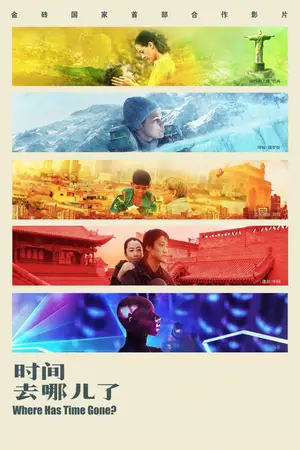
Since 2017, Jia Zhangke, the founder of the Pingyao Film Festival, has been producing a collaborative film every year encompassing five short films representing each of the BRICS countries – Brazil, Russia, India, China, and South Africa – that focuses on diverse themes. Notably, when BRICS was first established , Walter Salles directed a documentary about Jia and his hometown, titled "Jia Zhangke, un Gars de Fenyang" (Jia Zhangke, A Guy From Fenyang).


In first-tier cities in China, such as Beijing, Shanghai, Shenzhen, and Guangzhou, which boast numerous language learning centers and art institutions, there are occasional classic film screening events featuring works from Argentina and Chile. On rarer occasions, the Cultural Offices of various embassies also organize their own small-scale film festivals. These festivals often serve as a means of introducing select films that are representative of their country's image, with the aim of promoting cultural exchange and reaching out to more second-tier cities in China.
In 2019, the Embassy of Brazil in China organized a Brazilian film festival in collaboration with Broadway Cinema, extending its reach to more Chinese cities, including Hangzhou, Ningbo, Chengdu, and Kunming. From my observations in Kunming, during the weekends, a substantial number of attendees, including those outside the typical festival-going demographic, were curious about gaining insights into the Brazilian society and daily lives of its people. For instance, films like "Amazônia Groove(Amazon Groove,2018)," a music documentary that centers around the city of Belém, proved to be particularly appealing, drawing people to experience the enchanting world of Brazilian tropical music. However, on weekday evenings, the turnout was significantly lower, with only a small number of attendees.

From Marco's perspective, the Chinese audience's curiosity about Brazil is partly due to Brazil's inclusion in BRICS, which frequently makes headlines in China. He noted, ’You rarely see news about Peru or Mexico.’
I offered a different viewpoint, ’I'm certain that if the Peruvian embassy were to organize a similar film tour, the audience would also be curious.’
‘Yes, maybe. The important thing is whether the films can be screened in theaters or on platforms. Sadly, China distributors are not buying, that’s fact’, Marco responded.
This year, Marco Müller got some positive news – there will be a greater selection of Brazilian films available for consideration. The reason behind this shift is also political. Marco noted, ‘Think historically, now luckily [a] new democratic government [has] replaced [the] fascist government. So the selection of Brazilian films is just completely different. The new government supports young filmmakers and art house films. In the past,the fascist government tried to kill Brazilian cinema, Brazilian voices, and film market. With the return of Lula to the political stage after years of waiting, things [have] changed. Previously, all filmmakers were against the fascist regime.’
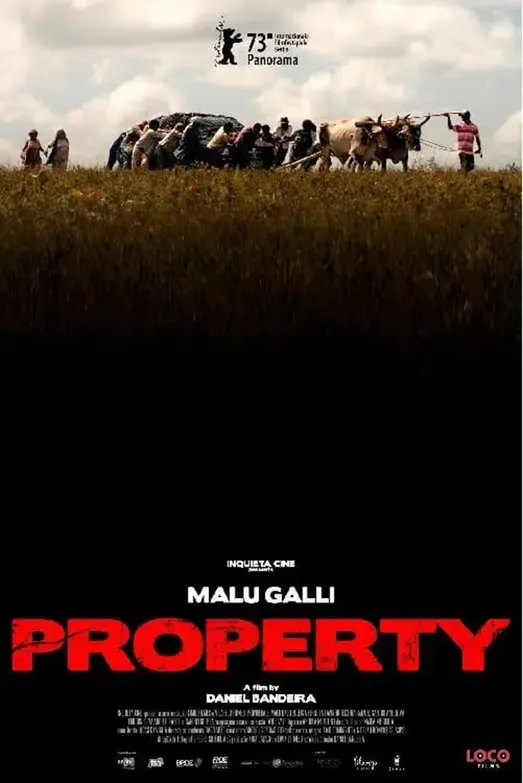
With the advent of a new Brazilian government, a fresh diplomatic approach has been ushered in. On May 12th, Fortaleza, a coastal city in northeastern Brazil, and Xiamen, a coastal city in southeastern China, where the Golden Rooster International Film Festival is hosted, inked a sister-city agreement. While the upcoming international film category of the Golden Rooster features only one Brazilian film, "Propriedade" (Property), the outlook for further collaboration and cinematic exchange is promising.‘I certainly hope that the sister cities will help in the interaction of our industry’, expressed Fong, ’from my role at Golden Rooster, I can't wait for any collaborations [to start] with film festivals in Latin America’.
Past and Present, Invisible Films and Pictures of Ghosts
During every FIFA World Cup, memories of the old Argentinian film, "El Centroforward murió al amanecer" (That Forward Center Dies At Dawn, 1961), resurface among the older generation in China. This tragic tale revolves around a soccer player who finds himself in a surreal world of wealth, a cage with no chance of escaping. This film was selected for the Cannes Film Festival in 1961 and made its way to China's screens in 1963 through the efforts of the Shanghai Film Dubbing Studio. As film historian Wang Yao(teaches at Beijing Film Academy) pointed out, ‘Even before the establishment of diplomatic relations between Argentina and China in 1972, there were already small-scale cultural exchange events taking place.’


In his research on China's film about "The 17-Years Period”, from 1949 when the People's Republic of China was founded to 1966 before the Cultural Revolution began, which halted international cultural exchanges, it was discovered that the first Latin American film to be screened in Chinese theaters after 1949 was " Las aguas bajan turbias" (Dark River, 1952), an Argentinian film dubbed by the Changchun Film Dubbing Studio in 1957. The story is about Two brothers labor in the rural Alto Parana countryside, enduring inhumane working conditions. Eventually, the workers unite and harshly punish their exploiters. A highly politically charged film that resonates with that period. Over the subsequent decade, more films from countries like Argentina, Mexico, Bolivia, Chile, and Cuba were dubbed and presented in China theaters.


A decade after the end of the Cultural Revolution, Argentinian films finally returned to China, the first being "Días de ilusión" (Days of illusion, 1980), dubbed by Shanghai Film Dubbing Studio in 1987. In the same year (1987), an Argentinian film delegation visited China. By 1988, Chinese Film Weekly was shown in Argentina. This cultural exchange culminated in 1990 when the first Argentinian Film Weekly came to China. Five films including "La historia official" (The Official Story, 1985), which got the Academy Award for Best International Feature Film in 1986, were screened in both Beijing and Hefei for a total of 199 times, and the number of attendees reached an impressive 100,866, as per the findings from Wang Yao's research.


All these events took place before China's transition to a market economy, and they served to represent a country's image and promote cultural exchange, in addition to bilateral diplomacy. However, after China's accession to the World Trade Organization (WTO) in 2001, the landscape changed dramatically. Viewing methods shifted from theaters to DVDs and, most recently, streaming platforms. As a result, the broader masses in China gradually lost interest in Latin American films. For the relatively small number of cinephiles, obtaining films through downloads from the Internet became easier; they can also participate in film festivals,where only a few chosen films are showcased on the big screen.
Today's festival audiences have the selectors to thank. The inclusion of Latin American films at the Pingyao Festival is made possible through the efforts of Marco Müller and his collaborator, Diego Lerer, who is based in Buenos Aires and travels across the entire continent. For them, one of the most fertile grounds for discovering fresh talent is the BAFICI Film Festival, short for the Buenos Aires International Independent Film Festival. Comparing it with Mar Del Plata International Film Festival, which is the largest of its kind in Latin America, Marco believes that ‘BAFICI provides a superior platform for discovering new voices.’
Latin American films also find their way to the Golden Rooster Festival through the selections made by Fong. She always tries hard to go beyond the two/three major film festivals and tap into more regionally respectable ones as long as time allows. Her point of view is, ‘With the major established festivals, their programming perspective/philosophy is known and expected. If we are going to look for pleasant surprises, we need to go off the box.' For example, she shared her experience of being on the jury panel of the Guanajuato International Film Festival, where she was exposed to many delightful films that remain true to their cultural origins. Fong emphasized the importance of exchanges among programmers from various festivals as they are valuable sources of reference, and considers them ‘colleagues’ from different parts of the world.
When discussing films for a mass audience, it is worth noting that in 2018, many Chinese news outlets mentioned "Nise - O Coração da Loucura" (Nise - The Heart of Madness, 2015) as the first Brazilian film officially brought to China's screens. Although it earned just over 1 million Chinese yuan (approximately 140,000 USD) at the box office, it received exceptional acclaim. As mentioned above, "The Heist of the Century" made its way to Chinese screens in 2021 shortly after the Pingyao Festival and garnered nearly 1.5 million CNY (approximately 205,000 USD) in box office revenue. Marco Müller played a pivotal role in the film's selection and invited distributors to the Pingyao Festival, persuading them to believe that there was indeed a chance for the Latin American film to be released and generate revenue.

As the scope expands to all Spanish and Portuguese-speaking films, including those from countries like Spain, Portugal, and Portuguese-speaking Africa, the outcomes are notably different. Marco Müller provided an example with "Contratiempo" (The Invisible Guest, 2016), a highly successful Spanish thriller genre film that also achieved significant box office success in the Chinese market, grossing 173 million CNY, which is around 24 million USD. Furthermore, a Chinese adaptation of the film is set to premiere in theaters in early December. Marco emphasized the importance of having dedicated individuals who undertake all the necessary groundwork before distributors enter the picture. Marco provided a detailed story, ‘One clever producer from Shanghai, she bought the rights of this film, believed this can be succeed, and slowly contacted all the important Chinese distributors. Eventually [she] found a big one. This is the only one Spanish language film[that] sold more than 1000 copies.’


Fong, who has the opportunity to view numerous films from around the world because of her role as a selector, also expressed the sentiment that in comparison to Spain, there is a shortage of titles from Portugal. This limitation is primarily due to the relatively small number of film productions in Portugal each year, and it may result in under-representation in major European film festivals and the commercial market.
In comparison, Brazilian cinema often serves as a more prominent representative of Portuguese-speaking films. Chinese audiences are relatively familiar with well-known and commercially successful films such as "Central Station," "City of God," and "The Elite Squad [serious]." Additionally, in the realm of art-house cinema and the festival circuit, films like "Nise - The Heart of Madness," "The Fever," and "Through Ernesto's Eyes" have consistently received high praise.
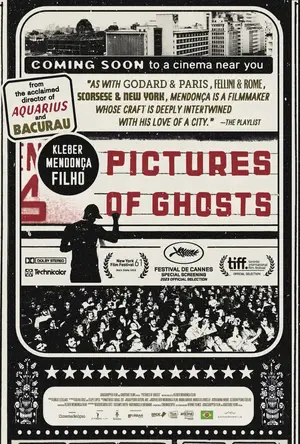
On the final day of this year's Pingyao Film Festival, another new Brazilian documentary film captured the attention of cinephiles. It is "Retratos Fantasmas" (Pictures of Ghosts,2023), directed by Kleber Mendonça Filho, who is also an old friend of Pingyao and Jia. The film delves into the director’s own childhood memories; he reflects on how the classic movie palaces of downtown Recife from the 20th century have mostly disappeared, turning that area into something of an archaeological site that reveals lost aspects of life in society, akin to pictures of ghosts. Towards the end of the documentary, Mendonça Filho hails a taxi to take himself home. The driver claims to possess a unique superpower, which is the ability to turn invisible whenever he wishes to. Set against the backdrop of a joyful Frevo-style song, the driver truly vanishes before the eyes of the director and audience, becoming an invisible guest and a picture of a ghost.









Comments 0
No comments yet.