Anatomy of a Fall: Inherent Uncertainty and Vulnerability of the Human Spirit
General Reviews

French director Justine Triet's "Anatomy of a Fall" won the Palme d'Or at the Cannes Film Festival, making her the third female director in the history of Cannes to receive the prestigious award. This comes two years after French female director Julia Ducournau won the Palme d'Or for "Titane".

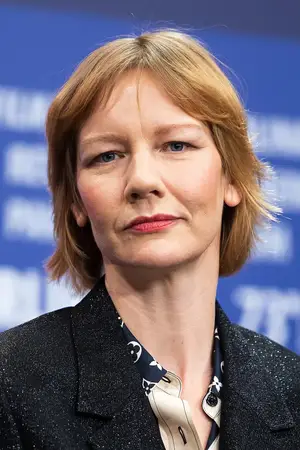
The film tells the story of a German female writer living in France who is investigated and put on trial after her husband fell from their home. The trial profoundly affects her family life, leading to significant changes in her relationship with her son, who had previously lost his sight accidentally. Actress Sandra Hüller delivers a brilliant performance in the film. She portrays the protagonist Sandra with intellect, independence, and restraint. Even when confronted with the prosecution's questioning, she maintains complete rationality. Hüller effectively conveys both inner pain and joy through subtle facial expressions. However, she exhibits great explosiveness and unleashes intense emotions while keeping them distinct and organized. It is likely that the film will also achieve success at next year's Oscars, and Hüller may become a strong contender for the Best Actress award.

There has been a significant increase in the number of legal dramas in recent years: last year, there was “Saint Omer” which made its debut as the Best Film at the Venice Film Festival; this year at Cannes, there was “Anatomy of a Fall” in the main competition section and “The Goldman Case” in the Directors' Fortnight section. These films often include a significant number of courtroom scenes, and some even take place entirely within the courtroom. Their tone can vary from calm to intense, with "Anatomy of a Fall" falling somewhere in between.
Interestingly, these legal dramas tend to be of high quality and often achieve impressive box office results. There are several important factors that contribute to this: first, the cases depicted in the films are usually controversial, making the plot highly engaging and appealing to the audience. Second, the conflicts between the prosecution and defense are often intense, easily drawing the audience's emotions and generating resonance. Third, the complexity of expression in these films often touches on various aspects such as society, politics, history, and human nature. This provides ample room for exploration and discussion, especially in recent years as social contradictions have become increasingly pronounced in various countries. The courtroom becomes an excellent lens through which intricate issues can be fused together. Moreover, law, as a concept, embodies the will of the ruling class. Therefore, courtroom debates can effectively reflect the intense clash between a potent and conservative social consciousness and individual experiences.

While legal dramas might appear straightforward to film, in reality, it is a challenging task to execute them well. On one hand, the screenwriter needs to handle the relationships between the parties involved, such as the parties involved, lawyers, witnesses, judges, and juries. On the other hand, an overly powerful screenwriter can often affect the director's creativity. Therefore, achieving a balance or mutual support between the two is extremely difficult.
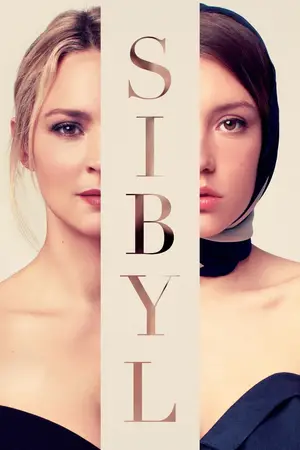
Director Justine Triet has done a great job in this aspect, reflecting the highest level of legal dramas in recent years. This is not only related to her partner Arthur Harari (who has been collaborating with her on the screenplay since her previous work “Sibyl” and the two of them obviously have a good understanding), but also to Justine Triet's deep involvement in the screenwriting process. Triet also mentioned in an interview that she "almost reads stories about real crimes every day." Given her second work, "Victoria," also involved filming courtroom scenes, she likely possesses considerable experience in capturing both the inside and outside dynamics of the courtroom, adeptly building characters and nurturing audio-visual relationships.

From the beginning of the film, we are placed in a suspenseful situation: the young boy Daniel goes for a walk outdoors guided by a guide dog and when he comes back, his father is lying dead in the snow. Next, we almost follow Daniel to listen to the arguments from both the prosecution and defence in the courtroom. First, we gain a deeper understanding of the situation at the crime scene, and then we gradually delve into the family dispute behind this death: the accident involving the child plunges the couple into a dilemma, and the compromises between them eventually transform into irreconcilable conflicts. Both work and life are riddled with problems. The wife seems to have a definite motive to kill her husband, but her incredibly rational behaviour in court does not give the impression of a murderer. Every seemingly real life snapshot tends to fail in a more complex emotional system, and every overlooked detail has the potential to overturn previous conclusions.

Triet occasionally adjusts her camera to capture close-ups of the protagonist's determined and unwavering face. At the same time, the camera also transforms into a directive television lens, providing subtle judgments and assumptions. It is not until a certain moment that we realize the audience's perspective is actually that of Daniel's. Like him, we are seeing the dispute between the couple for the first time, unable to see the truth behind it, and can only make a futile choice guided by our inner feelings. Is the mother, truly a murderer? It is a burdensome, painful, and overwhelming question to face.

Another film, “Kuru Otlar Üstüne,” directed by Palm d'Or winner Nuri Bilge Ceylan, is from this year's main competition unit. Its story also unfolds on a snowy day. Both films feature extensive dialogue and delve into the intricate dynamics between men and women, as well as between adults and children. They even raise deep questions about human relationships. Kuru Otlar Üstüne may be more cynical, but the film's one-sided emphasis on the script makes it visually and audibly intriguing, and highlights the craftsmanship of the writer. To some extent, both Hirokazu Kore-eda and Ceylan have experienced a decline from their peak creative states, and the pursuit of new ideas might have caused them great confusion.
On the other hand, “Anatomy of a Fall” does not seem to trouble director Terray with its abundance of textual information. In fact, since his debut feature “Age of Panic,” Terray has been skilled at constructing complex texts and narrative structures that complement the visual and auditory expressions, creating complex and multi-faceted characters and providing a complex viewing experience.
The highlight of the film is undoubtedly the couple's quarrel scene, where they gradually escalate from calm complaints to violent madness. The camera removes the over-the-shoulder shots bit by bit, completely isolating the space between the two characters. The flashback abruptly ends, visually breaking the continuity, while the sound continues echoing in the silent courtroom, creating a strong sense of ambiguity.

We can only infer what happened next from the protagonist's words and the physical evidence collected at the scene. As viewers, although we are watching, we are not much different from the blind son. The trial seems to be based on facts, but the facts are no longer relevant. The lawyers on both sides fabricate their own stories, even suggesting the protagonist's novel as evidence of murder. Its entire significance lies in shattering the son's trust in his mother and, in the process, eroding our trust in the protagonist as well. Once trust is destroyed, it is permanent, and everything afterward is just self-persuasion. In the end, the truth does not surface; only one verdict emerges. Up to this point, “Anatomy of a Fall” is clearly no longer just about family relationships or the challenges faced by women; it has evolved into a profound exploration of the eternal problem of understanding and trust between people. Triet shows us the inherent instability and vulnerability in the depths of the human spirit. Perhaps, as Irish writer Colm Tóibín writes in his new work The Magician, the "human spirit" is so comically tragic, "as soon as the wind changes direction, their stories change with it, and their lives are a continuous, fading, ridiculous effort to make themselves seem believable." In this sense, Anatomy of a Fall becomes a harsh analysis of the human soul.






Comments 0
No comments yet.