A Touch of Sin (2013)★ 7.1/10
- Crime
- Drama
Directed by: Jia Zhang-ke
Written by: Jia Zhang-ke
Four separate stories unfold in modern China, each revealing how ordinary lives are upended by sudden, senseless acts of violence.
Articles about this

From A Touch of Sin to Walking Past the Future: The Fate and Love of Poor Rural Youth from China Drifting Through City
C
CentralChinamovieMay 27, 2026
0
Chatting About Movies With Couchsurfers
S
seamouseNovember 7, 2024
3
Zhang-ke Jia y cómo pintar la aldea desde la propia obra (y a la obra desde si misma)
D
Daniel CasteloApril 19, 2025
6
“Ausencia”: lánguido, pero amor al fin
A
Andrés VartabedianJanuary 27, 2025
4
Llevar películas latinoamericanas a China: ¿una misión imposible? (Parte 1)
M
MarratonNovember 7, 2023
0
Filmes latinos na China: uma missão impossível? (Parte 1)
R
rato marinhoNovember 3, 2023
0Cast & crew
See all ›






Videos
See all ›

Awards · 0 wins, 1 nominations
See all ›- NomineeCannes Film Festival 2013Palme d'Or · Palme d'Or
Reviews
CCentralChinamovieMay 29, 2026
CentralChinamovieMay 29, 2026Contains spoilers
From A Touch of Sin to Walking Past the Future: The Fate and Love of Poor Rural Young Men and Women from China Drifting Through Cities
In May 2026, I happened to watch Walking Past the Future (路过未来), a film released in 2017. The main storyline follows a young man and woman who met online and fell in love offline. Both came from rural areas of mainland China and worked in Shenzhen to earn a living, experiencing many hardships and twists of fate. Watching this film immediately reminded me of another movie, A Touch of Sin (天注定), which also contains a subplot about a young couple in love working in Shenzhen.
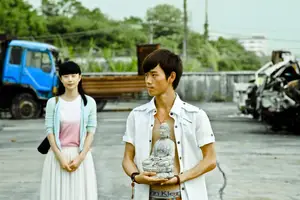
The stories of working youth and romance in these two films contain both similarities and differences. In A Touch of Sin, the young man Xiaohui (小辉) is a rather naïve and honest Foxconn worker, while the young woman Lianrong (莲蓉) is a sex worker serving powerful men. The film has a darker tone and more oppressive atmosphere, ending with the tragedy of the young man’s suicide. In Walking Past the Future, the young man Xinmin (新民) and the young woman Yaoting (耀婷) also struggle to survive, but they are more lively and optimistic. The film alternates between gloom and hope, and despite enduring many hardships, the lovers remain devoted to each other and move toward marriage.
However, both films coincidentally reflect the same reality: many young people from ordinary rural families, lacking connections and resources, find themselves alone in big cities, struggling to survive and uncertain about the future.
For most young migrant workers entering cities, the main path available is factory labor, exchanging exhausting work on assembly lines for meager sweatshop wages. Such work is somewhat better than laboring in the fields “with faces toward the yellow earth and backs toward the sky” in rural areas, and the income is somewhat higher. This was precisely why their parents and the older generation of migrant workers eagerly entered cities for work. But younger generations find it harder to tolerate such repetitive and exhausting labor and instead hope for easier work and quicker money. This is why Xiaohui and Lianrong in A Touch of Sin, as well as Xinmin and Yaoting in Walking Past the Future, all chose certain “unconventional” jobs.
Such “unconventional” work can indeed avoid some of the burdens and monotony of ordinary labor, but it also means greater risks and requires abandoning certain moral principles, even selling one’s body and dignity. Lianrong becomes a role-playing sex worker to earn money and support her child, satisfying the various unusual sexual preferences of powerful men. Yaoting participates in drug trials to make quick money for buying a home and paying her younger sister’s tuition. Both are selling their bodies. Xiaohui becomes a waiter in a sexually oriented entertainment establishment and witnesses his girlfriend serving elderly clients. Xinmin recruits people for drug trials and accidentally pulls his long-term online girlfriend into this world. By choosing these “unconventional” jobs, they lose part of their morality and dignity, while also having to watch the people they love suffer. This is the concentrated expression of the tragedy faced by these young men and women.
When Xiaohui gives up his easy job as a waiter and returns to the hopeless Foxconn factory, he regains some spiritual dignity while at the same time making his material circumstances even worse, ultimately choosing to jump to his death. When Xinmin discovers that the girlfriend he had known online for years was in fact the girl he personally pulled into the drug-trial circle, he abandons the relatively easy money-making business of recruiting test subjects and instead goes to work at construction sites, meaning he too must face a harsher life. Between moral dignity and material gains, leaning toward one side often means losing something on the other side. For poor young people without background or connections, such painful choices are unavoidable.
Reality itself is often even more cruel than the films portray. For many migrant youths with no family or support networks in large cities, even if they wished to abandon dignity and seek morally questionable or even illegal work, such opportunities are not easily found; it is like “wanting to enter hell but finding no door.” Romance among working-class young men and women is also more realistic. This does not mean that working people lack genuine love. There is plenty of real love among them, but considerations of money and future prospects, as well as greater tendencies toward calculation and abandonment, are difficult to avoid. Their constrained living conditions and stretched incomes force them to become highly practical. Films, for dramatic purposes, often increase emotional and romantic elements while reducing the degree of utilitarian realism found in actual life.
In A Touch of Sin, Xiaohui dies in despair, while Lianrong continues to endure humiliation and work in service jo
T troyd-3March 3, 2025
Four stories filled with violence and tragedy are loosely strung together to form this film. Beyond showcasing everyday crimes, it delves into the theme of desperate rebellion under societal pressure. Regardless of the form and target of their violence, the characters cannot change reality in the slightest.
T thinkmillerFebruary 28, 2025
The 133-minute film feels like a summary of China’s news over the years. Only the first and last stories stand out. Perhaps I lack the insight to grasp the film's essence and deeper meaning.
O o-OLAVOMarch 28, 2025
Quatro histórias cheias de violência e tragédia são vagamente interligadas para compor este filme. Além de apresentar crimes cotidianos, investiga o tema da rebelião desesperada sob pressão social. Independentemente da forma e do alvo de sua violência, os personagens não podem mudar em nada a realidade.
V v_plinMarch 28, 2025
Cuatro historias llenas de violencia y tragedia se entrelazan de forma algo suelta para dar forma a esta película. Más allá de mostrar crímenes cotidianos, explora el tema de la rebelión desesperada bajo la presión social. Sin importar la forma ni el objetivo de su violencia, los personajes no pueden cambiar la realidad en lo más mínimo.
P Pineapple_saMarch 27, 2025
Este filme de 133 minutos parece um resumo das notícias da China ao longo dos anos. Apenas a primeira e a última histórias se destacam. Talvez me falte o conhecimento para compreender a essência e o significado mais profundo do filme.
S Syndfg324March 27, 2025
Esta película de 133 minutos se siente como un resumen de las noticias de China a lo largo de los años. Solo la primera y la última historia destacan. Quizás me falta visión para captar la esencia y el significado más profundo del filme.