The Archivist
Romance

The room was sterile, white, and silent, save for the low hum of the server banks that lined the walls. It smelled of ozone and refrigerated air. This was the modern mausoleum, the place where the dead went to wait. My job was to be their tour guide. I was an Archivist.
My name is Elara, and for the past five years, I have curated the memories of the deceased. The technology was called "Continuum." A simple, elegant process. Upon death, a person's neural implant could be accessed, its recorded sensory data—sight, sound, emotion—cataloged into a searchable archive. For a fee, the bereaved could be granted a limited number of "immersions," a chance to step back into a moment of their loved one's life, seen through their eyes, felt with their heart.
I was good at my job. I was detached, methodical. I guided grieving spouses through sun-drenched wedding days, showed tearful children their own birth from their mother's perspective. I was a dealer in second-hand joy, a librarian of ghosts. I never partook myself. I believed memories were like old photographs; best left in the album, lest their colors fade with overexposure.
Until Anya died.
My Anya. My brilliant, chaotic, and endlessly vibrant wife. A car accident on a rainy Tuesday. A single, senseless moment, and the music of my life stopped.
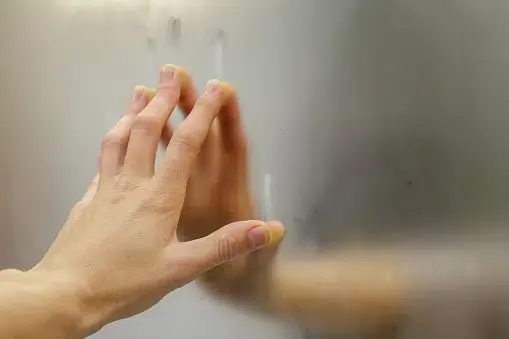
The silence in our apartment was no longer the comfortable silence of two people sharing a space. It was a screaming void. The scent of her paint—turpentine and linseed oil—still clung to the air in her studio, a ghost I couldn't exorcise. I found myself standing in the doorway for hours, staring at her unfinished canvas, a riot of color with no resolution.
That's when I broke my own rule.
I brought her Continuum drive home from the archive. It was a small, silver disc, cool to the touch, impossibly light to hold the weight of a life. My colleagues warned me against it. "It's not healthy, Elara," they said. "It's an echo, not a voice." I didn't care. I needed to hear her echo. I needed to feel the warmth of her sun one last time.
My plan was simple. I would relive our beginning. The day we met, at that little bookstore downtown. I remembered it perfectly. The smell of old paper, the way the afternoon light caught the dust motes dancing in the air. I remembered her laugh, a sound like wind chimes, when I dropped a stack of books at her feet. I wanted to feel that laugh again, from her side. To feel the spark as she saw me for the first time.
I calibrated the immersion rig, the headset cool against my temples. I keyed in the date, the location, and the memory parameters. "First encounter," I typed. "Bookstore."
I closed my eyes. And I fell into her.

The world bloomed into existence. Her world. I could feel the worn wooden floorboards under her shoes, the slight, excited tremor in her hands as she browsed the poetry section. I saw the world through her eyes, the colors slightly richer, the light softer. And then, I saw myself. A younger, less tired version of me, fumbling with a stack of books. I saw myself fall.
And I felt her reaction.
It wasn't a spark. It wasn't the meet-cute of a romance novel. It was... pity. A gentle, almost maternal amusement. I felt her think, Oh, that poor, clumsy man. He looks so lost. The laugh I remembered as a shared moment of joy was, from her side, an act of kindness. Of charity.
The immersion ended. I sat in the darkness of my living room, the silence heavier than before. The memory wasn't wrong. My interpretation of it was.
I tried again. Our first date. I remembered it as a night of witty banter, of instant connection. I immersed. Through her eyes, I saw a man who was trying too hard. A man who talked about his work—the theoretical ethics of memory archiving—with a passion she couldn't mirror. I felt her boredom, a polite, carefully concealed layer of it under her smiles. I felt her thinking, He's brilliant. But does he ever just... live?
This became my new obsession. A form of self-flagellation. I dove into her memories, not for comfort, but for truth. I watched our wedding day. I remembered overwhelming joy. I felt her love, yes, but it was tinged with a thread of deep, terrifying anxiety. Can I be enough for him? Can I live up to the idea he has of me?
I watched the day I got my promotion to Senior Archivist. I remembered my pride. I felt her quiet resignation. It was the day I started working late, the day the silence in our apartment began to grow.
The archive was a mirror, and it was showing me a version of myself I didn't recognize. A man so absorbed in the theory of life that he had forgotten to participate in it. A spectator. Anna's last words to me, six months before she died. No, that wasn't right. That was someone else. My memories were getting crossed.

The real blow came when I decided to search for a memory I wasn't in. I wanted to see her happy, on her own terms. I searched for "joy," "contentment." The archive returned a memory from a year ago. An afternoon she had told me she was spending with a friend from her art class.
I immersed.
I felt the sun on her skin, the smell of fresh-cut grass. She was in a park. And she was not alone. A man was with her. I didn't recognize him. They were laughing. And the laugh was different. It wasn't the kind laugh she gave me. It was a full, unburdened, joyous sound.
I felt her heart beat faster as he took her hand. I felt the warmth of his skin against hers. And I felt her thought, a thought so clear and so devastating it shattered my world.
This is what it's supposed to feel like.
I ripped the headset off, a scream caught in my throat. The room was spinning. It wasn't just that she had been with someone else. It was that she had been happy. Truly, effortlessly happy, in a way I now realized she had never been with me.
My grief, which had been a sharp, clean pain, curdled into something ugly. Jealousy. Rage. Betrayal. I had been a fool. A blind, arrogant fool.
I spent the next week in a drunken haze, alternating between rage and self-pity. I wanted to destroy the archive. I wanted to erase her, to erase the truth. But I couldn't. I was an addict. I needed another hit.
I decided to see the end. The day of the accident. I needed to know her last thoughts. Was she thinking of him?
I keyed in the date, my hands shaking. "Final moments."
The immersion began. The sound of rain on the windshield. The rhythmic sweep of the wipers. I felt her anxiety, a low hum. She was late. Late for what? She was thinking about me. I have to tell him tonight, I felt her resolve. It's not fair to any of us. He deserves to be with someone who can truly see him. Someone who isn't a ghost.
A ghost?
And then, a memory within the memory. A flashback. Her, younger, in a hospital room. A man in the bed, pale, dying. It wasn't her father. It was her first husband. A man I never knew existed. A man whose death from a long illness had broken her years before she ever met me.
The realization hit me with the force of the oncoming truck.
The other man in the park. He wasn't a new lover. He was a grief counselor. The "joy" I had felt was the joy of release, of someone finally understanding her pain.
She had never been unfaithful. She had been grieving. And I had been so wrapped up in my own world, I had never even seen it. I was the ghost in her life. The man who was there, but not there. A spectator.
And her last thought, as the headlights filled her vision, wasn't of another man. It wasn't even of me.
It was a single, clear, devastating image. The face of our daughter, who was waiting for her at home.
The immersion ended. I sat in the silence, the tears streaming down my face. The pain was no longer ugly. It was clean again. A pain born not of betrayal, but of a profound, heartbreaking understanding.
My rebirth was not a grand, explosive event. It was a quiet, agonizing death of the man I thought I was. The death of the perfect husband, the brilliant archivist, the man who understood memories.
I went to my daughter's room. She was sleeping, her face serene. I knelt by her bed and did something I hadn't done in years. I didn't analyze. I didn't theorize.
I just felt.
I stayed there until the sun came up, the first dawn of my new, broken, and finally real life.


Comments 1