MAFIA: WELCOME TO EMPIRE BAY
Crime
It's 1943, and we learn the story of Vito Scaletta, a young Italian from Sicily who lived in extreme poverty due to Mussolini's dictatorship. His family made the effort to leave Italy and emigrate to the United States in search of the American Dream.

Once in the United States, in a city known as "Empire Bay," he meets Joe Barbaro, who would become his best friend. They are influenced by mafia movies and TV shows, embracing a life of luxury, but of course, without understanding the price of that lifestyle at the time.

At only 18 years old, Vito was already a potential criminal, and he and Joe became targets of the authorities. However, due to the political context of a war with the objective of invading Sicily, Vito is recruited because, despite his young age, he speaks perfect English and Italian.

Once recruited, he agreed to collaborate with the American army in exchange for not going to jail. Once there, they executed "Operation Husky," which was altered because the operation was supposed to be at night, but they were located by Mussolini's soldiers and decided to go head-on, resulting in a moment of pure action between the Americans and Mussolini's army.

At first, they seemed to have the advantage, but the tide turned when they decided to bring in a heavy tank, which the Americans were unprepared to face, and they were defeated.

Vito survived by sheer luck because the head of the Mafia, "Don Carlo," in Sicily arrived in time to offer a ceasefire for the benefit of Mussolini's army, which simply halted the conflict—something Vito would remember much later.

Although alive, Vito was shot, so the army decided to give him leave for at least a month while he recovered. Upon returning to Empire Bay, he was greeted by Joe, who invited him for a drink and filled him in on the city and the latest news. Most importantly, Joe mentioned that he now had contacts and that everything was much easier for him.

He quickly contacted someone so that Vito Scaletta wouldn't have to leave again and could stay in the city and fully immerse himself in the world of the mafia. He didn't seem too keen on the idea, but he kept it "on hold." Afterward, he headed to where his sister Francesca and his mother Maria Scaletta lived.

Initially, the conversation is touching, filled with nostalgia. Vito spends the night there, and in the morning, his mother has a more serious conversation about what he plans to do to find work.

While Vito isn't specific about what he wants to do, he does mention Joe's offer, but his mother judges him because it all started with a mission he was on with Joe, and she fears the police will come looking for him again.

His mother suggests that he go work for Mr. "Papalardo" so he can start earning an honest income. She explains that Vito's father also worked for Mr. Papalardo and was able to support his family, eventually leading to their emigration to the United States.

Immediately afterward, Vito goes to the docks and meets Derek and Steve. He offers his services, and they immediately put him to work loading boxes for $10. At first, he does it, but he realizes his method of making money is too slow and won't get him anywhere. He quits immediately, telling Steve he'll work for Joe Barbaro.

Upon hearing Joe's name, Steve is surprised because he also knows him. He then summons him to speak with Derek, wondering, "Who would carry boxes while working for Joe Barbaro?" He speaks with Derek, but, being a complete stranger, Derek calls him back to verify. Luckily, Joe is available to help Vito out of his predicament, as he was dealing directly with the city's mafia.

Derek assigns Vito a "job," which involves intimidating several workers into paying the barber's fee. They don't necessarily use the barber's services, and half of them don't pay. Vito excels at this, resorting to violence with at least three of them and managing to collect the money for Derek, thus gaining his trust.

Immediately afterwards, Vito meets with Joe, who is going to introduce him to someone who, like Vito and Joe, is earning a place in the family by doing "jobs" that make them question their morality. In that sense, we meet Henry, who, having barely met them both, entrusts Vito with a rather risky task, which consists of infiltrating a state office and stealing gas coupons with the intention of selling them to gas stations.

At first, he hesitates, but trusting in his skills as a war veteran, he accepts. He prepares the location and all possible scenarios, infiltrating at night. His veteran skills shine through as he easily gets past the guards without triggering any alarms. He steals all the coupons from the office and arrives without a scratch or any sign of fatigue, handing everything over to Henry. Henry is surprised by how calm Vito is, despite having just committed a crime.

But there's a problem: the gas coupons have an expiration date, and unfortunately, it's the next day. Therefore, they'll be useless in a few hours. Henry suggests taking the coupons to the nearest gas stations to sell them before midnight, and so Vito drives as fast as he can, selling almost all the coupons.

The gas station workers seemed cooperative in that they didn't ask many questions about where the gas coupons came from. Aside from two others, there was some uncertainty because Vito didn't have any kind of state-issued identification, and his answers weren't very convincing because he didn't express himself with the necessary confidence. However, it seemed like everything went "okay."
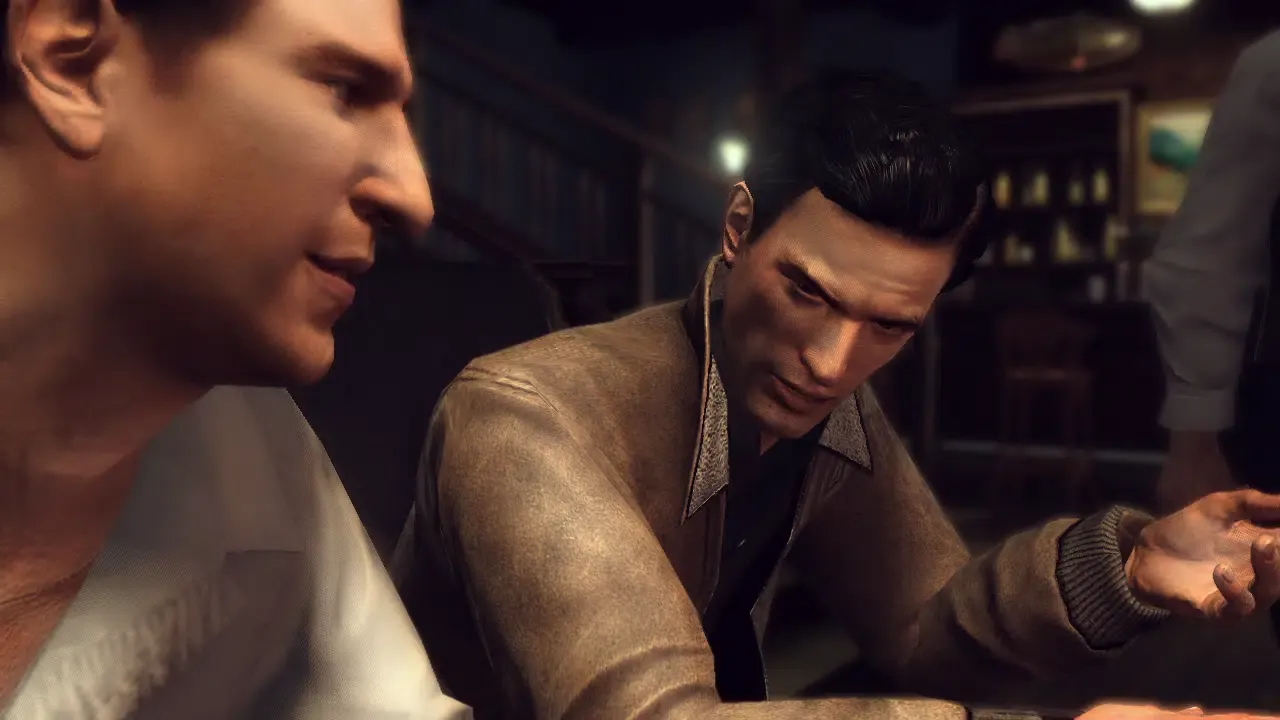
The next day, Vito met with Henry and Joe to discuss what had happened and wonder if everything had gone well. Henry spoke first, mentioning that the three of them had a specific job to do. One of the mafia bosses was upset because someone had taken out a loan and wasn't repaying it "as they should," so they were ordered to rob the jewelry store of the person who took out the loan.

Henry remains on the sidelines, only providing the weapons and logistical resources for the operation. Vito and Joe are tasked with being the main attackers. Upon arrival, they quickly gain the upper hand, stealing jewels.

However, things get complicated when they run into the Irish. Fortunately, they manage to escape, at least from the Irish, but the police are still at large, which takes more time. They are armed, and Vito once again demonstrates his skill with weapons, managing to fight his way through.

Joe takes all the loot and leaves while Vito stalls, distracting them. Everything goes perfectly this time; the feeling is positive, although Vito is reminded of his conversation with his mother about honesty and honor. Vito feels that he hasn't been honest or honorable because he's on a path where no one comes out unscathed.

The next day, they meet another mobster at their usual restaurant. Joe has delivered all the merchandise, and the mob bosses are starting to take notice of Vito and Joe, seeing them as "useful young men" due to their successful operations.

Henry introduces them to Luca Gurino, who says his boss is pleased with their performance and offers them $5,000 each for a total of $10,000, asking if they're ready to take the "next step," which translates to carrying out specific executions.

They hesitate but accept the task because they want to join. Henry explains all the details about who Luca is and what they need to do.

He's tasked with retrieving a gun turret with another veteran like Vito, named Harry, and they have a long conversation comparing their achievements.

Once at the location, we learn a bit about Henry's past and understand his motivations and why he's involved with the mafia.

His father was a political refugee under Mussolini's dictatorship and was brought to the United States by mafia members who were friends of his father. They helped him with the language and helped him find his place in society.

They waited a few minutes before their target arrived. When he did, they cornered him to execute him, but he managed to run a few meters while the three of them easily eliminated all the bodyguards in the distillery until they reached their target, whom they called "The Fat Man."

Once cornered, he begged for his life, and in a moment of carelessness, Henry shot him in the leg, taking him out of commission. Things got complicated because the building showed signs of possible collapse, which hampered their efforts to extract information from him, and he was simply executed.

They rush to "El Greco," a doctor who practices at his home and is known for treating all the Mafia members with gunshot wounds. Greco speaks with Vito and Joe, as it's the first time they've met him, and begins to tell them that the life they've chosen will come to a tragic end for both of them, that it's only a matter of time. At first, they look at each other and are a little worried, but beyond that, nothing more.
Henry is out of danger, and Joe stays with him to arrange for his transfer later. Vito simply returns to Joe's apartment until the next day, when the premonition of both Vito's mother and Greco comes true.

Vito, barely out of the apartment, is cornered by the police and will be investigated for "illegal distribution of gasoline rationing coupons," something Vito clearly knows.

Once inside the trial, it's revealed that the feds had been investigating Vito for some time, ever since the coupon incident. Luca manages to get a lawyer, but the evidence and testimonies are too overwhelming. Security camera footage from the gas stations Vito visited that night coincides with the mysterious "disappearance" of the coupons.

The refore, the judge hands down a sentence against Vito, finding him guilty and sending him to a maximum-security prison for 10 years. For now, everything seems lost for Vito, who had intended to do the right thing to help his family through crime. His mother's premonition has come true, and he has left behind everything that being a war veteran meant to him, driven by the desire to "be someone" in a country with laws and the rule of law.

Conclusion and Clarifications
This is a 2010 video game developed by 2K Games, which I believe is most brilliantly told through its story. If you've read this far, you'll see that it's very well-written and packed with references. If adapted into a film, it would, in my opinion, be a film that would generate a lot of discussion.
What I've described isn't the complete story, as it's composed of 15 episodes. As a film, I think it could be adapted to Chapter 6, "Time Well Spent," with the following chapter explored in a sequel. I've also omitted some plot points, not for any negative reason, but because I feel they make the plot even more cumbersome than it already is.
Why would it be considered film noir? Because the story delves into what a mafia can do to someone who initially only saw them as "cool," through the experiences of witnessing them in the 1940s and how the migration of Italians fleeing a dictatorship affected that era.
Thank you for reading



Comments 2