Fantasia 2026:Tunnels: Sun in the Dark
General Reviews
As always, I think film festivals are one of the best places to get into other cinemas and see perspectives you either think you already know or straight up don't, and with Fantasia I've always been lucky enough to dig deeper into Asian cinema specifically. What I love most about it, from Thailand to the Philippines, is how it's not nearly as solemn about telling its own stories as we tend to be on this side of the world, where everything has to be either dead serious or locked into one tone the whole way through; over there, genres mutate inside the same story, starting at point A and getting to point C by way of letters that don't even exist in the alphabet.
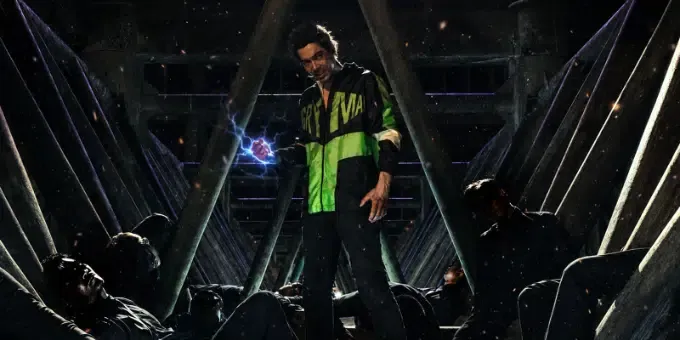
 Tunnels: Sun in the Dark, directed by Bùi Thạc Chuyên, drops us into Vietnam in 1967, following a 21-person guerrilla squad surviving inside the Cu Chi tunnels while American forces hunt them down. And that's where I get this nagging feeling, similar to what I had last year with The President's Cake out of Iraq: even when you're watching a perspective that clearly comes from the country where the conflict actually happened, the film still plays it lukewarm. What frustrates me most is that Southeast Asian cinema, in all its genre fluidity, usually goes deeper exactly where Tunnels settles for the surface of a conventional blockbuster, closer to what we'd make on this side of the world; a perfect counter-example is Viet and Nam, by Trương Minh Quý, which handles the postwar period through something as intimate as two men in love trying to escape the mine they work in, and ends up being a collective meditation on trauma and a history that never fully resolves.
Formally, Tunnels has a lot going for it: the production design is gorgeous, the tunnels look genuinely impressive, and the effects and battle work are clearly cared for. But the cinematography feels like a work-for-hire job from the very first shot, shaky handheld camera with no tension or situation that actually earns the shake, just wide shots trying to show the action or cram in as many characters as possible without any real intention behind them. And while we're at it, there's no sound design taking advantage of how claustrophobic being underground could feel, which given the setting is a completely wasted opportunity.

There's one scene that sums up the archetype problem perfectly: after days of getting shelled and burned, the squad captain cracks a Marvel-style joke, something like "is it right behind me?", and everyone around him reacts with a lightness the film never comments on or questions. It's not that a character having that kind of tasteless-joke personality is a problem in itself, it's that the gag itself is straight-up American, dropped into a Vietnamese war narrative without anyone seeming to notice.
I think the real issue underneath all of this is that Tunnels seems to confuse humanizing the Viet Cong with siding with them, so it plays it safe and never really commits to anything. Not falling into the American propaganda we've been sold for decades is a noble effort, but recent years have shown us you can absolutely present a perspective without being morally aligned with the people you're portraying, look at Jonathan Glazer's The Zone of Interest. That's why I walk away disappointed: the film has everything it needs to take a stance and instead just floats there, feeling hollow.

On top of that one character, there are too many others with a lot of personality but nothing distinct enough to set them apart, the same archetypes we've seen in every other war movie, which makes it hard to keep track of each subplot even though the main plot itself isn't that complicated. The structure doesn't help either: the first half is watching the squad set traps and get ready, the second half is an impressively staged massacre on both sides, but neither half builds toward anything beyond the fight scene playing out in front of you.
In the end I keep coming back to what Viet and Nam understands so well, that Vietnamese cinema, when it lets itself be fluid and sit in ambiguity, finds something universal inside its own specific pain. Tunnels has the production value, the ambition, and the human material to get there, but it shuts the door on itself before it even tries.





Comments 1